Cramp! – The Magnesium Myth
Your calf locks up — time to reach for magnesium? It is not that simple. Learn why cramps in endurance sports often involve muscle fatigue, how fluids and electrolytes may contribute, and how to reduce your risk of cramping.
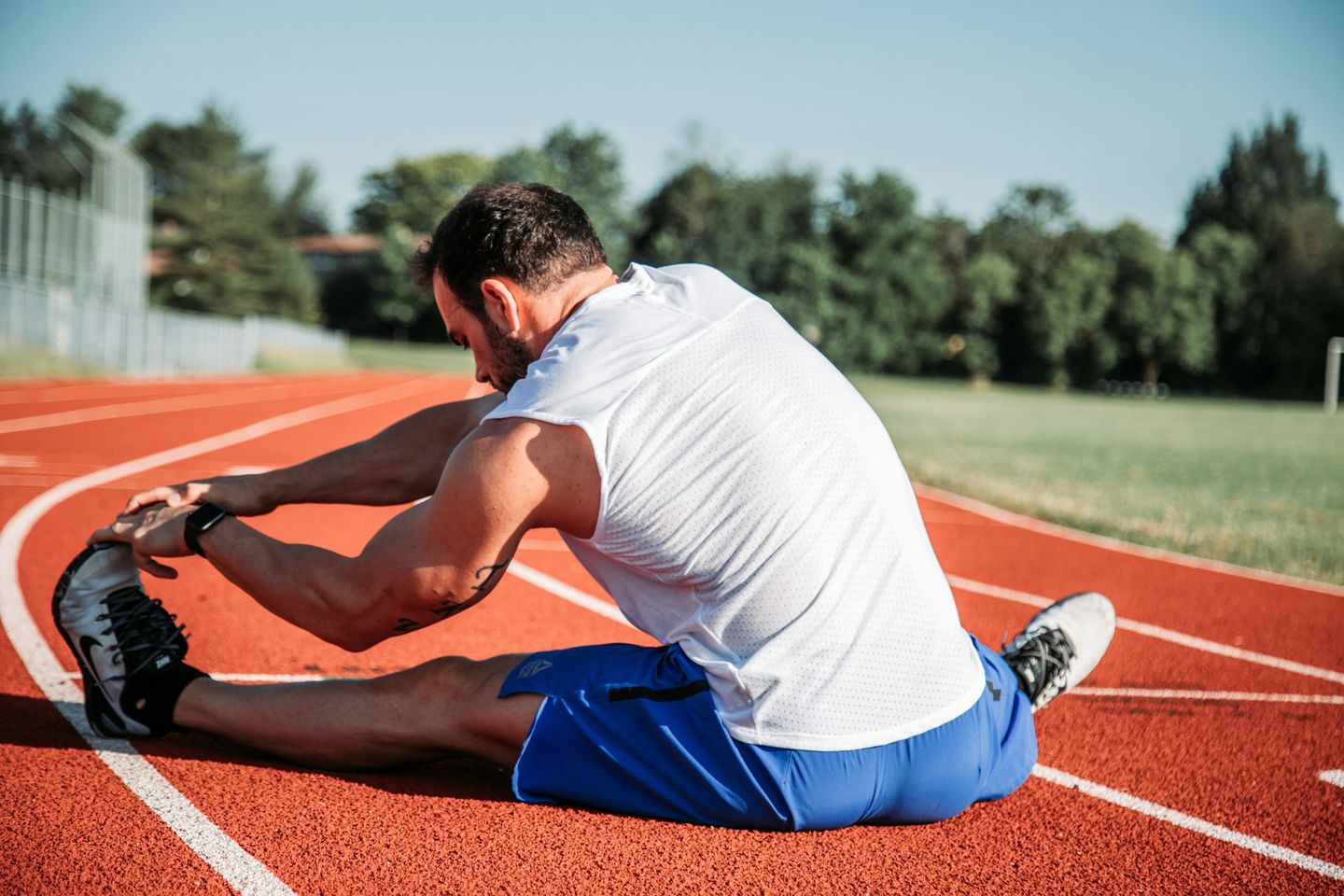
Photo by Alora Griffiths on Unsplash · Unsplash License. Illustrative image: a runner stretching.
TL;DR:
Magnesium is no miracle cure: There is no reliable evidence that taking extra magnesium prevents exercise-associated muscle cramps.
Fatigue plays a central role: Under heavy exertion, the control of muscle contraction and relaxation can fall out of balance.
Fluids and electrolytes can contribute: But they do not explain every cramp. Simply consuming more salt or water is not a universal solution.
Cramp susceptibility varies from person to person: If you have experienced cramps repeatedly in the past, your risk of further cramps is higher.
Preparation matters: Sport-specific training, an appropriate race pace and an individual fueling and hydration strategy are sensible starting points for prevention.
Magnesium as a miracle cure for cramps?! The claim that magnesium helps with cramps is on a similar level to the idea that alcohol-free wheat beer is the best drink for rehydration after exercise. Both are clever industry marketing messages that have become firmly lodged in the public mind.
So the next time you are in the middle of a race and your thigh suddenly locks up like a vice, do not expect a magnesium tablet to rescue you. It is not a proven immediate remedy for exercise-associated muscle cramps. Sports science has moved on: when we look at how exercise-associated muscle cramps (EAMC) develop, two main theories come into play: neuromuscular fatigue and imbalances in fluid and electrolyte levels.
Let us explore what is happening and, above all, what you can do about it ...
Theory 1: Neuromuscular fatigue
Neuromuscular fatigue is now one of the most widely discussed explanations for exercise-associated cramps. It sounds complicated, but the proposed mechanism is fairly simple: muscle activity is coordinated through circuits in the spinal cord. Two important players influence these circuits. Muscle spindles act like an accelerator: they detect stretch and tell the muscle, “Contract!” Golgi tendon organs act like a brake: they sense tension and help signal, “Relax, that is too much!”
When a muscle becomes very fatigued, this system can fall out of balance. According to this theory, excitatory signals from the muscle spindles increase while inhibitory signals associated with the Golgi tendon organs decrease. To stay with the analogy, the brake weakens while the accelerator gets stuck. The result is sustained motor activity: the muscle keeps contracting and cramps.
Fatigue-related cramps usually affect a specific muscle: the one that has been working hard. A purely systemic electrolyte imbalance would be expected to have broader effects. After all, we sweat across the body and blood circulates through all our muscles, not just the left calf. A local cramp late in a race is therefore consistent with neuromuscular fatigue, although its timing and location alone do not prove the cause.
Theory 2: Electrolyte imbalance
Does that mean the electrolyte theory is completely off the table? No. Cramps do not occur only in individual muscles or towards the end of exercise. They can also affect several muscle groups at once or happen before obvious fatigue has developed. Fluid or electrolyte disturbances may contribute in some situations, but the pattern of cramping alone cannot identify the cause.
Nutrition and hydration before and during a race deserve attention, including during carbohydrate loading. Stored glycogen, the storage form of carbohydrate, is associated with roughly 3 grams of water per gram. Loading up on pasta and rice changes glycogen and water storage, so a sensible hydration strategy matters. Sodium and potassium are important for normal nerve and muscle function. However, carbohydrate loading alone does not establish an electrolyte deficiency or explain a cramp.
The X factor: The genetic lottery
Despite these explanations, there is an uncomfortable truth for some of us: people who have cramped before are more likely to cramp again. Individuals differ in their cramp threshold, and inherited factors may play a role. Some nervous systems appear more prone to cramping under exertion and stress. As frustrating as that sounds, susceptibility varies, and there is no single explanation that fits everyone.
What actually helps?
The good news: your predisposition does not leave you powerless. Even if cramps keep troubling you, there are ways to prepare:
1. Address fatigue through targeted training: Appropriate, sport-specific training can help delay fatigue and is a sensible part of cramp prevention. When your muscles are well prepared for the demands of an event, they are better equipped to handle them. Gradually build the relevant muscle and tendon capacity, practise the expected duration and intensity, and choose a realistic race pace.
2. Support fluid and electrolyte balance with an individual nutrition strategy: Plan your fluid and sodium intake around the duration of the event, the conditions and your individual needs, especially before and during the race. A balanced diet normally provides potassium. Avoid assuming that more salt or water is always better; try your strategy in training first.
And magnesium? Do not rely on it as an immediate fix or a proven way to prevent exercise-associated cramps. Magnesium is important for normal nerve and muscle function, but that does not mean taking an extra tablet will stop a cramp. Correcting a diagnosed deficiency is a separate issue.
References
Costa, L. D. S., Correa, V. A. F., de Oliveira, V. F., Jahn, A. J. S., Aliano, G. B., & Nunes, G. S. (2026). Risk factors for exercise-associated muscle cramps: A systematic review with meta-analysis. Muscle & Nerve. Advance online publication. https://doi.org/10.1002/mus.70389
Miller, K. C., McDermott, B. P., Yeargin, S. W., Fiol, A., & Schwellnus, M. P. (2022). An evidence-based review of the pathophysiology, treatment, and prevention of exercise-associated muscle cramps. Journal of Athletic Training, 57(1), 5–15. https://doi.org/10.4085/1062-6050-0696.20
Nelson, N. L., & Churilla, J. R. (2016). A narrative review of exercise-associated muscle cramps: Factors that contribute to neuromuscular fatigue and management implications. Muscle & Nerve, 54(2), 177–185. https://doi.org/10.1002/mus.25176
Garrison et al. (2020). Magnesium for skeletal muscle cramps. Cochrane Database of Systematic Reviews. https://doi.org/10.1002/14651858.CD009402.pub3