DATAGROUP Triathlon Nürnberg.
The Olympic distance at the DATAGROUP Triathlon Nuremberg is raced entirely in the city centre: 1,500 metres in the Wöhrder See with a rolling start at nine, four laps of the closed ten-kilometre city circuit out to the Luitpoldhain and ten kilometres of running along the Pegnitz into the old town. There is no categorised climb; what is asked for is awareness and an output that carries four identical laps.
No date has been announced for the next edition yet. The course, elevation and route profile are from the most recent edition.
DATAGROUP Triathlon Nuremberg: Course, Route Profile & Map
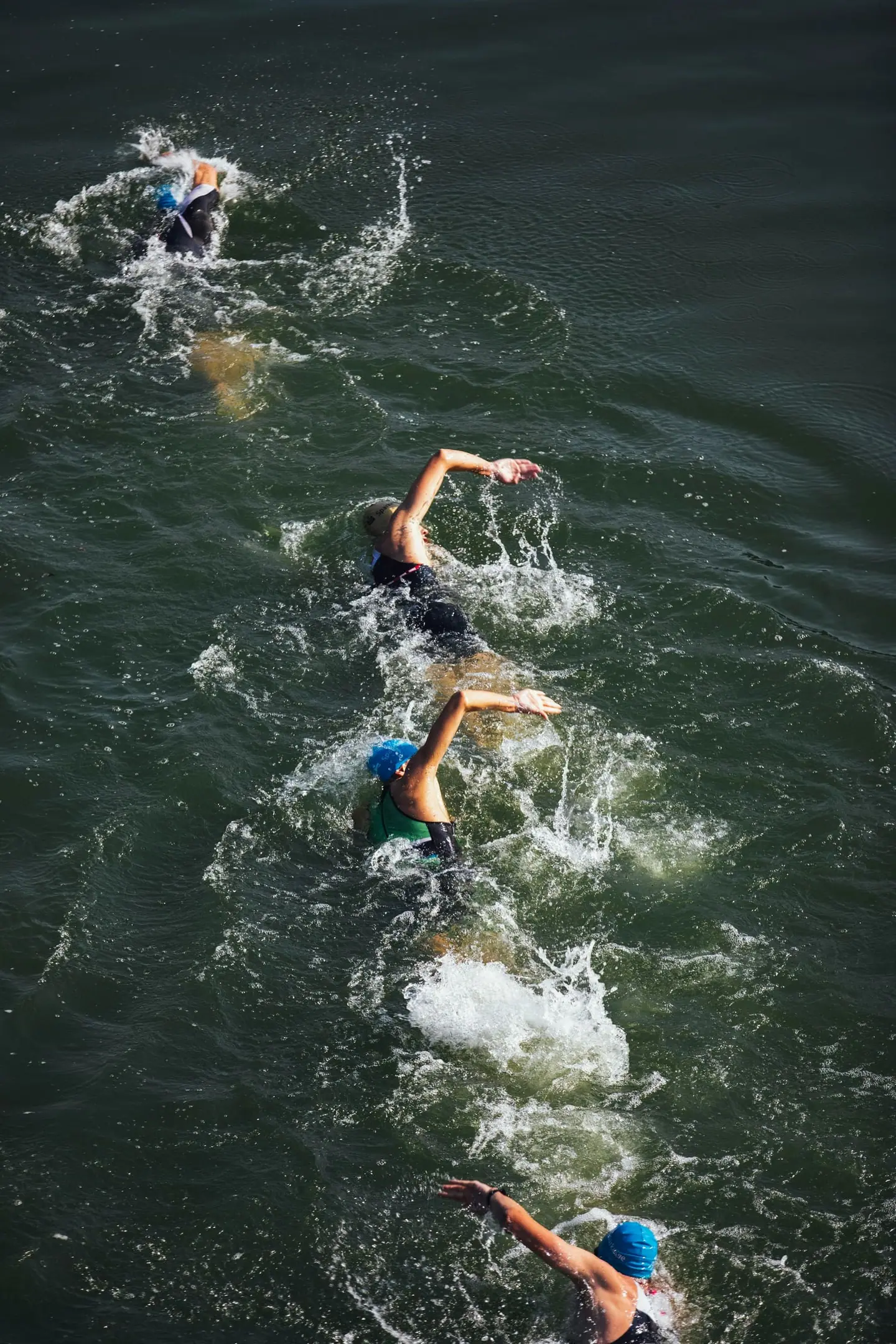
The swim goes off at nine in the Wöhrder See, on a marked turning-point course and with a rolling start rather than a mass start. Transition sits directly by the lake, in the middle of the city.
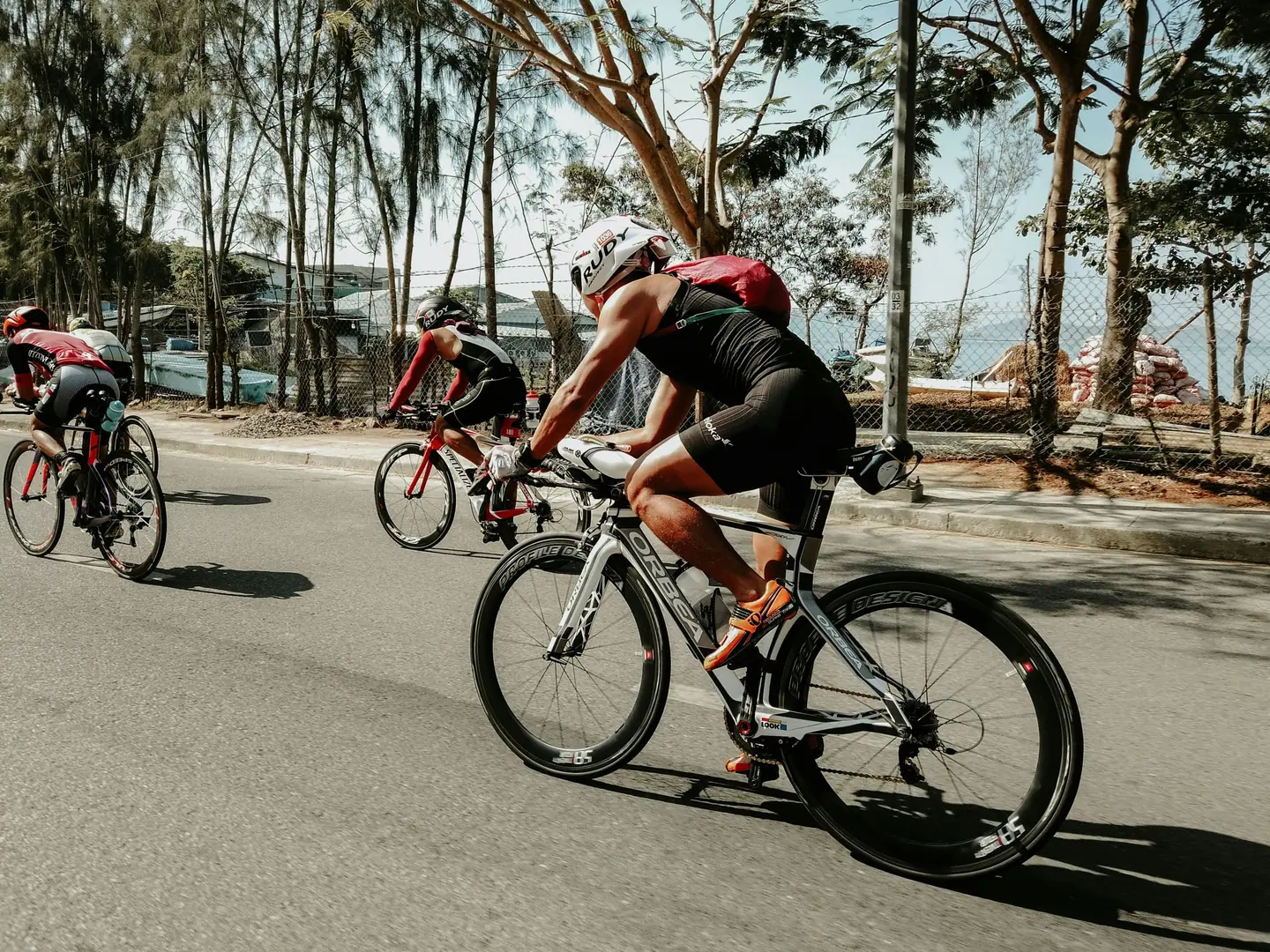
The bike is a ten-kilometre circuit closed to traffic and ridden four times: north-east from the lake to the first turnaround, back along the shore and south via the Hainstraße through St. Peter into the Luitpoldhain, then back over the Bayernstraße and Regensburger Straße to the Wöhrder Wiese and through the second turnaround on the Ostendstraße to close the lap. The elevation band stays between 300 and 324 metres, 63 per cent of the course is classified as flat, and there is no categorised climb. The run follows the Pegnitz west through the Wöhrder Wiese into the old town twice, turning a loop by the river between Lorenz and Sebald and returning to the lake along the same corridor, 14 metres of climbing over ten kilometres.
What sets it apart is the backdrop and how tight it is. You ride closed main roads with eight turnarounds and numerous junctions across the four laps; you run on park paths, riverside promenade and closed city tarmac, with the outbound and return sharing one corridor so the field meets itself head-on. The organiser is Deutsche Triathlon gGmbH, the entire programme runs on a single Sunday, and the Olympic distance is its first and longest start.
+182 m
+14 m
Bike course
40 km · +182 mRun course
10 km · +14 mHow to pace DATAGROUP Triathlon Nuremberg.
Settle into the race
The rolling start takes the crush out of the swim and makes the pacing your own job. Swim the 1,500 metres evenly and sight off the course buoys rather than the athletes beside you; on a course without a single climb, nothing catches a start that was too hard.
Spread the effort
The lap structure decides the bike. Eight turnarounds across four laps mean eight decelerations and rebuilds, with junctions and corners on top where the field overtakes and laps itself. Tearing away out of the saddle each time builds an anaerobic load that shows up on the run: brake early, take them tight, rebuild seated to target output over about twenty seconds. And since the lap repeats identically four times, comparing laps is the best control instrument you have.
Finish strong
The trap is the run corridor. Outbound and return share the same path, you run against oncoming athletes on the narrow sections, and the density of spectators in the old town invites a pace that is not yours. Run the first lap deliberately to effort, use the turn in the old town as a checkpoint and only lift on the second.
Training plan for DATAGROUP Triathlon Nuremberg: 12-week build
Build all three disciplines
For the Olympic distance in Nuremberg, expect roughly two and a quarter to three hours depending on your level. The demand is steadily aerobic with one urban quirk: the terrain provides no variation at all, while eight turnarounds and the circuit's junctions keep forcing short power spikes.
Brick sessions
The last two bike laps and the second run lap decide it. On the bike you find out whether your power curve stayed flat despite the interruptions; on the run, whether the pace chosen out of transition was realistic. With both run laps identical the comparison is immediate: every passage comes round a second time, only with more fatigue.
Practise transitions
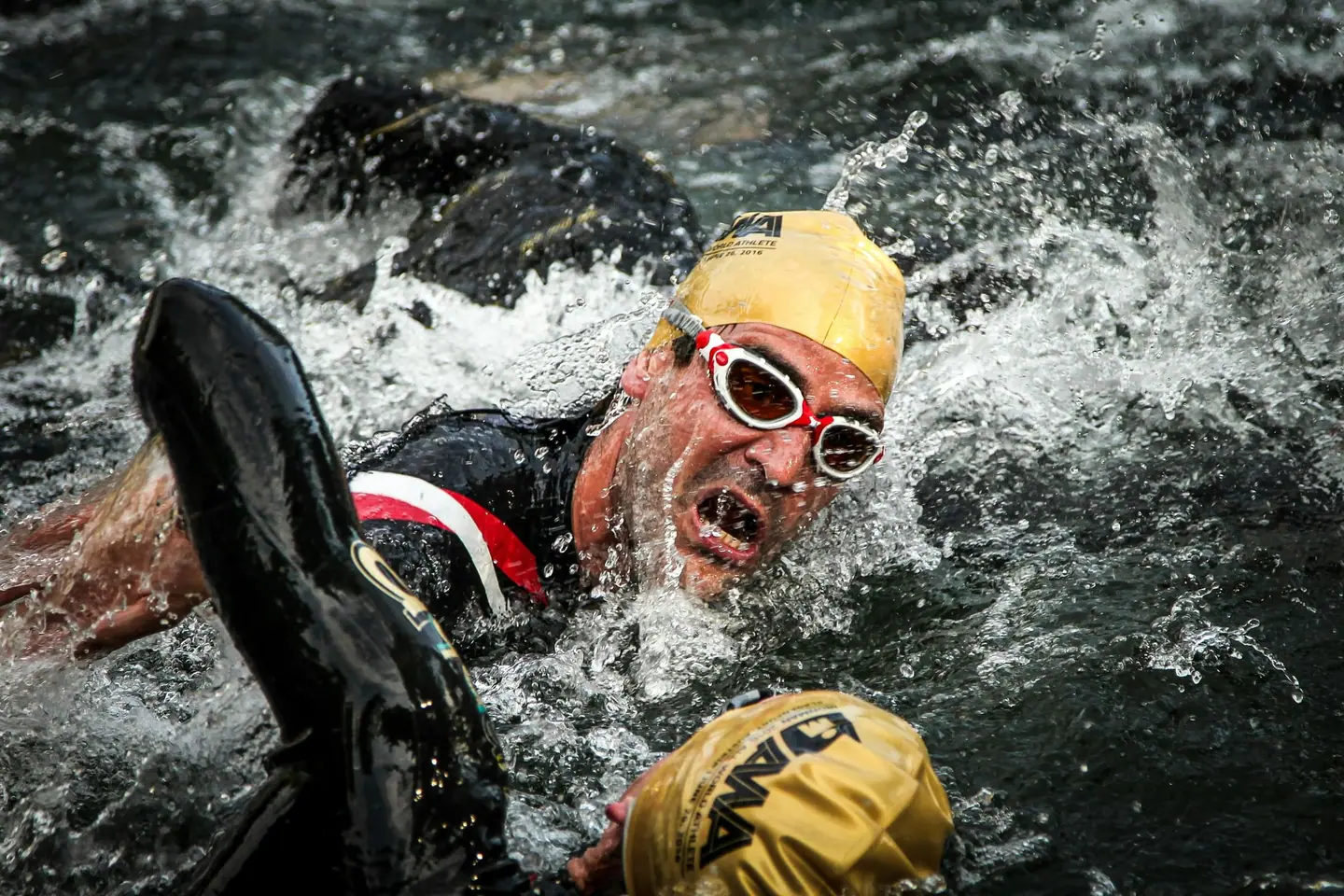
The conditions are urban and, in August, warm, even if the early nine o'clock start avoids the worst heat. The course runs mostly on asphalt and stone surfaces that store warmth, shade exists only in places along the Pegnitz, and the Wöhrder See is calm open water with few sighting points above the waterline. A drinking plan and an open-water routine with buoy sighting therefore deserve preparation.
Arrive fresh
Three priorities follow. First, bike sessions with re-accelerations from low speed built in: say 8 to 12 times 30 seconds after braking almost to a standstill, embedded in longer blocks at target race effort. Second, flat tempo runs at target ten-kilometre pace plus brick runs straight off hard, corner-heavy rides. Third, continuous 1,500-metre open-water swims including a turn out on the course, and getting used to a rolling start where you have to find your pace without a field around you.

Courses
Download each leg of DATAGROUP Triathlon Nuremberg as its own GPX file for your watch or bike computer.
Let YOUB adapt your plan for DATAGROUP Triathlon Nürnberg dynamically
Ben connects your goal, the course, current load, recovery, and calendar. Your plan stays pointed at race day even when real life is not perfectly plannable.
Everything about DATAGROUP Triathlon Nürnberg.
How long is DATAGROUP Triathlon Nuremberg?
DATAGROUP Triathlon Nuremberg is 51.5 km long. That distance shapes how much aerobic endurance, pace durability, and race-specific work belong in the training plan.
How much elevation gain does DATAGROUP Triathlon Nuremberg have?
DATAGROUP Triathlon Nuremberg has around 196 m of elevation gain over 51.5 km. That affects pacing, muscular load, and preparation for late-race sections.
What is the profile of the bike course at DATAGROUP Triathlon Nuremberg?
The bike course at DATAGROUP Triathlon Nuremberg is classified as Flat, averaging 4.4 vertical metres per kilometre. 97% of the route is flat, 3% climbs moderately (2 to 6%) and 0% is steeper than 6%.
Is there a GPX file for the DATAGROUP Triathlon Nuremberg course?
Yes. Each leg of DATAGROUP Triathlon Nuremberg is on this page as its own free GPX download — ready to import into Garmin, Wahoo, Komoot, Strava or any other app that reads GPX.
How should I prepare for DATAGROUP Triathlon Nuremberg?
Preparation for DATAGROUP Triathlon Nuremberg should account for 51.5 km, 196 m of elevation gain, current training load, and available training time. An adaptive plan helps place key sessions without ignoring recovery and real life.
What pacing strategy works for DATAGROUP Triathlon Nuremberg?
The pacing strategy for DATAGROUP Triathlon Nuremberg should reflect 51.5 km, 196 m of elevation gain, and your current fitness. Start controlled and keep margin for sections where the profile or fatigue makes target pace harder.
When does DATAGROUP Triathlon Nürnberg next take place?
No date has been announced for the next edition yet. The most recent one was held on August 9, 2026.
Where does DATAGROUP Triathlon Nürnberg take place?
DATAGROUP Triathlon Nürnberg takes place in Nürnberg, Germany.
Which distances does DATAGROUP Triathlon Nuremberg offer?
DATAGROUP Triathlon Nuremberg offers 3 distances — Kurzdistanz: 51.5 km; Sprintdistanz: 25.5 km; Supersprintdistanz: 13.5 km.
How do I register for DATAGROUP Triathlon Nuremberg?
Registration runs through the organiser: nuernberg-triathlon.de. YOUB shows you the course, elevation profile and training plan for your preparation.