Triathlon de Portalban.
The Triathlon de Portalban is a sprint on Lake Neuchâtel that climbs out of the lake plain immediately: 750 metres in the water, 20 kilometres of riding with 293 metres of climbing through the Broye and the Vully, and a 5 kilometre run that gains 74 metres in its first two kilometres. The only flat part here is the water.
No date has been announced for the next edition yet. The course, elevation and route profile are from the most recent edition.
Triathlon de Portalban: Course, Elevation & Route Profile
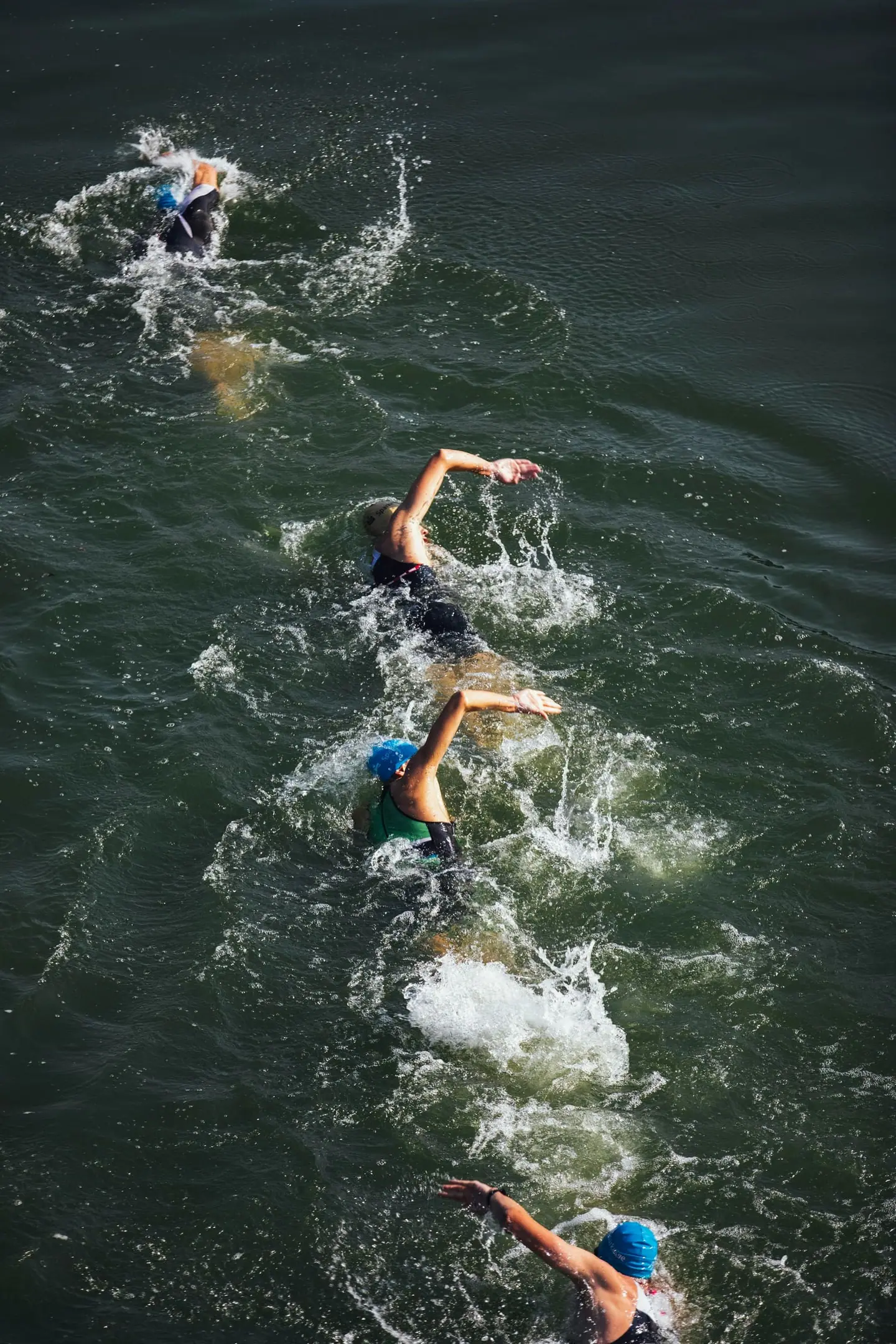
At 13:30 the race begins with a rolling start in Lake Neuchâtel: 750 metres from the kitesurfers' launch point back onto the beach at Delley-Portalban, marked with 60 buoys. Out of the water it is only a few metres into transition on the shore.
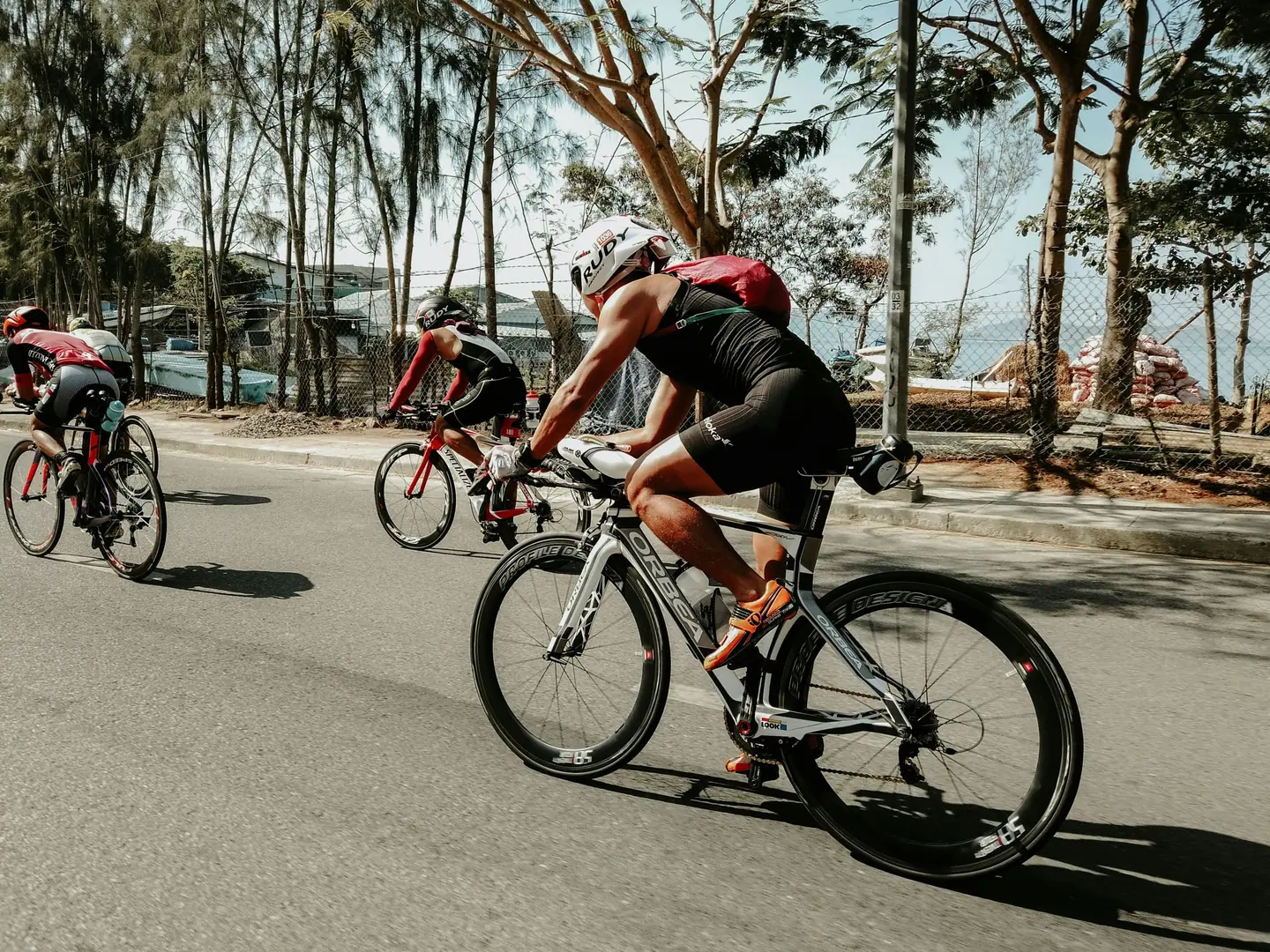
The bike lap leaves the lake plain at once. A 1.63 kilometre climb at 4.9 per cent begins after just 250 metres, and at kilometre 2.88 the steepest section follows: 1.15 kilometres at 7.1 per cent average with peaks of 15.2. From the start at 430 metres that takes you up to around 567 before the route rolls back to the lake via Chabrey, Montmagny, Salavaux, Villars-le-Grand, Les Friques, St-Aubin, Vallon and Gletterens, with another long climb of 1.55 kilometres from kilometre 11. Only 34 per cent of the lap is level, and the roads stay open to traffic.
The run is a scaled-down copy of the same pattern: after 480 flat metres the course climbs for 1.43 kilometres at 5.4 per cent and up to 10.6, through the Bois des Biolles forest and the village of Delley to around 505 metres, then falls back to the lakeshore across a good two and a half kilometres. 41.5 per cent of the run descends and only 22 per cent is level. Youth and age classes from U20 to M60 all race the same course.
+293 m
+88 m
Bike course
20 km · +293 m| Start | Length | Ø | Max. | Gain | Cat. |
|---|---|---|---|---|---|
| km 0.3 | 1.6 km | 4.9 % | 10.3 % | +80 m | Cat. 4 |
| km 2.9 | 1.2 km | 7.1 % | 15.2 % | +81 m | Cat. 4 |
| km 9.7 | 0.5 km | 3.7 % | 4.6 % | +19 m | — |
| km 11 | 1.6 km | 4.2 % | 7.1 % | +64 m | — |
Climb categories follow the road-cycling convention and rate the terrain itself (length and gradient) regardless of sport: Cat. 4 marks the easiest rated climbs, Cat. 1 the hardest, and HC (hors catégorie, “beyond categorization”) is reserved for the most brutal ascents. Short climbs below the Cat. 4 threshold stay unrated.
Run course
5 km · +88 m| Start | Length | Ø | Max. | Gain | Cat. |
|---|---|---|---|---|---|
| km 0.5 | 1.4 km | 5.4 % | 10.6 % | +77 m | — |
Climb categories follow the road-cycling convention and rate the terrain itself (length and gradient) regardless of sport: Cat. 4 marks the easiest rated climbs, Cat. 1 the hardest, and HC (hors catégorie, “beyond categorization”) is reserved for the most brutal ascents. Short climbs below the Cat. 4 threshold stay unrated.
How to pace Triathlon de Portalban.
Settle into the race
On this course everything is decided in the first minutes out of the water. Swim the 750 metres under control, because the first climb begins just 250 metres out of transition. A heart rate carried out of the lake cannot be brought back down there, since the road rises for four kilometres straight.
Spread the effort
The race is decided between bike kilometre 2.9 and 4. One point one five kilometres at 7.1 per cent with peaks above 15, ridden with a cold system and a wet trisuit: get out of the saddle there and you pay for it across the remaining 16 kilometres and again on the climb of the run. Choose an easy gear early, stay seated and ride to your breathing.
Finish strong
The main trap is the distribution of the run. The climb between kilometre 0.5 and 2 costs more than its 74 metres suggest, because it arrives immediately out of transition. After that come two and a half kilometres of descent: that is where the time actually is, but only if there is coordination left at the top. Run the climb deliberately with short strides at a high cadence and let the descent to the lakeshore run. Note the start time too: 13:30 in late August is the warmest point of the day, and the open roads of the Broye offer little shade.
Training plan for Triathlon de Portalban: 12-week build
Build all three disciplines
The Triathlon de Portalban takes roughly 80 to 115 minutes depending on your level. The demand is a sprint distance with a mountain profile: the first four kilometres on the bike already contain 160 metres of climbing, and the run too begins with a sustained climb rather than a run-in phase.
Brick sessions
What decides it is the ability to absorb a multi-minute supra-threshold effort straight after a change of discipline, twice at exactly the same point in the race, once on the bike and once on the run. The second factor is downhill running: 41.5 per cent of the run descends, and that is where the time is made on tired legs.
Practise transitions
The training emphasis therefore belongs on brick sessions with a climb immediately after the changeover: 3 to 4 rounds of 10 minutes on the bike at race effort followed straight away by a 3 to 4 minute climb at five to eight per cent. Add weekly downhill running, 5 to 6 times 400 to 600 metres on descending forest track, with short strides and a high cadence.
Arrive fresh
Add two or three open-water sessions sighting along a line of buoys, plus gearing that suits ramps of 15 per cent. Inside a sprint with 381 metres of climbing that is not a comfort question. And because the roads stay open and the gun goes at 13:30 in August, riding in real traffic and at least two sessions in afternoon warmth belong in the preparation.

Courses
Download each leg of Triathlon de Portalban as its own GPX file for your watch or bike computer.
Let YOUB adapt your plan for Triathlon de Portalban dynamically
Ben connects your goal, the course, current load, recovery, and calendar. Your plan stays pointed at race day even when real life is not perfectly plannable.
Everything about Triathlon de Portalban.
How long is Triathlon de Portalban?
Triathlon de Portalban is 25.75 km long. That distance shapes how much aerobic endurance, pace durability, and race-specific work belong in the training plan.
How much elevation gain does Triathlon de Portalban have?
Triathlon de Portalban has around 381 m of elevation gain over 25.75 km. That affects pacing, muscular load, and preparation for late-race sections.
What is the profile of the bike course at Triathlon de Portalban?
The bike course at Triathlon de Portalban is classified as Rolling, averaging 14.1 vertical metres per kilometre. 52% of the route is flat, 21% climbs moderately (2 to 6%) and 5% is steeper than 6%.
What climbs does the bike course at Triathlon de Portalban have?
The hardest climb on the bike course at Triathlon de Portalban starts at kilometre 2.9, runs for 1.2 km at an average of 7.1% and gains 81 metres. Cycling-convention rating: Cat. 4. 4 climbs are mapped in total.
Is there a GPX file for the Triathlon de Portalban course?
Yes. Each leg of Triathlon de Portalban is on this page as its own free GPX download — ready to import into Garmin, Wahoo, Komoot, Strava or any other app that reads GPX.
How should I prepare for Triathlon de Portalban?
Preparation for Triathlon de Portalban should account for 25.75 km, 381 m of elevation gain, current training load, and available training time. An adaptive plan helps place key sessions without ignoring recovery and real life.
What pacing strategy works for Triathlon de Portalban?
The pacing strategy for Triathlon de Portalban should reflect 25.75 km, 381 m of elevation gain, and your current fitness. Start controlled and keep margin for sections where the profile or fatigue makes target pace harder.
When does Triathlon de Portalban 2026 next take place?
No date has been announced for the next edition yet. The most recent one was held on August 22, 2026.
Where does Triathlon de Portalban 2026 take place?
Triathlon de Portalban 2026 takes place in Portalban, Switzerland.
Which distances does Triathlon de Portalban offer?
Triathlon de Portalban offers 2 distances — Triathlon Individuel: 25.75 km; Relais Mixte: 25.75 km.
How do I register for Triathlon de Portalban?
Registration runs through the organiser: triathlonportalban.ch. YOUB shows you the course, elevation profile and training plan for your preparation.