Köln Triathlon.
The sprint distance of the Köln Triathlon packs the whole race into the middle of the city: the swim is in the Rhine, the bike leg runs along the left bank, the run keeps the cathedral in view. Apart from short bridge ramps the profile is flat; what counts here is speed from the first metre, not tactics spread over hours.
Köln Triathlon 2027: Course, Route Profile & Map
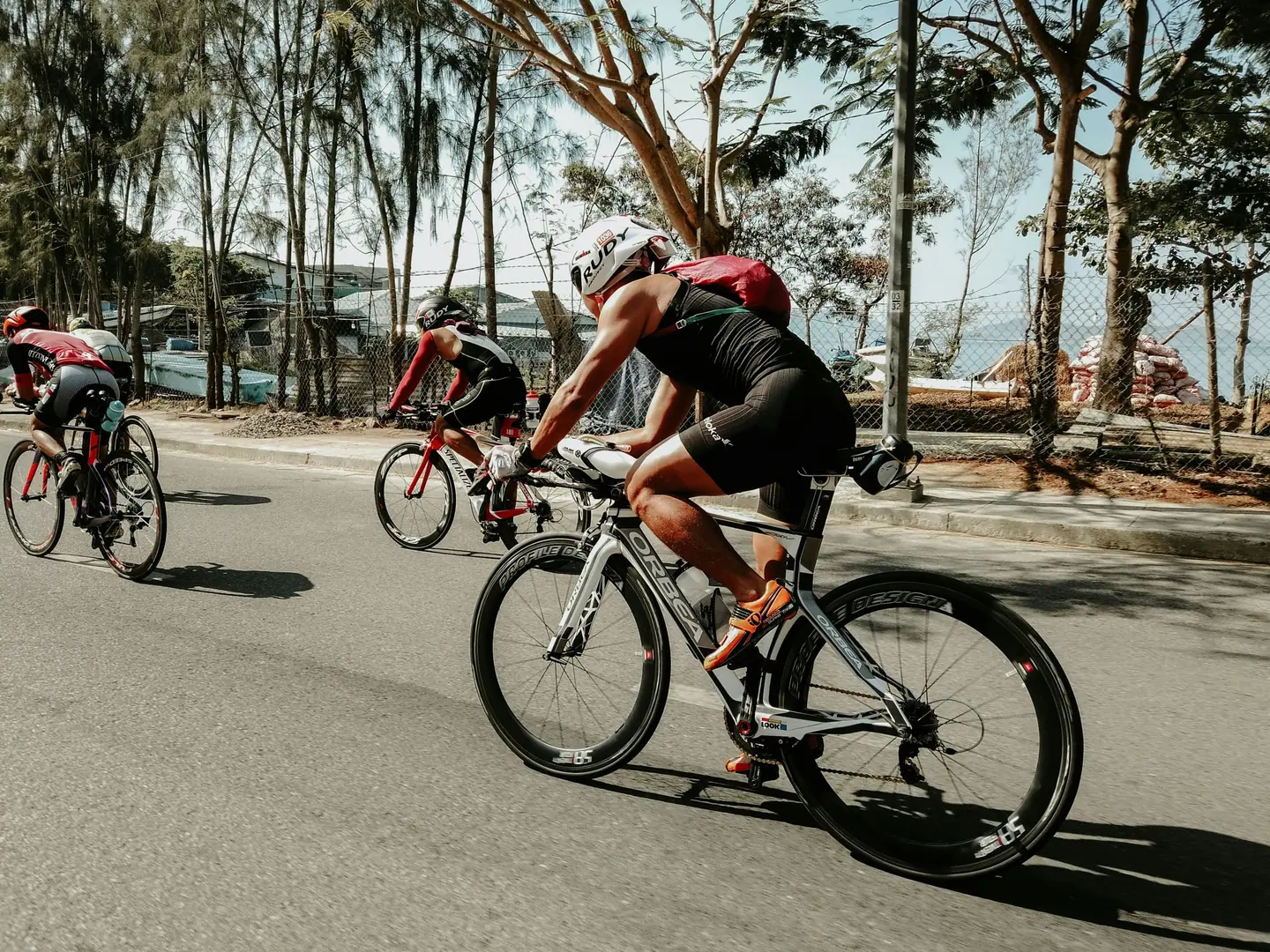
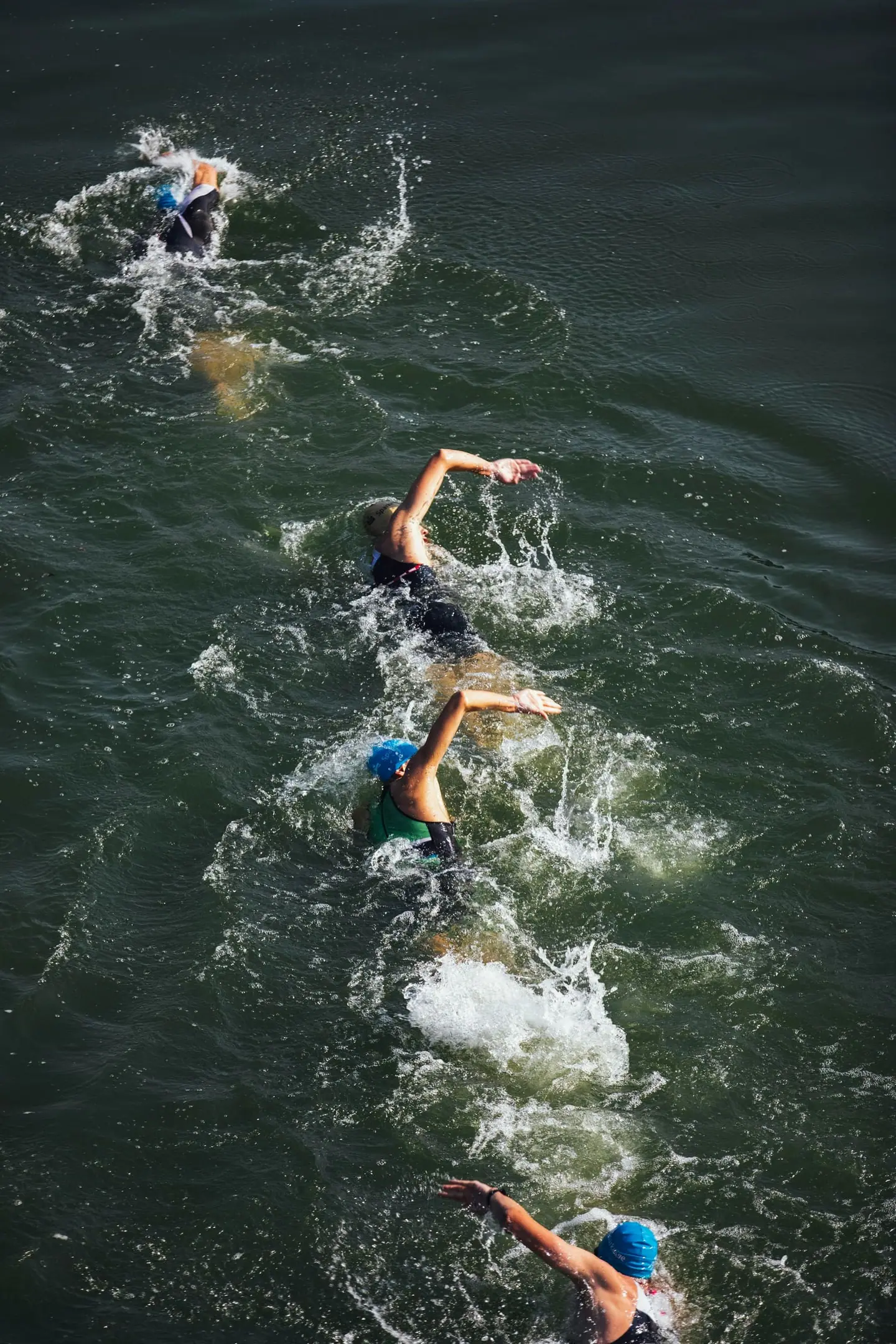
The opening is the race's trademark: a swim in the Rhine, where the river's current plays a tangible role, something almost no other German city race offers. The bike course follows along the left bank, flat, fast and defined by long straights, interrupted only by one short rise after a few kilometres and the ramps of the bridges.
The closing run stays by the river and delivers the Cologne postcard along the way: the cathedral, the riverside and the Hohenzollernbrücke, on which the course crosses the river. Across the whole sprint distance around 105 metres of elevation accumulate, almost half the course is completely level, and the steep moments are limited to short bridge and underpass ramps. That makes the race an ideal fast city triathlon, as an entry into the format and as a full-throttle test for the experienced alike.
+77 m
+28 m
Bike course
20 km · +77 m| Start | Length | Ø | Max. | Gain | Cat. |
|---|
Climb categories follow the road-cycling convention and rate the terrain itself (length and gradient) regardless of sport: Cat. 4 marks the easiest rated climbs, Cat. 1 the hardest, and HC (hors catégorie, “beyond categorization”) is reserved for the most brutal ascents. Short climbs below the Cat. 4 threshold stay unrated.
Run course
4.8 km · +28 m| Start | Length | Ø | Max. | Gain | Cat. |
|---|
Climb categories follow the road-cycling convention and rate the terrain itself (length and gradient) regardless of sport: Cat. 4 marks the easiest rated climbs, Cat. 1 the hardest, and HC (hors catégorie, “beyond categorization”) is reserved for the most brutal ascents. Short climbs below the Cat. 4 threshold stay unrated.
How to pace Köln Triathlon.
Settle into the race
A sprint distance forgives little tactics but rewards courage: you ride and run just at threshold, and on this flat course there is no terrain to hide behind for recovery. Divide the race by effort, not by course: a controlled-hard swim, a bike leg at the upper limit of what still allows a fast run, then a run that builds to the line.
Spread the effort
Two points decide the race. First, the Rhine: the current rewards a smart line and punishes sighting mistakes twice over, so invest the seconds it takes to sight properly. Second, the switch to the run: after a flat, fast bike leg at constantly high cadence, the first run kilometre determines whether the legs arrive or the pace breaks.
Finish strong
The trap is the short bridge ramps: sprint every one of them and you collect anaerobic debts that a 20-odd-minute run leaves no time to repay.
Training plan for Köln Triathlon: 12-week build
Build all three disciplines
For the sprint distance, total effort sits around 1:10 to 1:50 hours depending on your level, a race that lives at or just below threshold throughout.
Brick sessions
The demand is intense but even: the flat profile creates no load changes, so the hardness comes entirely from your chosen pace and the quick transitions between disciplines. Decisive are the swim in a flowing river and the ability to find a fast run pace straight off the bike.
Practise transitions
Train short and sharp accordingly: threshold sessions on bike and run, intervals slightly above race speed, and regular brick sessions with short, quick runs immediately after dismounting. On this distance the transitions themselves are training content; over roughly an hour of racing, two well-drilled transitions are quickly worth half a minute.
Arrive fresh
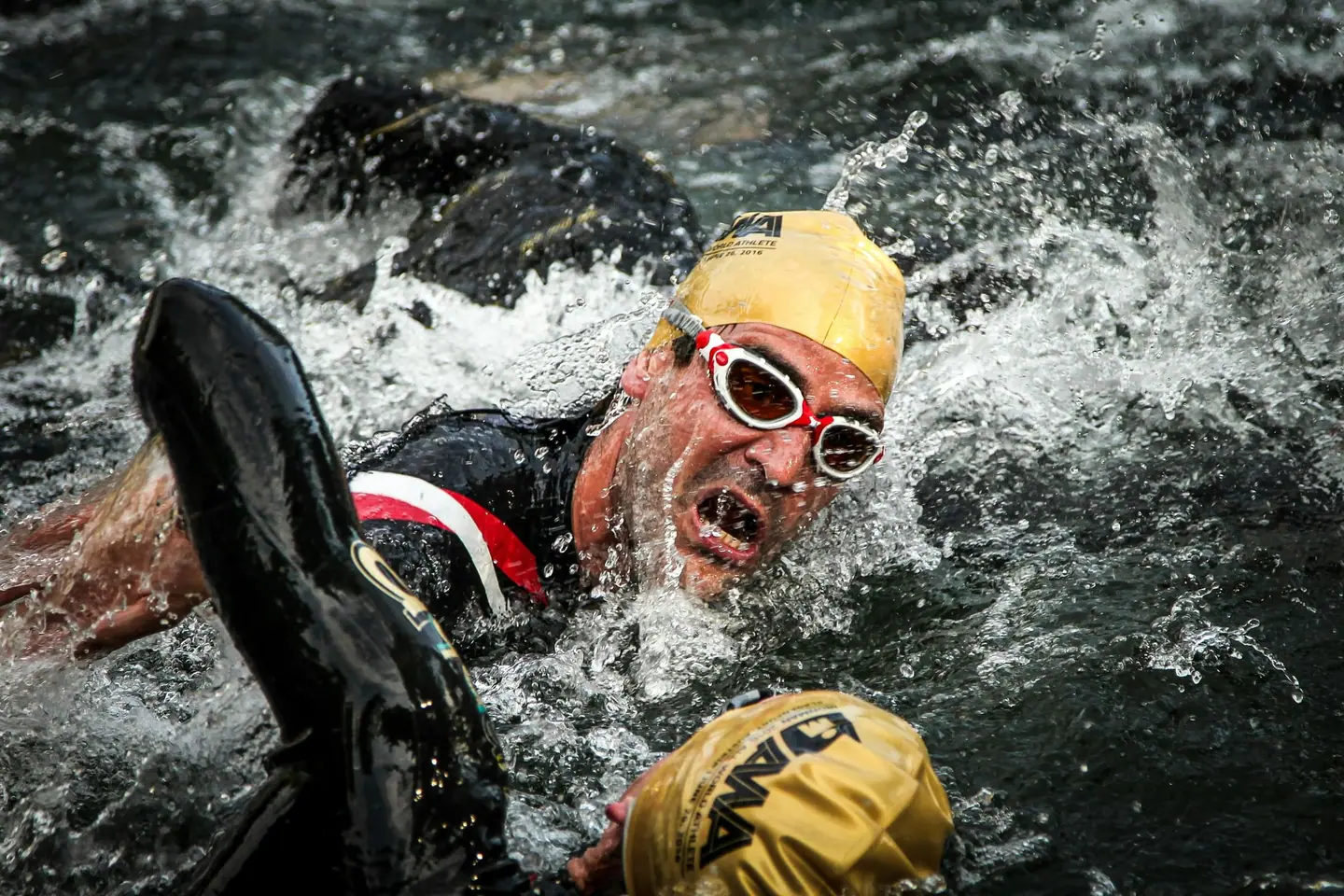
For open water: schedule at least a handful of sessions in open conditions with sighting practice, ideally in slightly moving water, so that on race day the Rhine commands respect but brings no surprises.

Courses
Download each leg of Köln Triathlon as its own GPX file for your watch or bike computer.
Let YOUB adapt your plan for Köln Triathlon dynamically
Ben connects your goal, the course, current load, recovery, and calendar. Your plan stays pointed at race day even when real life is not perfectly plannable.
Everything about Köln Triathlon.
How long is Köln Triathlon?
Köln Triathlon is 26.2 km long. That distance shapes how much aerobic endurance, pace durability, and race-specific work belong in the training plan.
How much elevation gain does Köln Triathlon have?
Köln Triathlon has around 105 m of elevation gain over 26.2 km. That affects pacing, muscular load, and preparation for late-race sections.
What is the profile of the bike course at Köln Triathlon?
The bike course at Köln Triathlon is classified as Flat, averaging 3.6 vertical metres per kilometre. 76% of the route is flat, 12% climbs moderately (2 to 6%) and 0% is steeper than 6%.
Is there a GPX file for the Köln Triathlon course?
Yes. Each leg of Köln Triathlon is on this page as its own free GPX download — ready to import into Garmin, Wahoo, Komoot, Strava or any other app that reads GPX.
How should I prepare for Köln Triathlon?
Preparation for Köln Triathlon should account for 26.2 km, 105 m of elevation gain, current training load, and available training time. An adaptive plan helps place key sessions without ignoring recovery and real life.
What pacing strategy works for Köln Triathlon?
The pacing strategy for Köln Triathlon should reflect 26.2 km, 105 m of elevation gain, and your current fitness. Start controlled and keep margin for sections where the profile or fatigue makes target pace harder.
When does Köln Triathlon take place?
Köln Triathlon takes place on September 5, 2027.
Where does Köln Triathlon take place?
Köln Triathlon takes place in Köln, Germany.
Which distances does Köln Triathlon offer?
Köln Triathlon offers 4 distances — Sprint: 26.2 km; Olympisch: 57.5 km; Mitteldistanz: 108.9 km; Olympische Staffel: 57.5 km.
How do I register for Köln Triathlon?
Registration runs through the organiser: koeln-triathlon.com. YOUB shows you the course, elevation profile and training plan for your preparation.