12. Sparkassen Kanal Triathlon.
The Sparkassen Kanal Triathlon is a short-course triathlon with an unusual balance: 500 metres in the Kiel Canal, 25 kilometres alone on the canal embankment and a flat 5 kilometres around the event site. More than four fifths of the racing distance sits on the bike, and because drafting is explicitly forbidden here, the day is decided exactly where nobody is allowed to help you. Also known as Kanal Triathlon.
No date has been announced for the next edition yet. The course, elevation and route profile are from the most recent edition.
Sparkassen Kanal Triathlon: Course, Route Profile & Map
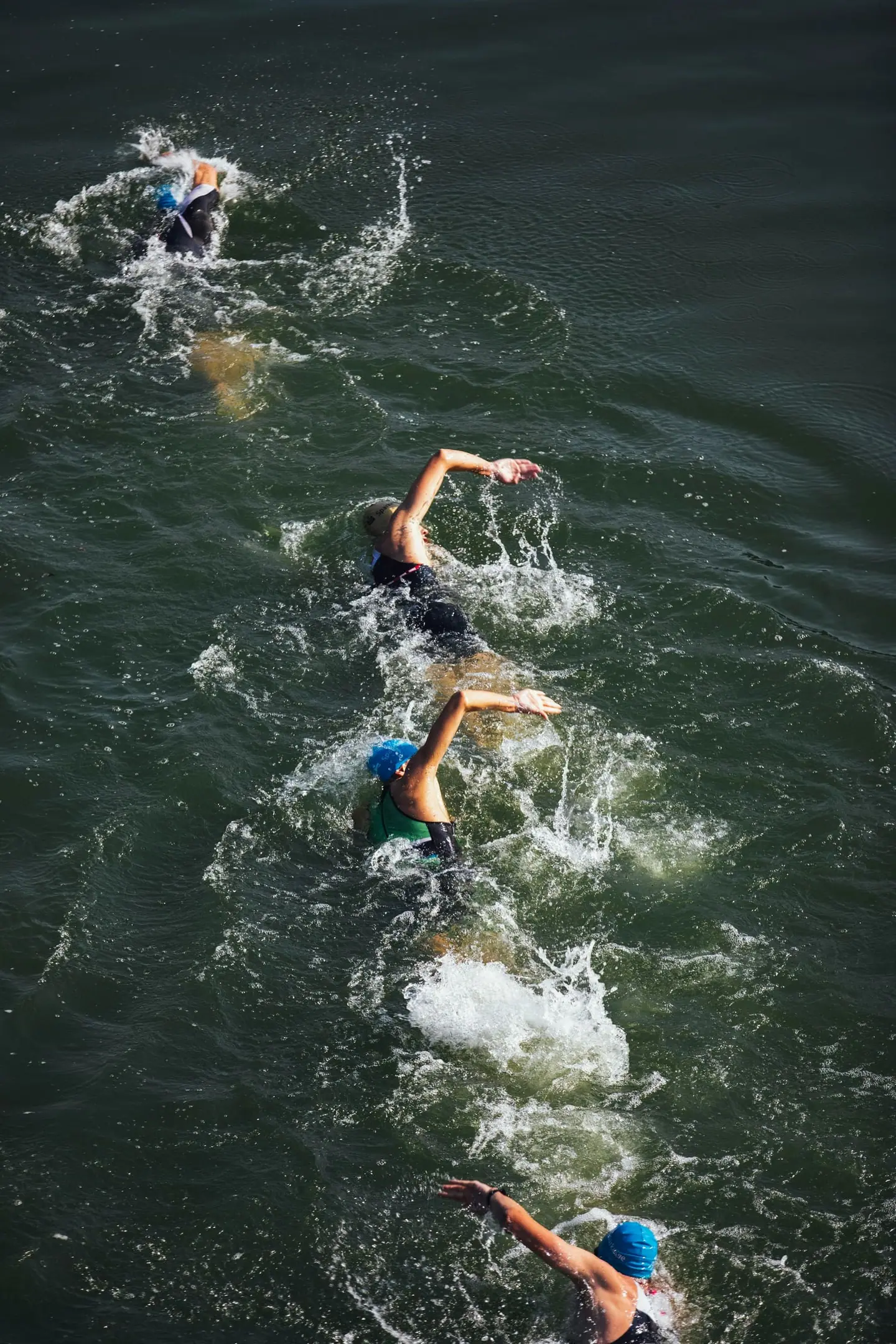
The day does not open with a mass start but with a rolling one: women, men and relay teams all set off together, each athlete entering the water when they reach the start line. The swim is a single open-water loop in the Kiel Canal along the Kreishafen basin, and the whole race is organised from that basin: T1, T2 and the finish all sit on the same site beneath the Rendsburg high-level railway bridge.
That makes the race a chain of three very different blocks with two short seams. In T1 you go straight from open, cool water into a riding position you then have to hold in one piece, with no climb and no group to carry you. T2 reverses the task: off the bike and immediately onto a flat five kilometres whose pace comes from you alone. None of the three parts gives you relief from the next.
The race is put on by SG Athletico Büdelsdorf, with the field capped at 240 athletes and the event embedded in the SH-Netz-Cup rowing weekend at the Kreishafen. One peculiarity is written into the race rules: if the canal is too cold, the organiser runs a duathlon instead, 5 kilometres of running, 25 kilometres on the bike and another 5 kilometres of running over the same bike and run courses. Entering here means entering two possible races.
+30 m
+1 m
Bike course
25 km · +30 m| Start | Length | Ø | Max. | Gain | Cat. |
|---|
Climb categories follow the road-cycling convention and rate the terrain itself (length and gradient) regardless of sport: Cat. 4 marks the easiest rated climbs, Cat. 1 the hardest, and HC (hors catégorie, “beyond categorization”) is reserved for the most brutal ascents. Short climbs below the Cat. 4 threshold stay unrated.
Run course
5 km · +1 m| Start | Length | Ø | Max. | Gain | Cat. |
|---|
Climb categories follow the road-cycling convention and rate the terrain itself (length and gradient) regardless of sport: Cat. 4 marks the easiest rated climbs, Cat. 1 the hardest, and HC (hors catégorie, “beyond categorization”) is reserved for the most brutal ascents. Short climbs below the Cat. 4 threshold stay unrated.
How to pace Sparkassen Kanal Triathlon.
Settle into the race
Plan the race by its proportions rather than by feel. The 500 metres are the shortest block of the day and the one where you can win least: with a rolling start the person beside you may have set off minutes earlier or later, so racing for position in the water buys you nothing. Swim under control and leave the canal with a heart rate you can bring back down in transition.
Spread the effort
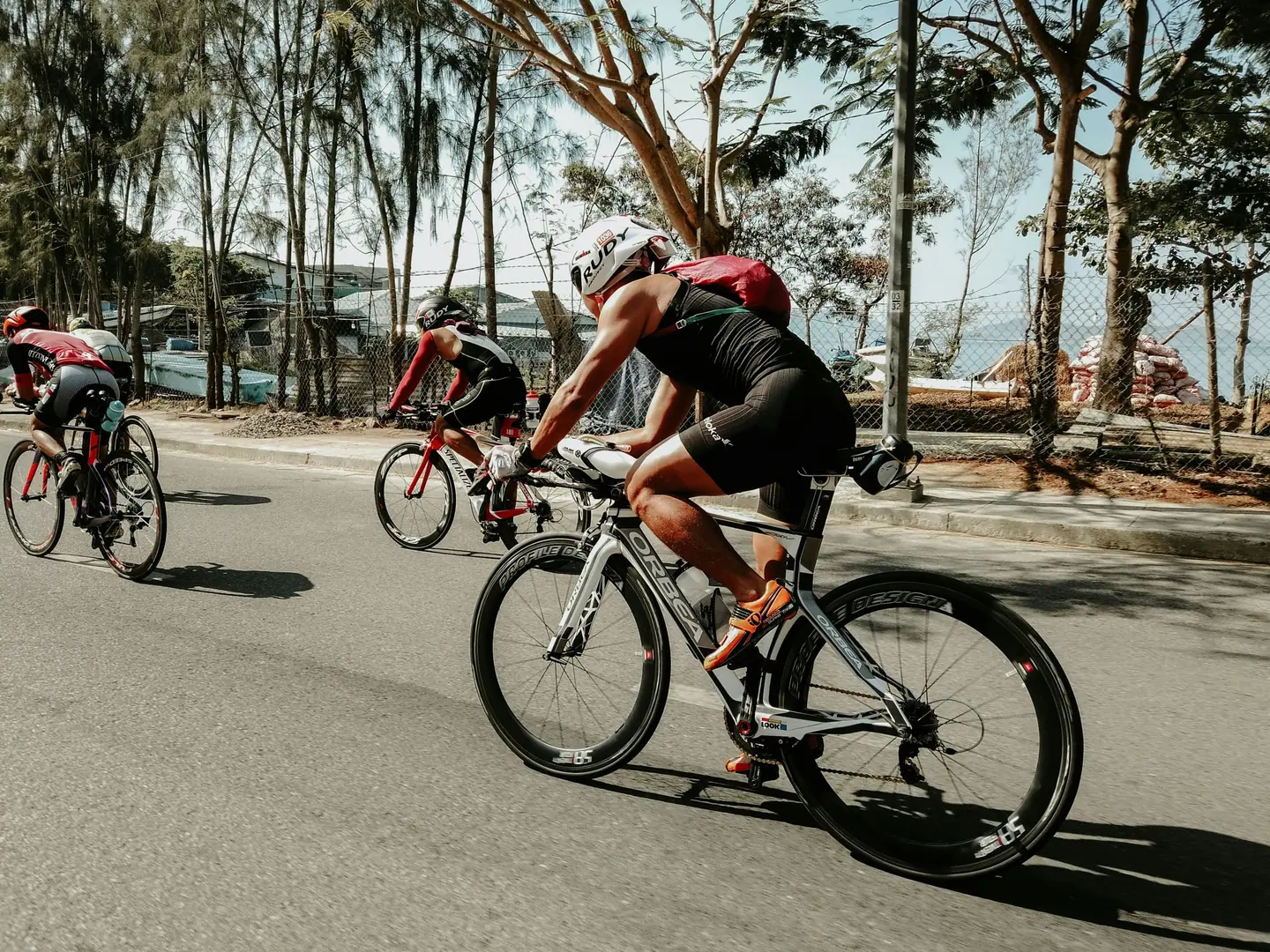
The triathlon is decided on the bike, and decided alone. The absolute ban on drafting means the 25 kilometres are a genuine individual time trial: no group papers over an over-ambitious opening, and no terrain caps your power for you. This is exactly where less experienced starters overspend, because a flat course accepts every watt you hand it.
Finish strong
An over-hard bike split is paid for immediately afterwards, since nothing in the closing run changes your rhythm for you. And if water temperature triggers the duathlon, the task moves forward: a fast five kilometres now comes first, and the mistake becomes an opening pace the 25 kilometres behind it still have to carry.
Training plan for Sparkassen Kanal Triathlon: 12-week build
Build all three disciplines
Budget roughly 1:15 to 1:45 hours for the whole race, depending on your level. The demand is largely even and aerobic: one short, intense swim block, then two long stretches with no real recovery, because neither terrain nor shelter takes the pressure off. The only honest changes of rhythm all day are the two transitions.
Brick sessions
So it is the transitions, not the fine detail of each leg, that decide your race. Finding the riding position out of open water without throwing the first kilometres into the red, and then switching the legs back to a running stride, costs most athletes more time than any refinement out on the road. Practise both deliberately: 500 metres swum briskly and straight onto the bike, and separately, starting a run immediately after a hard ride.
Practise transitions
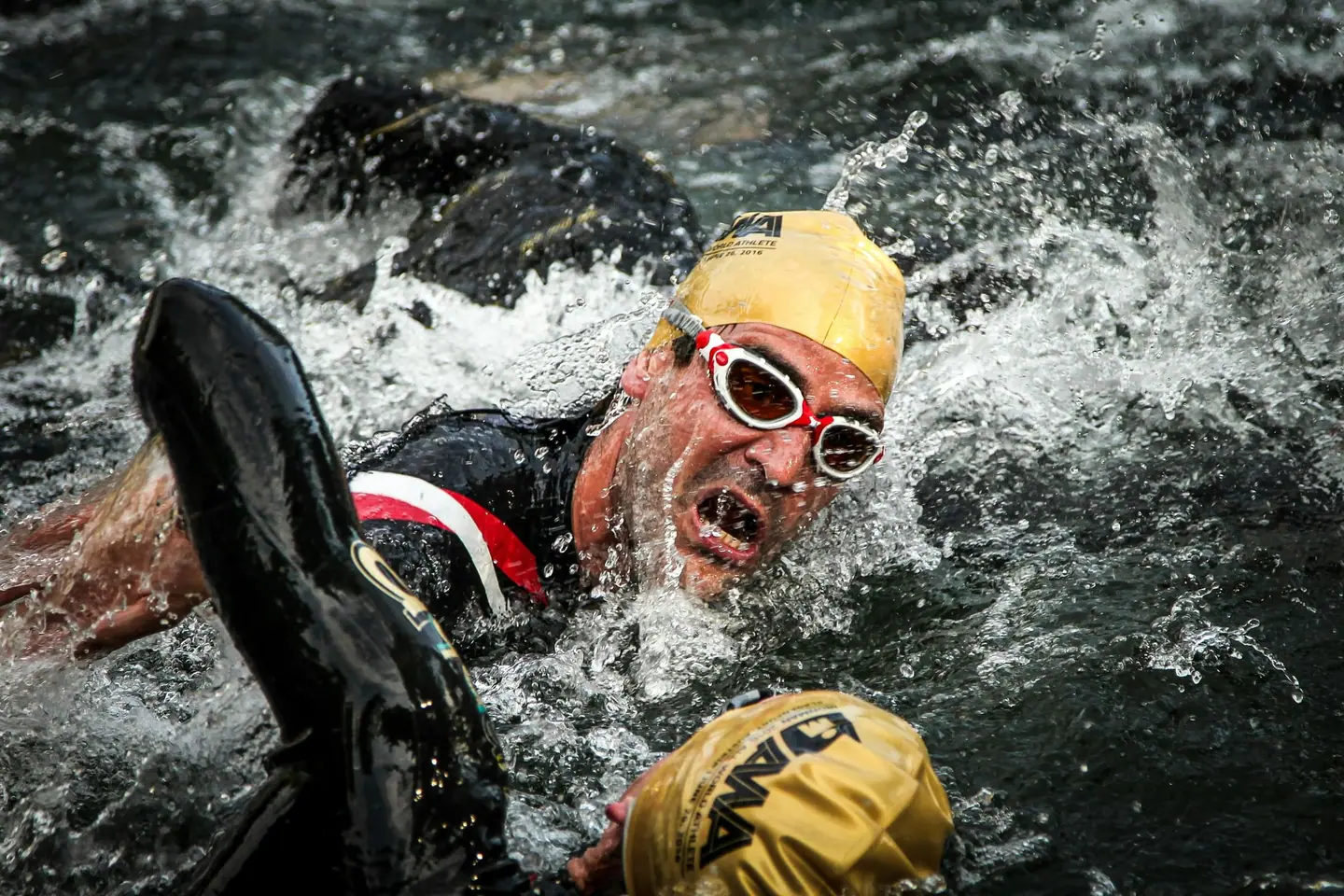
Conditions are early September on the Schleswig-Holstein coast: mild to cool, often windy, and with a canal water temperature that decides whether there is a swim at all. Spend the summer getting used to open water without a lane line and to sighting off landmarks rather than a pool wall. The organiser does not hand out swim caps for environmental reasons, so your own is part of the kit list.
Arrive fresh
Build your preparation around what nobody here does for you: even power on the bike with no wheel in front of you, and a five kilometre run you can still execute cleanly after a hard hour. Schedule the alternative version at least once as well, a run-bike-run set over the same distances, so that a late switch to the duathlon on race day is not a new experience.

Courses
Download each leg of Sparkassen Kanal Triathlon as its own GPX file for your watch or bike computer.
Let YOUB adapt your plan for 12. Sparkassen Kanal Triathlon dynamically
Ben connects your goal, the course, current load, recovery, and calendar. Your plan stays pointed at race day even when real life is not perfectly plannable.
Everything about 12. Sparkassen Kanal Triathlon.
How long is Sparkassen Kanal Triathlon?
Sparkassen Kanal Triathlon is 30.5 km long. That distance shapes how much aerobic endurance, pace durability, and race-specific work belong in the training plan.
How much elevation gain does Sparkassen Kanal Triathlon have?
Sparkassen Kanal Triathlon has around 31 m of elevation gain over 30.5 km. That affects pacing, muscular load, and preparation for late-race sections.
What is the profile of the bike course at Sparkassen Kanal Triathlon?
The bike course at Sparkassen Kanal Triathlon is classified as Flat, averaging 1.2 vertical metres per kilometre. 97% of the route is flat, 2% climbs moderately (2 to 6%) and 0% is steeper than 6%.
Is there a GPX file for the Sparkassen Kanal Triathlon course?
Yes. Each leg of Sparkassen Kanal Triathlon is on this page as its own free GPX download — ready to import into Garmin, Wahoo, Komoot, Strava or any other app that reads GPX.
How should I prepare for Sparkassen Kanal Triathlon?
Preparation for Sparkassen Kanal Triathlon should account for 30.5 km, 31 m of elevation gain, current training load, and available training time. An adaptive plan helps place key sessions without ignoring recovery and real life.
What pacing strategy works for Sparkassen Kanal Triathlon?
The pacing strategy for Sparkassen Kanal Triathlon should reflect 30.5 km, 31 m of elevation gain, and your current fitness. Start controlled and keep margin for sections where the profile or fatigue makes target pace harder.
When does 12. Sparkassen Kanal Triathlon next take place?
No date has been announced for the next edition yet. The most recent one was held on September 5, 2026.
Where does 12. Sparkassen Kanal Triathlon take place?
12. Sparkassen Kanal Triathlon takes place in Rendsburg, Germany.
Which distances does Sparkassen Kanal Triathlon offer?
Sparkassen Kanal Triathlon offers 2 distances — Jedermann: 30.5 km; Staffel: 30.5 km.
How do I register for Sparkassen Kanal Triathlon?
Registration runs through the organiser: kanal-triathlon.de. YOUB shows you the course, elevation profile and training plan for your preparation.