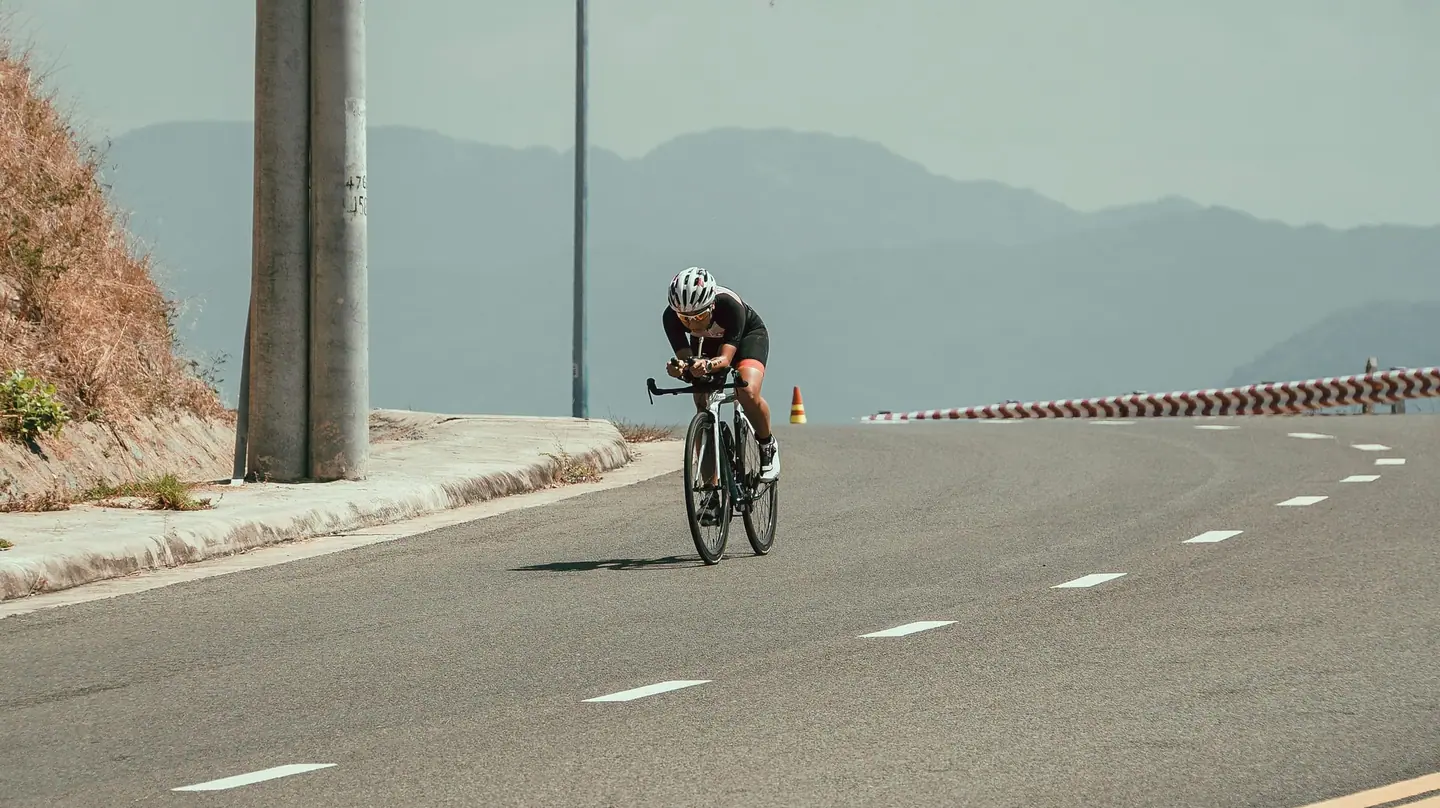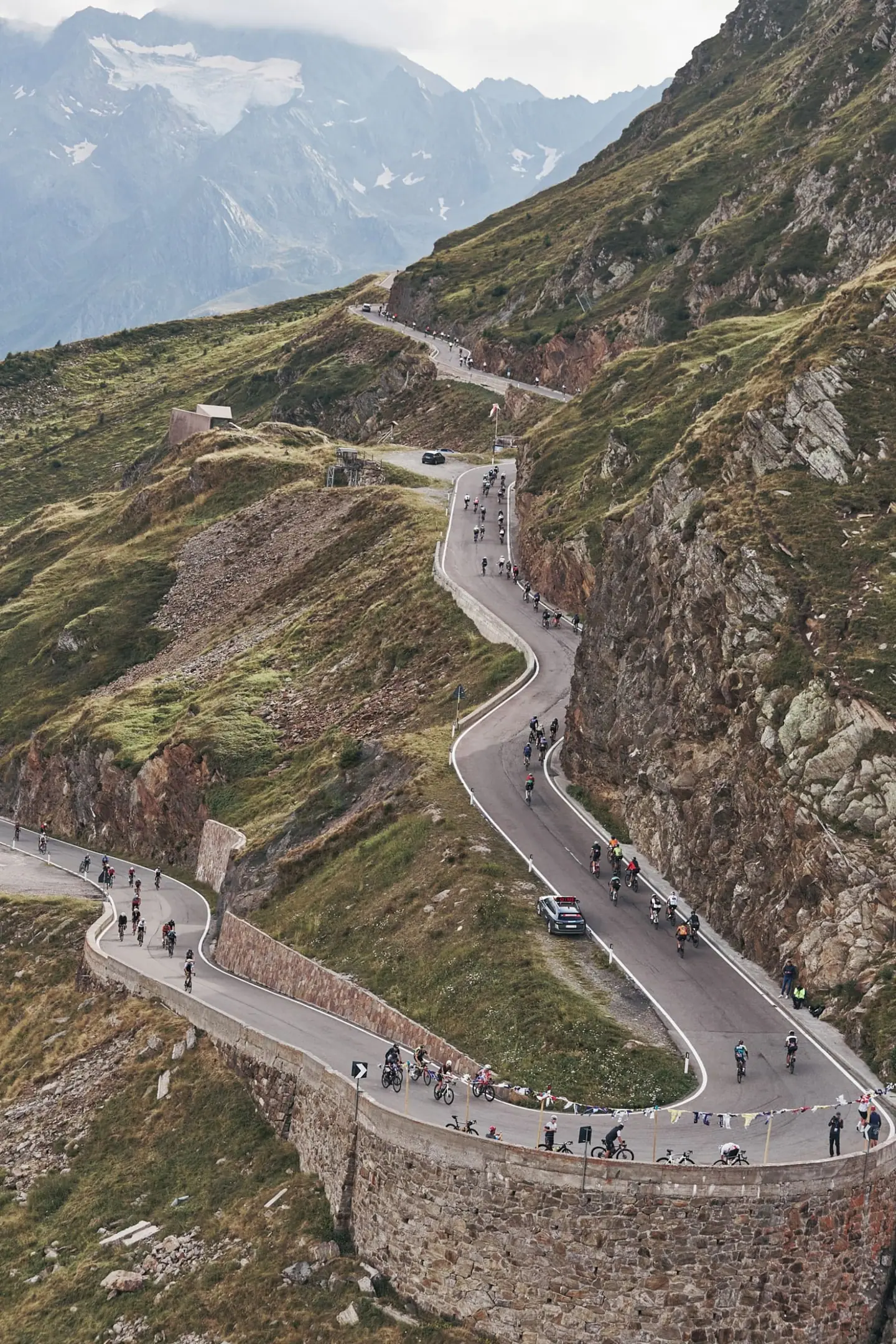
The Hills Gravel Race.
The Hills Gravel Race takes you 120 kilometres on gravel from Susegana through the UNESCO-listed Prosecco Hills. Its 17 iconic climbs are all short, so the preparation is not for one big mountain but for restarting the effort again and again, above all in the second half.
The Hills Gravel Race 2027: Course, Elevation & Route Profile
The loop starts and finishes in Susegana at just under 70 metres and wastes no time: at kilometres 4 and 11 it goes straight into the hills, the second climb lifting you to around 200 metres. The route then drops back and runs from about kilometre 20 to 45 with almost no height gain. It is the calmest part of the day, but only the approach to the real race.
From kilometre 46 the ground rises. Two climbs of a little over a kilometre and a half each reach the high point at just under 350 metres, the course falls away again, and at kilometre 72 comes the steepest ramp: just over a kilometre at 9.4 percent on average, with peaks near 16 percent. After the long descent to kilometre 90 there are three more short climbs, the last at kilometre 106, before the road drops from a little over 200 metres back to Susegana.
The Prosecco Hills are more than a backdrop here, because their relief shapes the race: no pass gives the day its order, only a sequence of short gravel ramps of which the organisers call 17 iconic. The event is meant as a competition and a shared ride through the region at once, with camaraderie an explicit part of it.
| Start | Length | Ø | Max. | Gain | Cat. |
|---|---|---|---|---|---|
| km 3.8 | 1.7 km | 5.6 % | 7.1 % | +97 m | Cat. 4 |
| km 11 | 1.7 km | 7.5 % | 11 % | +129 m | Cat. 4 |
| km 56.7 | 1.8 km | 7 % | 9.8 % | +124 m | Cat. 4 |
| km 60.3 | 1.6 km | 7.1 % | 9.4 % | +111 m | Cat. 4 |
| km 71.8 | 1.3 km | 9.4 % | 15.7 % | +120 m | Cat. 4 |
| km 90.2 | 1.9 km | 5.1 % | 13.2 % | +95 m | Cat. 4 |
| km 95.8 | 1.2 km | 8 % | 10.5 % | +97 m | Cat. 4 |
| km 106.4 | 1.7 km | 5.9 % | 11.5 % | +97 m | Cat. 4 |
Climb categories follow the road-cycling convention and rate the terrain itself (length and gradient) regardless of sport: Cat. 4 marks the easiest rated climbs, Cat. 1 the hardest, and HC (hors catégorie, “beyond categorization”) is reserved for the most brutal ascents. Short climbs below the Cat. 4 threshold stay unrated.
How to pace The Hills Gravel Race.
Sit in early
The race splits into a calm first part and a hard second one. Ride the two early climbs clearly below threshold and use the flat stretch to about kilometre 45 for eating and drinking rather than setting a pace. That is exactly where the terrain tempts you to take time you will pay back at a high price.
Ration your effort
The decisive stretch runs from kilometre 57 to 74. Three climbs follow in quick succession, and you want to reach the third and steepest with something left. Its peaks on gravel are less a question of power than of traction: stay seated so the rear wheel bites, and shift before the ramp forces you to.
Race the finale
The trap lies beyond it. The descent to kilometre 90 feels like the end of the work, but the last three climbs meet tired legs, and the first of them still touches 13 percent. If the reserve is gone by then, the final 30 kilometres cost more than the flat stretch ever gave you.
Training plan for The Hills Gravel Race: 12-week build
Build endurance
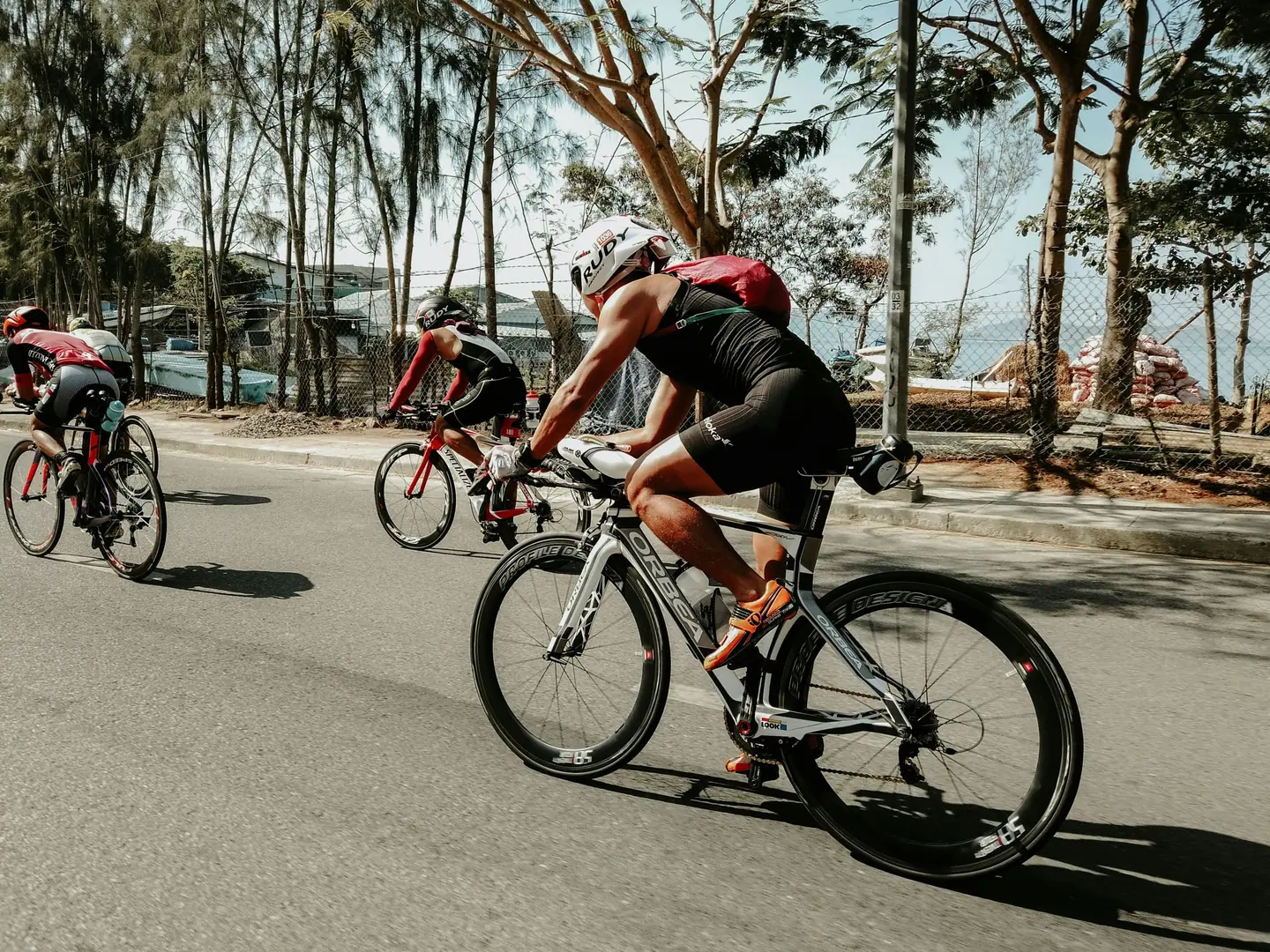
Age-group riders should expect roughly five to seven hours on race day. The effort stays long and aerobic but keeps being broken by short hard spikes. Almost a third of the distance goes uphill, never for long at a time, and that defines the demand: you do not settle into one rhythm, you find it again after every ramp.
Train the climbs
The core of the race only starts after some 50 kilometres, and the last climbs arrive around four hours into the saddle. So build your long rides with the hard work in the second half: easy hours first, then repeated climbs of eight to twelve minutes close to threshold, and finally a few short steep ramps. That teaches you to go again after a long base effort, not just to climb well when fresh.
Ride race-specific
The surface needs sessions of its own. Practise steep ramps on loose gravel while seated, keeping the pressure on the pedals even, and ride descents deliberately at the end of long outings, when braking and line choice suffer from fatigue. Use those rides to test the tyres and pressures you plan to race on.
Arrive fresh
The 20 March date falls early in the year, so your longest sessions land in winter and need planning well ahead. The organisers provide feed and technical support, but eating regularly for the full duration still has to be rehearsed beforehand. If you can travel, ride the organisers' training route, at least the section from kilometre 57 onwards.

Courses
Download the The Hills Gravel Race course as a GPX file for your watch or bike computer.
Let YOUB adapt your plan for The Hills Gravel Race dynamically
Ben connects your goal, the course, current load, recovery, and calendar. Your plan stays pointed at race day even when real life is not perfectly plannable.
Everything about The Hills Gravel Race.
How long is The Hills Gravel Race?
The Hills Gravel Race is 120 km long. That distance shapes how much aerobic endurance, pace durability, and race-specific work belong in the training plan.
How much elevation gain does The Hills Gravel Race have?
The Hills Gravel Race has around 1,845 m of elevation gain over 120 km. That affects pacing, muscular load, and preparation for late-race sections.
What is the route profile of The Hills Gravel Race?
The Hills Gravel Race is classified as Rolling, averaging 15.3 vertical metres per kilometre. 39% of the route is flat, 27% climbs moderately (2 to 6%) and 5% is steeper than 6%.
What climbs does The Hills Gravel Race have?
The hardest climb of The Hills Gravel Race starts at kilometre 11, runs for 1.7 km at an average of 7.5% and gains 129 metres. Cycling-convention rating: Cat. 4. 8 climbs are mapped in total.
Is The Hills Gravel Race a loop course?
Yes, The Hills Gravel Race is laid out as a loop: start and finish are in the same place.
Is there a GPX file for the The Hills Gravel Race course?
Yes. The The Hills Gravel Race course is on this page as a free GPX download — ready to import into Garmin, Wahoo, Komoot, Strava or any other app that reads GPX.
How should I prepare for The Hills Gravel Race?
Preparation for The Hills Gravel Race should account for 120 km, 1,845 m of elevation gain, current training load, and available training time. An adaptive plan helps place key sessions without ignoring recovery and real life.
What pacing strategy works for The Hills Gravel Race?
The pacing strategy for The Hills Gravel Race should reflect 120 km, 1,845 m of elevation gain, and your current fitness. Start controlled and keep margin for sections where the profile or fatigue makes target pace harder.
When does The Hills Gravel Race 2027 take place?
The Hills Gravel Race 2027 takes place on March 20, 2027.
Where does The Hills Gravel Race 2027 take place?
The Hills Gravel Race 2027 takes place in Susegana, Italy.
How do I register for The Hills Gravel Race?
Registration runs through the organiser: thehillsgravelrace.it. YOUB shows you the course, elevation profile and training plan for your preparation.