Triathlon d'Évian.
The Lé-Man Full Distance is the long-course race of the Évian Triathlon: 3.8 km in Lake Geneva, 180 km over the passes of the Chablais up to the Col de la Ramaz, and a marathon on the Évian lakefront to finish. It is a mountain race with a lakeshore at both ends, and for many the day ends by headlamp.
Évian Triathlon 2027: Course, Elevation & Route Profile
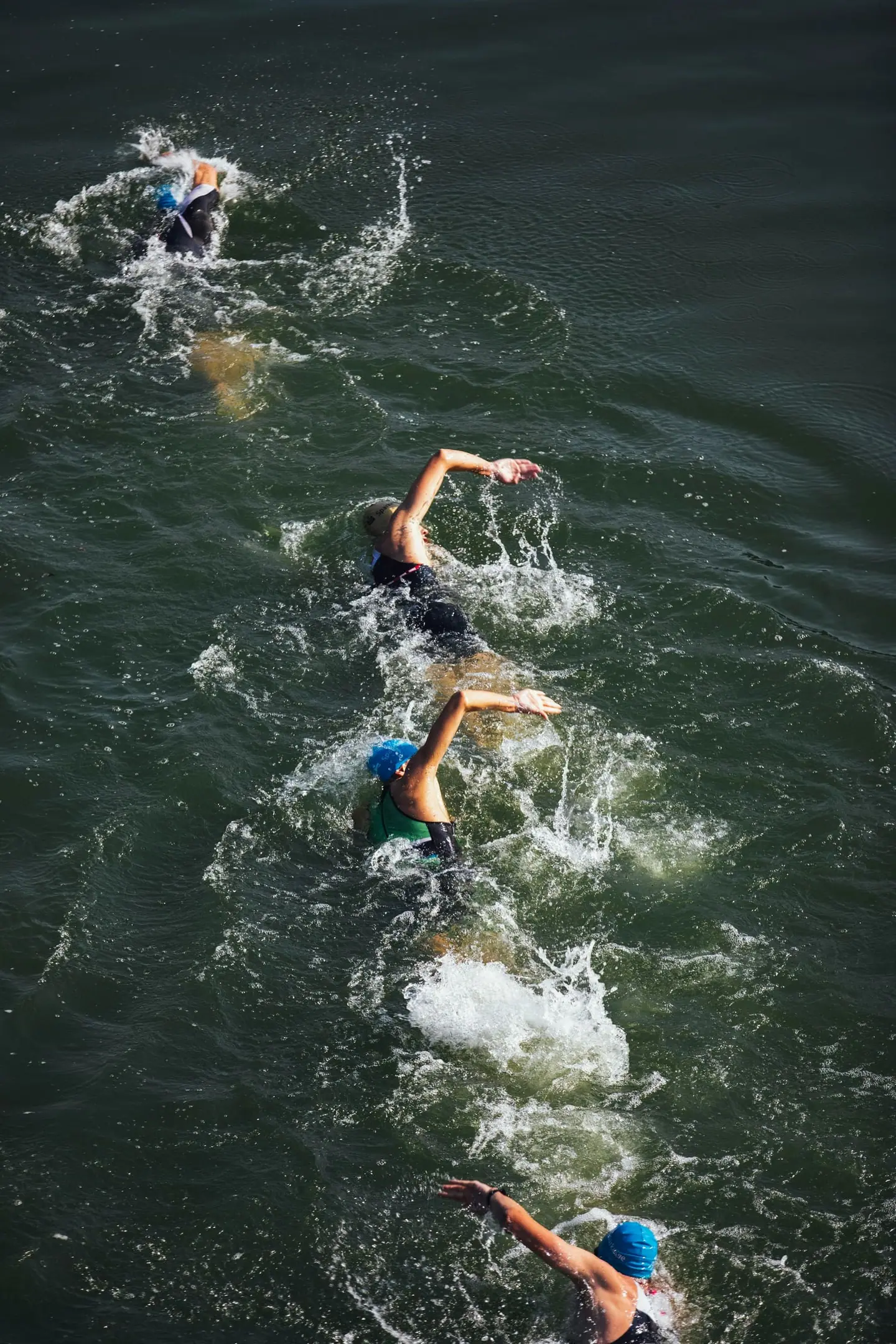
The start is a rolling start at Évian's Base Nautique. The swim includes an Australian exit and finishes opposite the Palais Lumière, where spectators can walk alongside the athletes into transition. Bikes go into the park on Friday; racking the day before is compulsory.
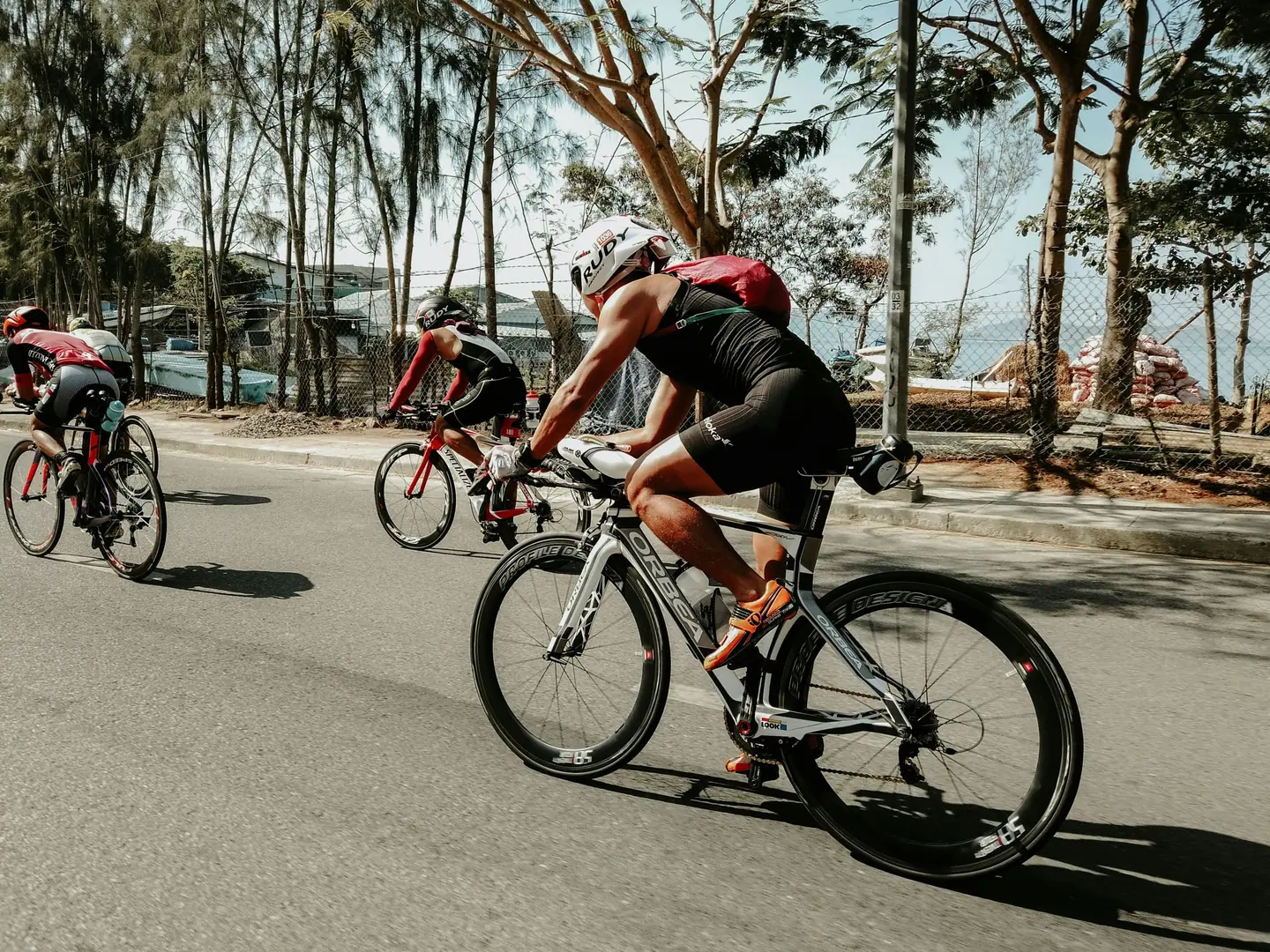
The bike climbs from the lakeshore into the hinterland: the Col de Saxel, Col de Terramont and Col de Jambaz shape the first half, the Col de la Ramaz with its tunnels and ramps past nine percent comes around km 100, then the Encrenaz and, late on, the Col du Corbier. Roads stay open to traffic, and front and rear lights are compulsory because of the tunnels.
Back in Évian a marathon in six laps follows the quays past the Palais Lumière, Place Rouge, the harbour and the Base Nautique. It is flat but partly poorly lit late in the day; anyone running after 8 pm needs a headlamp. The overall cut-off is 16 hours 45 minutes after the start.
+4,512 m
+167 m
Bike course
180 km · +4,512 m| Start | Length | Ø | Max. | Gain | Cat. |
|---|---|---|---|---|---|
| km 2.1 | 3.4 km | 4.8 % | 8.4 % | +162 m | Cat. 3 |
| km 42.3 | 4.1 km | 5.3 % | 22.4 % | +218 m | Cat. 3 |
| km 58.2 | 5.5 km | 5.1 % | 13 % | +276 m | Cat. 3 |
| km 91.5 | 8.2 km | 8.6 % | 38.8 % | +704 m | Cat. 1 |
| km 100.3 | 3.5 km | 5.9 % | 18.9 % | +206 m | Cat. 3 |
| km 112.2 | 2.4 km | 6.7 % | 23.6 % | +159 m | Cat. 4 |
| km 134 | 2 km | 8 % | 25.1 % | +162 m | Cat. 3 |
| km 136.2 | 3.8 km | 9.2 % | 29.1 % | +344 m | Cat. 2 |
Climb categories follow the road-cycling convention and rate the terrain itself (length and gradient) regardless of sport: Cat. 4 marks the easiest rated climbs, Cat. 1 the hardest, and HC (hors catégorie, “beyond categorization”) is reserved for the most brutal ascents. Short climbs below the Cat. 4 threshold stay unrated.
Run course
42.2 km · +167 m| Start | Length | Ø | Max. | Gain | Cat. |
|---|
Climb categories follow the road-cycling convention and rate the terrain itself (length and gradient) regardless of sport: Cat. 4 marks the easiest rated climbs, Cat. 1 the hardest, and HC (hors catégorie, “beyond categorization”) is reserved for the most brutal ascents. Short climbs below the Cat. 4 threshold stay unrated.
How to pace Évian Triathlon.
Settle into the race
The race is decided in the second half of the bike. The Ramaz arrives after about 100 km as the longest and most irregular climb of the day, and the Corbier is placed late on purpose. Ride the Saxel, Terramont and Jambaz clearly within yourself, even where they feel like rolling roads.
Spread the effort
The trap is counting on the flat marathon. Anyone planning to win time back on the lakefront overcooks the climbs and then faces six laps on empty legs. After close to 4,000 m of climbing, the marathon is for most a race against the cut-offs at 14 and 28 km, not a tempo run.
Finish strong
Treat the descents as recovery but not as a break in concentration: they are twisting, the roads are open, and the organiser even advises against aero bars because of them.
Training plan for Évian Triathlon: 12-week build
Build all three disciplines
For age-groupers this is a day of roughly 12 to almost 17 hours, most of it on the bike and uphill. The load is long and aerobic, broken by passages on the cols where you hold controlled high power for an hour or more.
Brick sessions
The decisive sections are the Ramaz and the Corbier in the second half of the bike. Prepare with long rides that back-load their climbing, ideally over 150 km with several passes, followed by brick runs that teach you what flat running feels like after a lot of climbing.
Practise transitions
Conditions are those of a September day on the lake: cool mornings, a swim where the wetsuit rule depends on water and air temperature, and a marathon that runs into the evening. Practise descending on open roads, ride with lights, and do some long runs at dusk with a headlamp.
Arrive fresh
The emphases are therefore climbing volume at aerobic intensity, descending skills, and marathon work aimed at even pace under fatigue rather than speed.

Courses
Download each leg of Évian Triathlon as its own GPX file for your watch or bike computer.
Let YOUB adapt your plan for Triathlon d'Évian dynamically
Ben connects your goal, the course, current load, recovery, and calendar. Your plan stays pointed at race day even when real life is not perfectly plannable.
Everything about Triathlon d'Évian.
How long is Évian Triathlon?
Évian Triathlon is 226 km long. That distance shapes how much aerobic endurance, pace durability, and race-specific work belong in the training plan.
How much elevation gain does Évian Triathlon have?
Évian Triathlon has around 4,679 m of elevation gain over 226 km. That affects pacing, muscular load, and preparation for late-race sections.
What is the profile of the bike course at Évian Triathlon?
The bike course at Évian Triathlon is classified as Mountainous, averaging 25.2 vertical metres per kilometre. 15% of the route is flat, 32% climbs moderately (2 to 6%) and 10% is steeper than 6%.
What climbs does the bike course at Évian Triathlon have?
The hardest climb on the bike course at Évian Triathlon starts at kilometre 91.5, runs for 8.2 km at an average of 8.6% and gains 704 metres. Cycling-convention rating: Cat. 1. 8 climbs are mapped in total.
Is there a GPX file for the Évian Triathlon course?
Yes. Each leg of Évian Triathlon is on this page as its own free GPX download — ready to import into Garmin, Wahoo, Komoot, Strava or any other app that reads GPX.
How should I prepare for Évian Triathlon?
Preparation for Évian Triathlon should account for 226 km, 4,679 m of elevation gain, current training load, and available training time. An adaptive plan helps place key sessions without ignoring recovery and real life.
What pacing strategy works for Évian Triathlon?
The pacing strategy for Évian Triathlon should reflect 226 km, 4,679 m of elevation gain, and your current fitness. Start controlled and keep margin for sections where the profile or fatigue makes target pace harder.
When does Triathlon d'Évian take place?
Triathlon d'Évian takes place on September 11, 2027.
Where does Triathlon d'Évian take place?
Triathlon d'Évian takes place in Évian-les-Bains, France.
Which distances does Évian Triathlon offer?
Évian Triathlon offers 8 distances — Lé-Man Full Distance: 226 km; Lé-Man Full Distance Relais: 226 km; Lé-Man Half Distance: 113 km; Lé-Man Half Distance Relais: 113 km; Olympique: 51.5 km; Olympique Relais: 51.5 km and 2 more.
How do I register for Évian Triathlon?
Registration runs through the organiser: triathlonevian.com. YOUB shows you the course, elevation profile and training plan for your preparation.