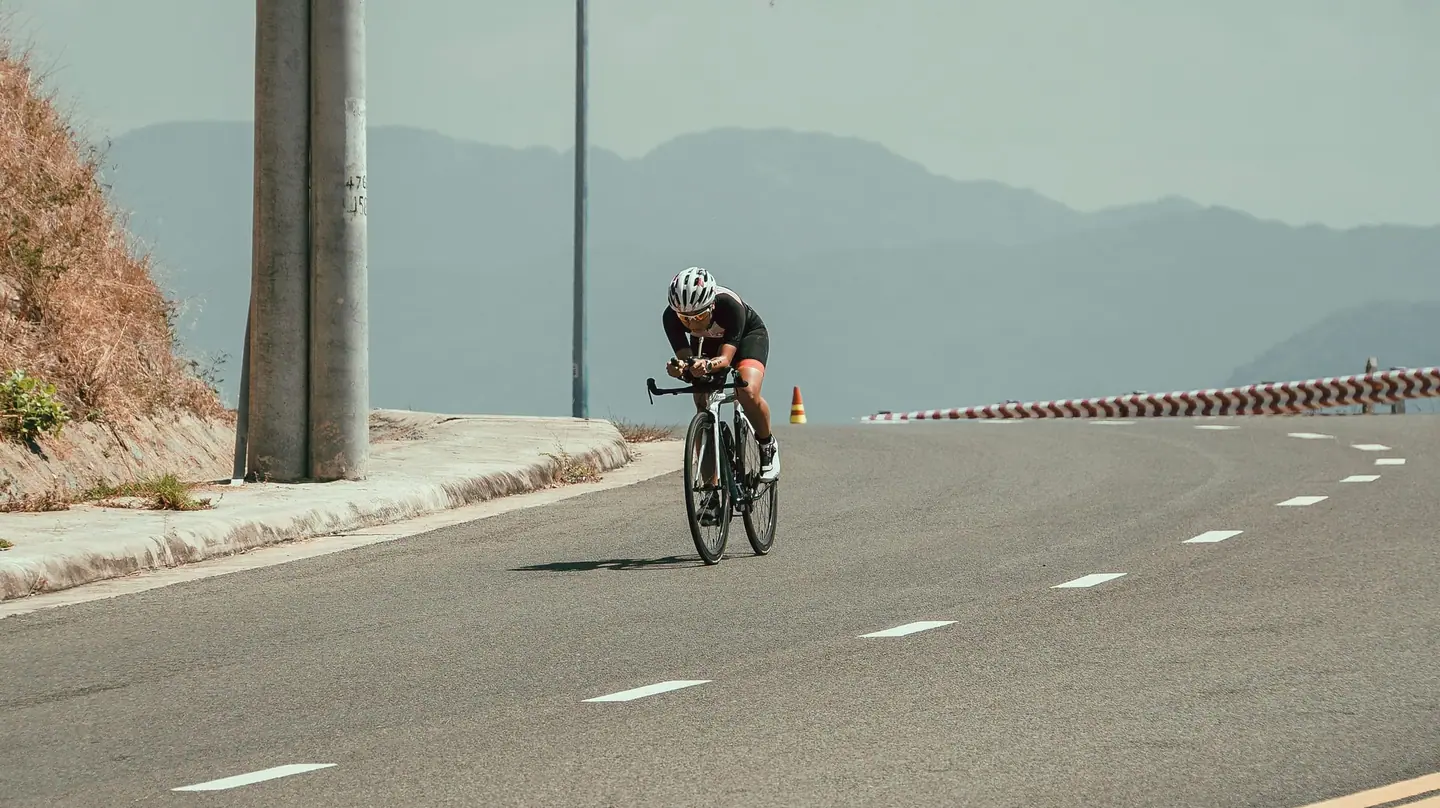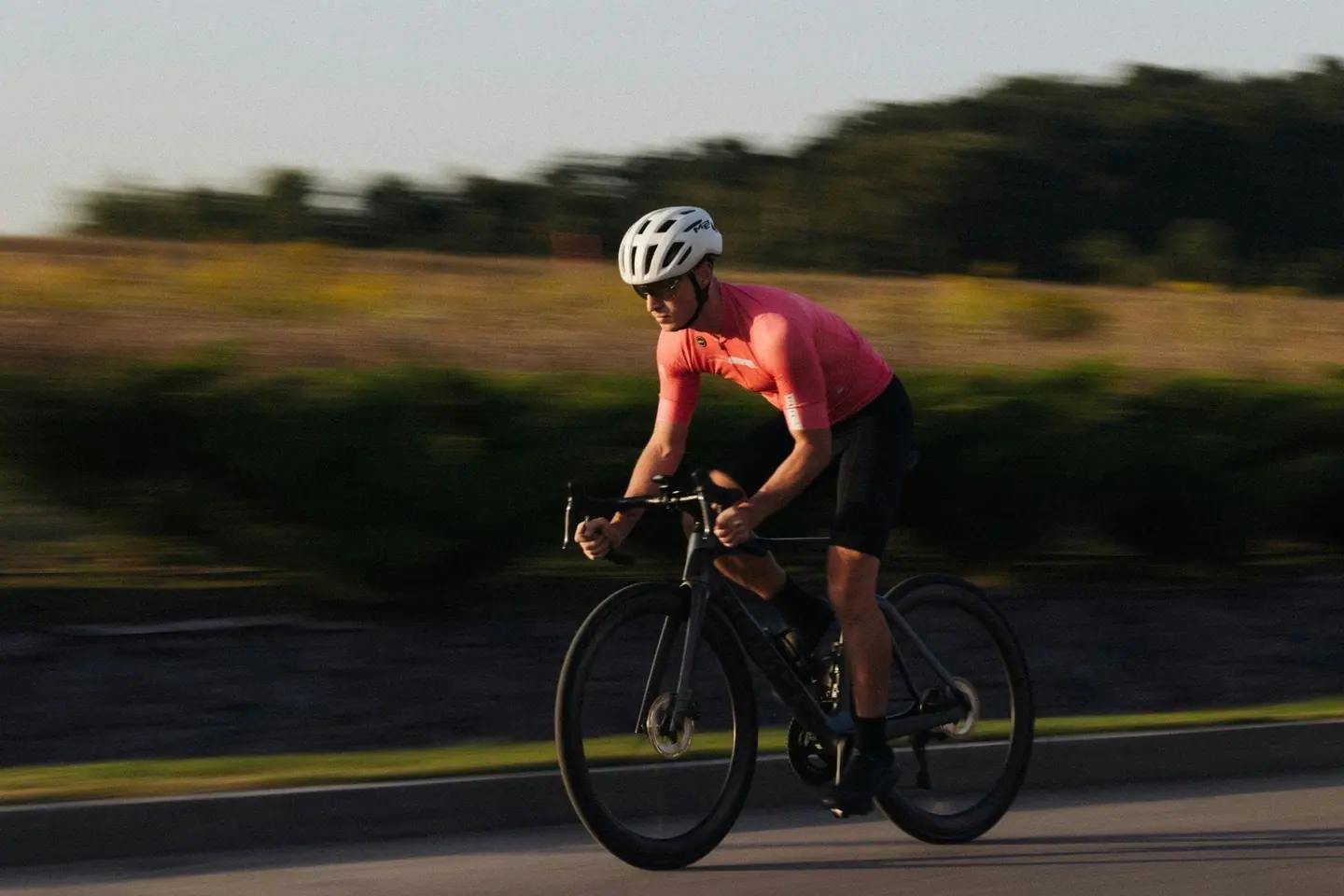
ZeitFahr-CUP Speed Seibersdorf 44.
The ZeitFahr-CUP Speed Seibersdorf 44 rides the same arrow-flat Leitha valley loop as the 22-kilometre version, but twice. That turns a half-hour time trial into an effort of roughly an hour, and the task shifts with it: what decides the day is not peak output but how much of it survives the second lap.
No date has been announced for the next edition yet. The course, elevation and route profile are from the most recent edition.
ZeitFahr-CUP Speed Seibersdorf 44: Course, Route Profile & Map
As with the short version, the start is at the Hauptstrasse car park in Seibersdorf at just under 190 metres. The loop runs via Reisenberg to Hof an der Leitha and back, ridden twice for just under 45 kilometres in total.
None of that changes the terrain: the course stays between 176 and 202 metres, with no categorised climb and no descent that hands back recovery. What changes is the repetition. The second lap covers already-familiar kilometres, and that knowledge is a double-edged tool: it allows precise pacing, but it also makes every first-lap mistake felt a second time.
As across the series, classification is split between time trial bike and road bike and between women's and men's fields, with a pair classification running alongside. Riders set off at intervals from midday with no drafting permitted. Over an hour in the open valley the wind becomes the defining factor, and because there are two laps, every wind section hits twice.
How to pace ZeitFahr-CUP Speed Seibersdorf 44.
Sit in early
An hour of flat time trialling is a different task from half an hour. Target output sits closer to threshold than above it, and the difference between a good and a bad time is made almost entirely on the second lap.
Ration your effort
Use the lapped course as a tool. Ride the first lap deliberately as the more controlled of the two, at an output you are confident you can repeat. Coming through the start you then have a real split and a solid comparison rather than just a feeling. Ride the first lap as a personal best and you will lose more on the second than you gained.
Race the finale
The real trap is the repetition of the wind sections. The headwind stretch comes twice, and the second time on tired legs. Hold output rather than speed there, stay in the aero position and accept the lower speed. And because the effort lasts an hour, unlike the short version, drinking genuinely belongs in the plan.
Training plan for ZeitFahr-CUP Speed Seibersdorf 44: 12-week build
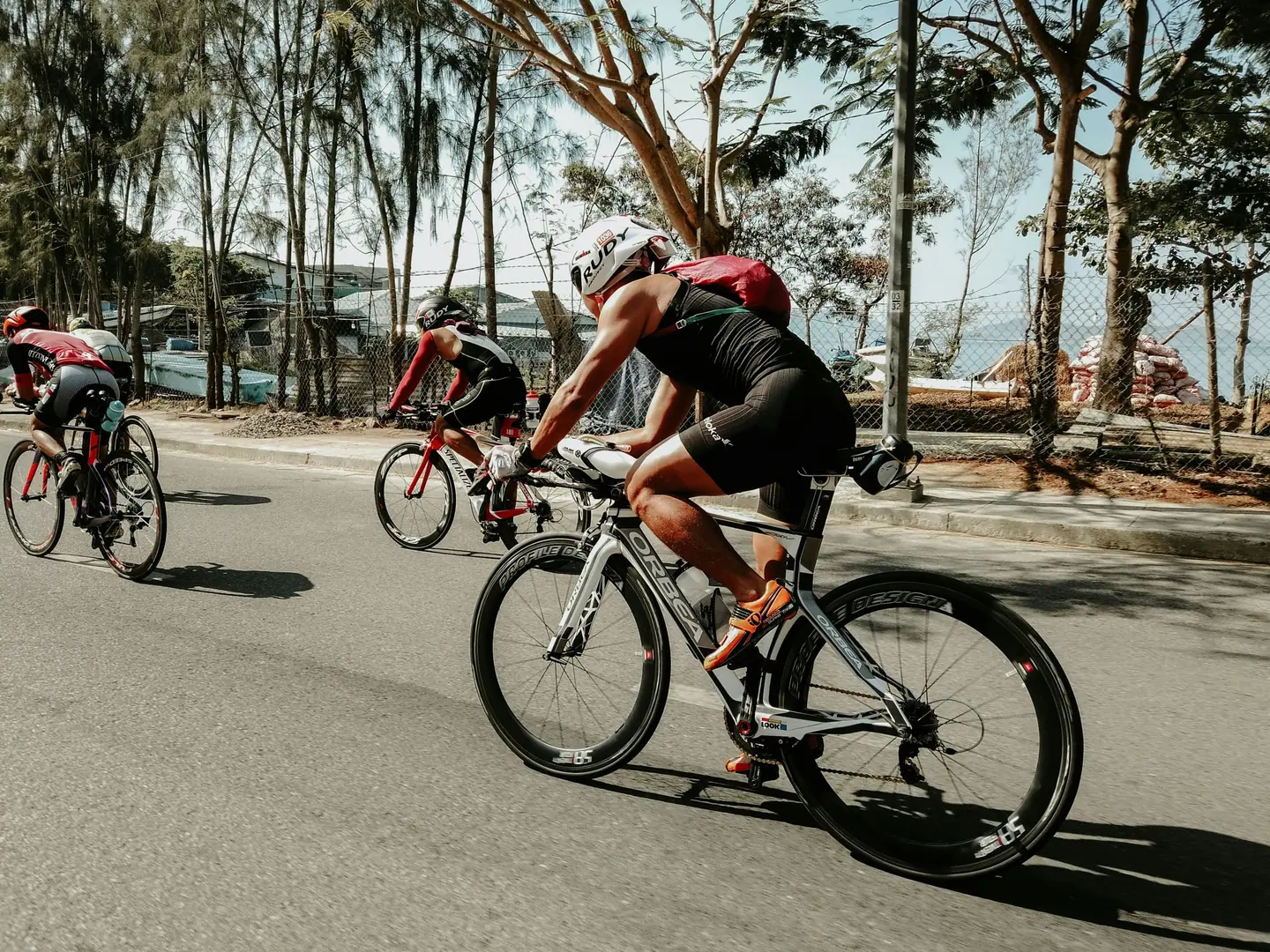
Build endurance
For these 44 flat kilometres, plan on roughly 55 to 80 minutes of riding depending on your level. The demand is one continuous effort at threshold with no accelerations and no recovery, simply far longer than a classic short time trial. That moves aerobic endurance alongside raw threshold power into the centre of the preparation.
Train the climbs
Long threshold blocks are the base. Progress from 2 by 20 minutes through 3 by 20 minutes to one continuous 50-to-60-minute effort just under threshold that mirrors race duration. Ride those sessions in race position, because an hour low on the extensions loads back, neck and breathing differently than twenty minutes does.
Ride race-specific
The second lap decides the race. Train the specific ability to produce the same output again after 30 minutes at threshold: two long blocks with a very short break between them reproduce that far better than four short ones with full recovery.
Arrive fresh
Two things matter here that barely register over the short distance. First, aerodynamics over duration: the position has to hold for an hour without restricting your breathing, or it costs more than it gains. Second, fuelling: at over an hour in the summer heat of the Leitha valley, drinking and a small carbohydrate intake need rehearsing, including the question of how you reach the bottle from the aero position at all.

Courses
Download the ZeitFahr-CUP Speed Seibersdorf 44 course as a GPX file for your watch or bike computer.
Let YOUB adapt your plan for ZeitFahr-CUP Speed Seibersdorf 44 dynamically
Ben connects your goal, the course, current load, recovery, and calendar. Your plan stays pointed at race day even when real life is not perfectly plannable.
Everything about ZeitFahr-CUP Speed Seibersdorf 44.
How long is ZeitFahr-CUP Speed Seibersdorf 44?
ZeitFahr-CUP Speed Seibersdorf 44 is 44 km long. That distance shapes how much aerobic endurance, pace durability, and race-specific work belong in the training plan.
How much elevation gain does ZeitFahr-CUP Speed Seibersdorf 44 have?
ZeitFahr-CUP Speed Seibersdorf 44 has around 128 m of elevation gain over 44 km. That affects pacing, muscular load, and preparation for late-race sections.
What is the route profile of ZeitFahr-CUP Speed Seibersdorf 44?
ZeitFahr-CUP Speed Seibersdorf 44 is classified as Flat, averaging 1.8 vertical metres per kilometre. 100% of the route is flat, 0% climbs moderately (2 to 6%) and 0% is steeper than 6%.
Is ZeitFahr-CUP Speed Seibersdorf 44 a loop course?
Yes, ZeitFahr-CUP Speed Seibersdorf 44 is laid out as a loop: start and finish are in the same place.
Is there a GPX file for the ZeitFahr-CUP Speed Seibersdorf 44 course?
Yes. The ZeitFahr-CUP Speed Seibersdorf 44 course is on this page as a free GPX download — ready to import into Garmin, Wahoo, Komoot, Strava or any other app that reads GPX.
How should I prepare for ZeitFahr-CUP Speed Seibersdorf 44?
Preparation for ZeitFahr-CUP Speed Seibersdorf 44 should account for 44 km, 128 m of elevation gain, current training load, and available training time. An adaptive plan helps place key sessions without ignoring recovery and real life.
What pacing strategy works for ZeitFahr-CUP Speed Seibersdorf 44?
The pacing strategy for ZeitFahr-CUP Speed Seibersdorf 44 should reflect 44 km, 128 m of elevation gain, and your current fitness. Start controlled and keep margin for sections where the profile or fatigue makes target pace harder.
When does ZeitFahr-CUP Speed Seibersdorf 44 next take place?
No date has been announced for the next edition yet. The most recent one was held on August 22, 2026.
Where does ZeitFahr-CUP Speed Seibersdorf 44 take place?
ZeitFahr-CUP Speed Seibersdorf 44 takes place in Seibersdorf, Austria.
How do I register for ZeitFahr-CUP Speed Seibersdorf 44?
Registration runs through the organiser: zeitfahr-cup.at. YOUB shows you the course, elevation profile and training plan for your preparation.