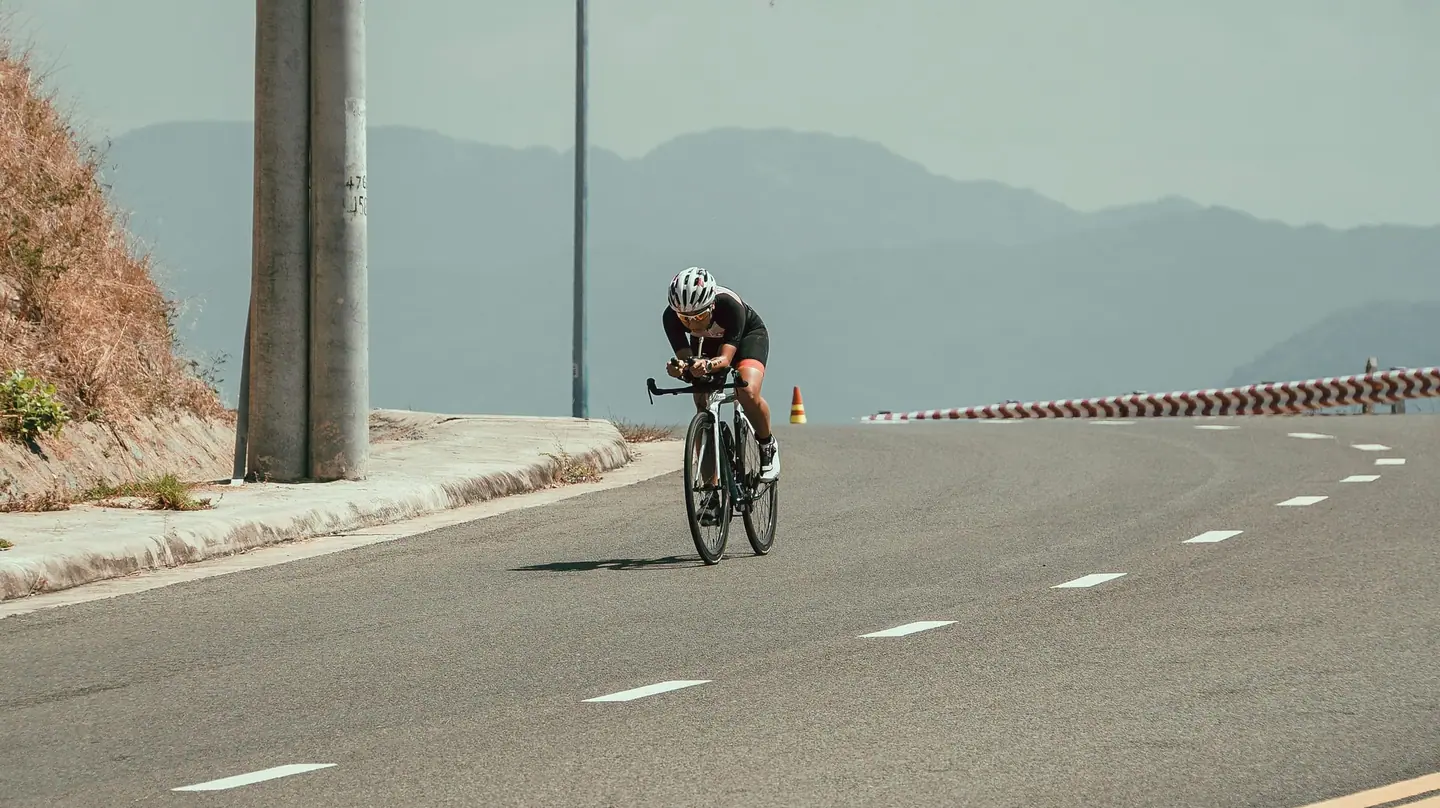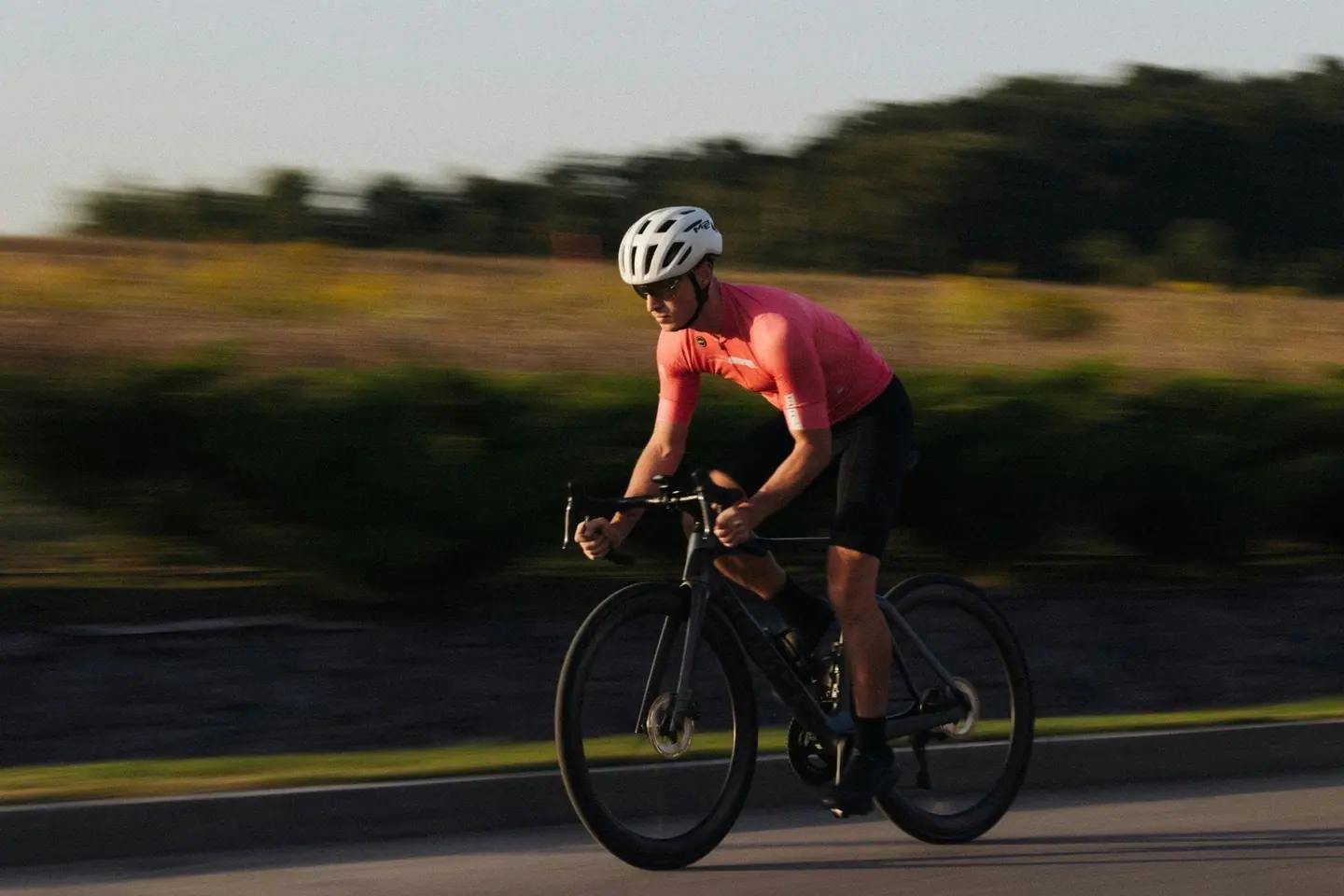
Alpina Zeitfahrcup 2026 – 4. Lauf (St. Georgen im Lavanttal).
Round four of the Alpina Time Trial Cup at St. Georgen im Lavanttal is an 11.5-kilometre individual time trial run as an out-and-back. It leaves the village via Matschenbloch and Schwarzenbach towards Ettendorf and returns along the same roads. On the flat valley floor nothing counts except sustained threshold power held in a low position.
No date has been announced for the next edition yet. The course, elevation and route profile are from the most recent edition.
Alpina Time Trial Cup – Round 4 (St. Georgen im Lavanttal): Course, Elevation & Route Profile
The Alpina Time Trial Cup is a series run by HRC ARBÖ Alpina Wolfsberg and reaches its twentieth edition in 2026. Its four rounds are spread across the Lavant valley, from Lavamünd through Frantschach and St. Paul to this closing round at St. Georgen, which is raced for the prizes of ARBÖ St. Georgen and starts at half past nine on a Sunday morning by the Kaufhaus Hassler in the village.
The course stays on the valley floor: out from St. Georgen via Matschenbloch, Niederhof and Schwarzenbach to the turnaround at Ettendorf, then back along exactly the same roads. Both halves are therefore the same tarmac in opposite directions, so whatever the wind does on the way out reverses after the turn. There are no climbs worth the name, and the turnaround is the only technical point of the race.
Average speeds are correspondingly high: an earlier edition was settled by a time of 14:53, a shade over 46 km/h. The field runs to about fifty riders, and the round is raced as an open event with separate classifications.
| Start | Length | Ø | Max. | Gain | Cat. |
|---|---|---|---|---|---|
| km 6.7 | 0.5 km | 5.9 % | 12.8 % | +28 m | — |
| km 9.3 | 0.4 km | 3.3 % | 5.1 % | +12 m | — |
Climb categories follow the road-cycling convention and rate the terrain itself (length and gradient) regardless of sport: Cat. 4 marks the easiest rated climbs, Cat. 1 the hardest, and HC (hors catégorie, “beyond categorization”) is reserved for the most brutal ascents. Short climbs below the Cat. 4 threshold stay unrated.
How to pace Alpina Time Trial Cup – Round 4 (St. Georgen im Lavanttal).
Sit in early
Eleven and a half flat kilometres mean fifteen to twenty minutes of racing for most riders. That is exactly the window in which maximum sustainable power sits, so the target is just above threshold rather than below it. Since no climb imposes structure on the effort, you have to cap the pace yourself, and the first two kilometres after the start are where too much gets spent.
Ration your effort
The turnaround at Ettendorf is the one place the course asks something back. Braking late, taking a tight arc and grinding back up to speed easily costs ten to fifteen seconds, more than any equipment choice returns. Approach it on a wide line, stay seated and rebuild the speed evenly over the following twenty seconds.
Race the finale
The real trap lies in the shape of the course. Whatever came easily on the way out returns as a headwind or a barely perceptible rise on the way back. Ration the outbound leg by power rather than by speed, and hold the aerodynamic position deliberately over the closing three kilometres even when the legs argue against it.
Training plan for Alpina Time Trial Cup – Round 4 (St. Georgen im Lavanttal): 12-week build
Build endurance
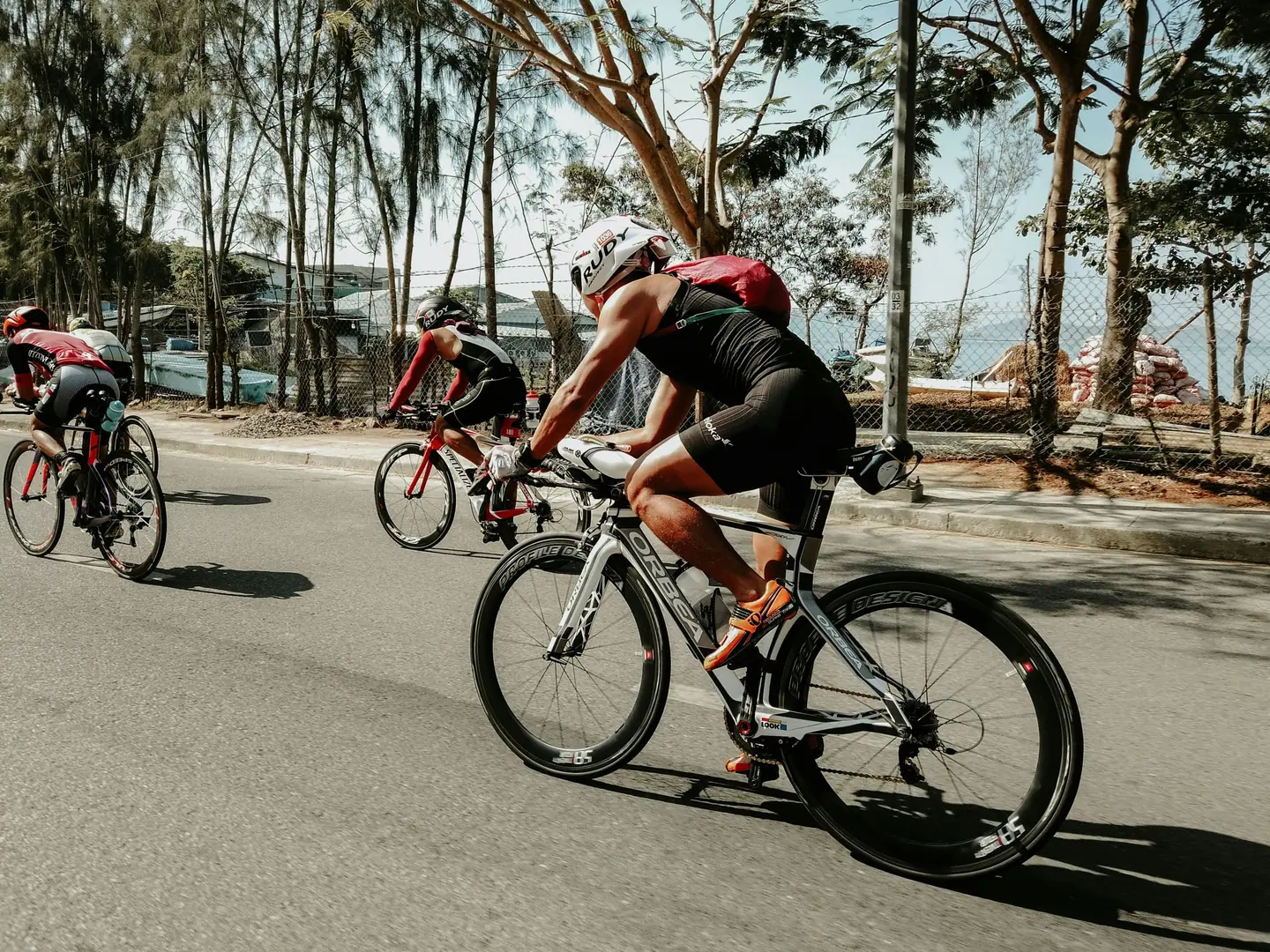
For age-group riders the effort lasts about fifteen to twenty minutes, and under fifteen for the fastest. Its character is as uniform as cycling gets: one continuous block of high aerobic output, with no accelerations, no drafting and no recovery. The race needs anaerobic capacity only twice, off the start and coming back up to speed after the turn.
Train the climbs
Two sections decide it. The first is the turnaround at Ettendorf, where handling and a clean rebuild of speed convert directly into seconds. The second is the closing three kilometres back to St. Georgen, where power typically fades and the torso comes up, which costs twice over on flat ground.
Ride race-specific
Training should centre on intervals at maximum sustainable power: two by ten up to three by eight minutes, ridden consistently in the time trial position so that hip angle and breathing are used to the racing posture. A position you only adopt on race day gives back power you actually had in training.
Arrive fresh
Two additions complete the picture. Short surges of twenty to thirty seconds followed by a return to race pace rehearse exactly what the turnaround demands. And a pacing test over the race distance on flat roads sets the target power range instead of guessing it on the day. Because the series runs across the whole summer, the earlier rounds are a good chance to check that number under race conditions.

Courses
Download the Alpina Time Trial Cup – Round 4 (St. Georgen im Lavanttal) course as a GPX file for your watch or bike computer.
Let YOUB adapt your plan for Alpina Zeitfahrcup 2026 – 4. Lauf (St. Georgen im Lavanttal) dynamically
Ben connects your goal, the course, current load, recovery, and calendar. Your plan stays pointed at race day even when real life is not perfectly plannable.
Everything about Alpina Zeitfahrcup 2026 – 4. Lauf (St. Georgen im Lavanttal).
How long is Alpina Time Trial Cup – Round 4 (St. Georgen im Lavanttal)?
Alpina Time Trial Cup – Round 4 (St. Georgen im Lavanttal) is 11.5 km long. That distance shapes how much aerobic endurance, pace durability, and race-specific work belong in the training plan.
How much elevation gain does Alpina Time Trial Cup – Round 4 (St. Georgen im Lavanttal) have?
Alpina Time Trial Cup – Round 4 (St. Georgen im Lavanttal) has around 182 m of elevation gain over 11.5 km. That affects pacing, muscular load, and preparation for late-race sections.
What is the route profile of Alpina Time Trial Cup – Round 4 (St. Georgen im Lavanttal)?
Alpina Time Trial Cup – Round 4 (St. Georgen im Lavanttal) is classified as Rolling, averaging 15.6 vertical metres per kilometre. 38% of the route is flat, 26% climbs moderately (2 to 6%) and 6% is steeper than 6%.
What climbs does Alpina Time Trial Cup – Round 4 (St. Georgen im Lavanttal) have?
The hardest climb of Alpina Time Trial Cup – Round 4 (St. Georgen im Lavanttal) starts at kilometre 6.7, runs for 0.5 km at an average of 5.9% and gains 28 metres. 2 climbs are mapped in total.
Is Alpina Time Trial Cup – Round 4 (St. Georgen im Lavanttal) a loop course?
Yes, Alpina Time Trial Cup – Round 4 (St. Georgen im Lavanttal) is laid out as a loop: start and finish are in the same place.
Is there a GPX file for the Alpina Time Trial Cup – Round 4 (St. Georgen im Lavanttal) course?
Yes. The Alpina Time Trial Cup – Round 4 (St. Georgen im Lavanttal) course is on this page as a free GPX download — ready to import into Garmin, Wahoo, Komoot, Strava or any other app that reads GPX.
How should I prepare for Alpina Time Trial Cup – Round 4 (St. Georgen im Lavanttal)?
Preparation for Alpina Time Trial Cup – Round 4 (St. Georgen im Lavanttal) should account for 11.5 km, 182 m of elevation gain, current training load, and available training time. An adaptive plan helps place key sessions without ignoring recovery and real life.
What pacing strategy works for Alpina Time Trial Cup – Round 4 (St. Georgen im Lavanttal)?
The pacing strategy for Alpina Time Trial Cup – Round 4 (St. Georgen im Lavanttal) should reflect 11.5 km, 182 m of elevation gain, and your current fitness. Start controlled and keep margin for sections where the profile or fatigue makes target pace harder.
When does Alpina Zeitfahrcup 2026 – 4. Lauf (St. Georgen im Lavanttal) next take place?
No date has been announced for the next edition yet. The most recent one was held on August 23, 2026.
Where does Alpina Zeitfahrcup 2026 – 4. Lauf (St. Georgen im Lavanttal) take place?
Alpina Zeitfahrcup 2026 – 4. Lauf (St. Georgen im Lavanttal) takes place in St. Georgen im Lavanttal, Austria.
How do I register for Alpina Time Trial Cup – Round 4 (St. Georgen im Lavanttal)?
Registration runs through the organiser: hrc-wolfsberg.com. YOUB shows you the course, elevation profile and training plan for your preparation.