BreathMan, lac de Saint-Ferréol.
The Triathlon L is the long format of the BreathMan at the Lac de Saint-Ferréol: 1.9 kilometres in the Canal du Midi's reservoir, 90 kilometres through the Montagne Noire with the timed côte de Sorèze, and 20 kilometres in four laps of the lake. The day is decided on the climbs and settled on the shore path. Also known as Triathlon de Revel Saint-Ferréol.
BreathMan 2027: Course, Elevation & Route Profile
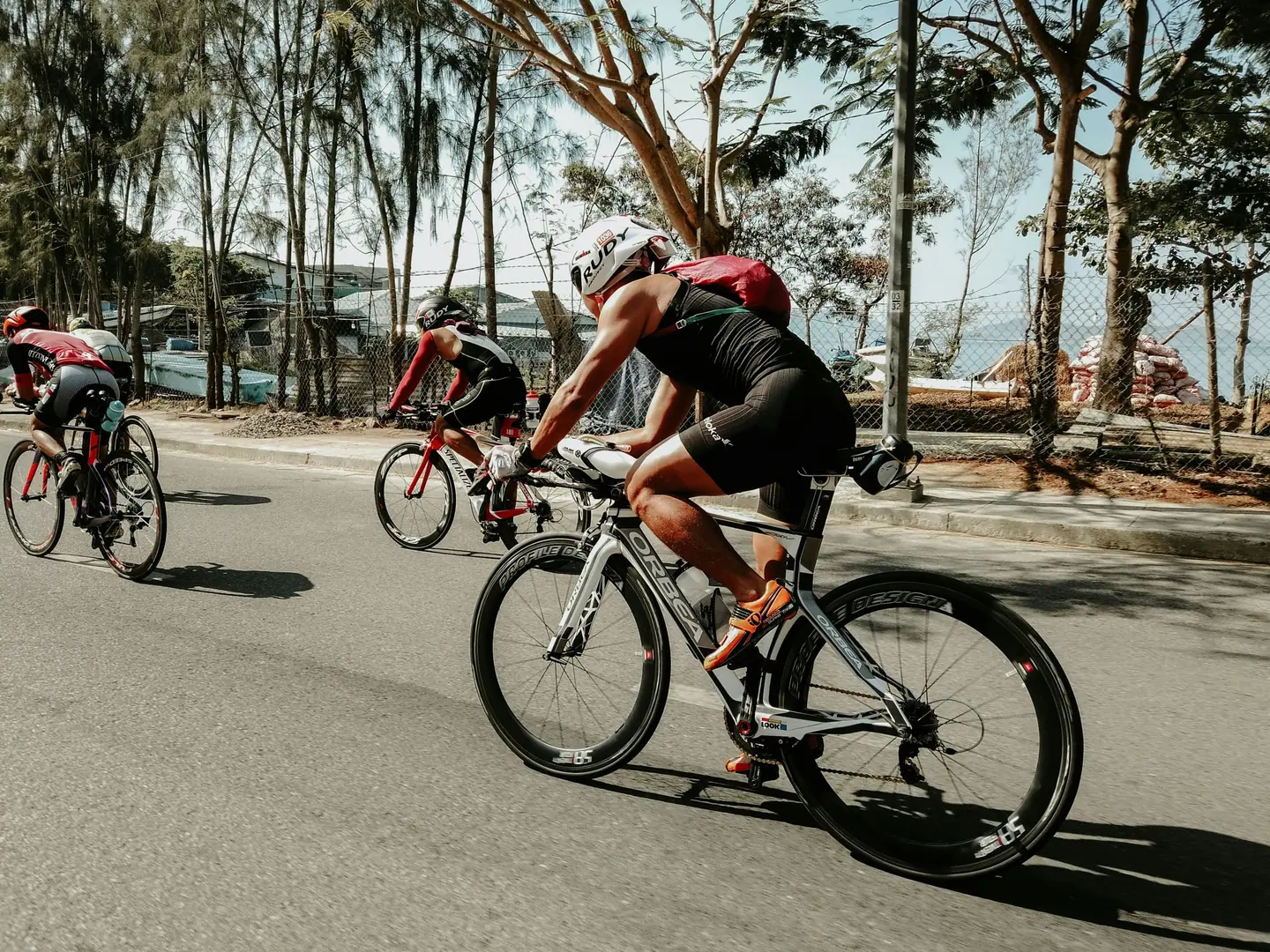
The start is on Sunday morning in the lake, with relays following men, women and duos. The swim loop ends with an Australian exit, then it is into the bike park on the dam. The bike course is one big loop into the wooded hills: first down to Sorèze, then the long climb over the Croix de Montalric, a rolling high plateau up to almost 875 metres, a long descent to the south and a late climb before returning to the lake.
The run is the counterpart: four flat laps on soft, shaded paths round the lake, across the 17th-century dam and past the beach of the Base de Loisirs. The Triathlon L counts towards the Challenge National Triathlon Longues Distances, is open from the junior category and can also be raced as a duo, in which two athletes cover the whole course together.
The race is organised by the Triathlon Toulouse Métropole club; in 2026 nearly 2,000 athletes took part across both days. There are cutoffs after the swim and after the bike.
+1,942 m
+140 m
Bike course
90 km · +1,942 m| Start | Length | Ø | Max. | Gain | Cat. |
|---|---|---|---|---|---|
| km 6 | 2.9 km | 5.4 % | 14.3 % | +154 m | Cat. 4 |
| km 9.3 | 0.7 km | 11.5 % | 24.1 % | +78 m | — |
| km 10.2 | 2.4 km | 5.9 % | 22.1 % | +141 m | Cat. 4 |
| km 12.7 | 1.4 km | 6.6 % | 14.1 % | +92 m | Cat. 4 |
| km 21.3 | 0.9 km | 7.6 % | 20.9 % | +68 m | — |
| km 22.4 | 0.9 km | 6.9 % | 12.1 % | +58 m | — |
| km 38.5 | 1.4 km | 5.1 % | 10.8 % | +73 m | — |
| km 70.9 | 1.1 km | 6.5 % | 8.2 % | +71 m | — |
Climb categories follow the road-cycling convention and rate the terrain itself (length and gradient) regardless of sport: Cat. 4 marks the easiest rated climbs, Cat. 1 the hardest, and HC (hors catégorie, “beyond categorization”) is reserved for the most brutal ascents. Short climbs below the Cat. 4 threshold stay unrated.
Run course
20 km · +140 m| Start | Length | Ø | Max. | Gain | Cat. |
|---|
Climb categories follow the road-cycling convention and rate the terrain itself (length and gradient) regardless of sport: Cat. 4 marks the easiest rated climbs, Cat. 1 the hardest, and HC (hors catégorie, “beyond categorization”) is reserved for the most brutal ascents. Short climbs below the Cat. 4 threshold stay unrated.
How to pace BreathMan.
Settle into the race
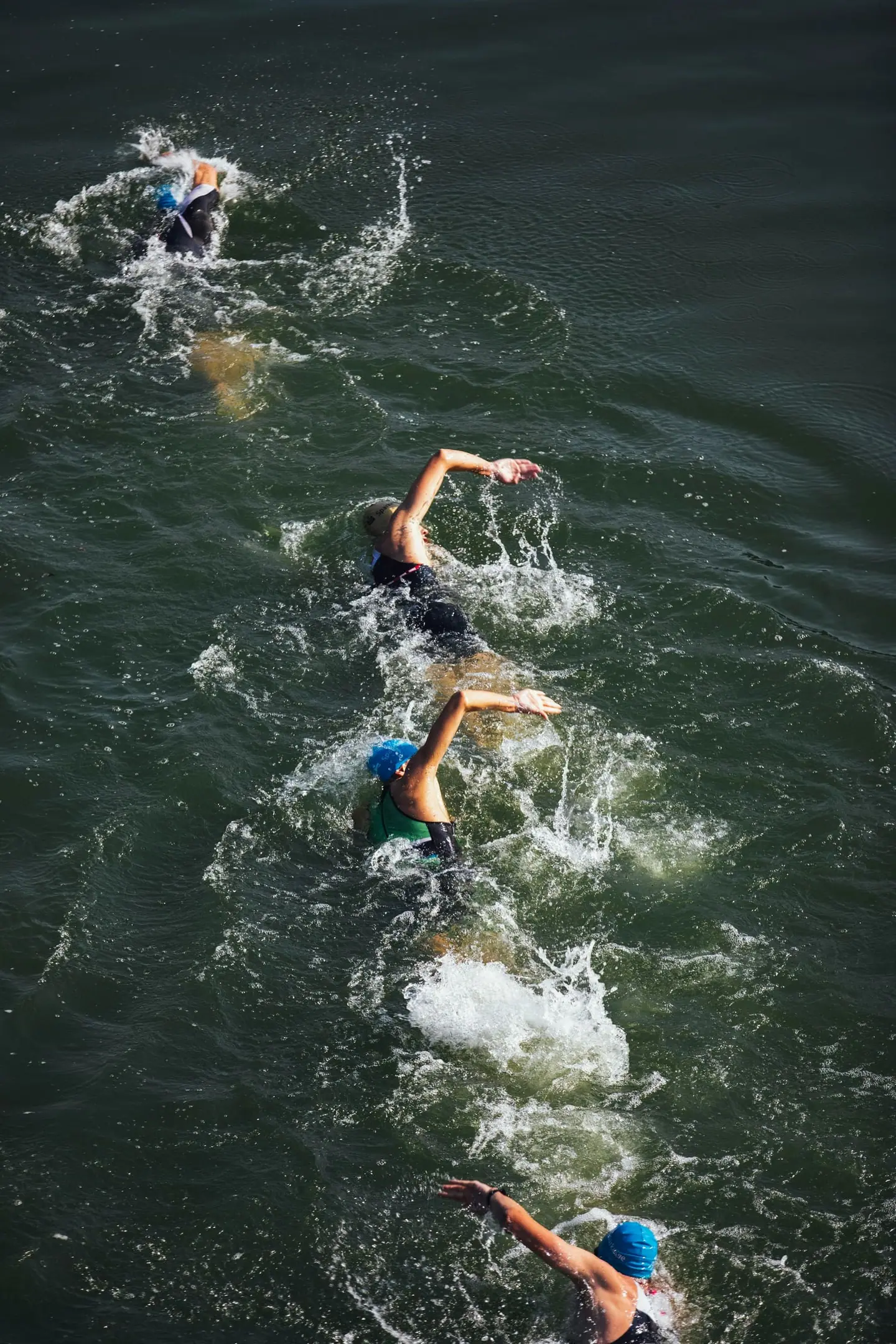
At 1.9 kilometres in calm lake water, the swim is a small part of the day. Swim under control and use the Australian exit to find space and your bearings. The run up into the bike park is where the easy part ends.
Spread the effort
The race is won or lost on the bike, more precisely on the côte de Sorèze from about kilometre 5. The timing there is the biggest temptation of the day. Ride it as a hill time trial and you pay for it on the plateau, on the late climb from kilometre 71 and above all on the third and fourth run laps.
Finish strong
Plan the race backwards: you want to be able to run the four laps at an even pace. You get there with even power on the bike, consistent fuelling on the plateau and a first run lap that feels too slow.
Training plan for BreathMan: 12-week build
Build all three disciplines
Expect five to seven and a half hours in total. Roughly half to two thirds of that is on the bike; the effort is long and aerobic, but with one very long climb and many rollers it is far less even than a flat middle distance.
Brick sessions
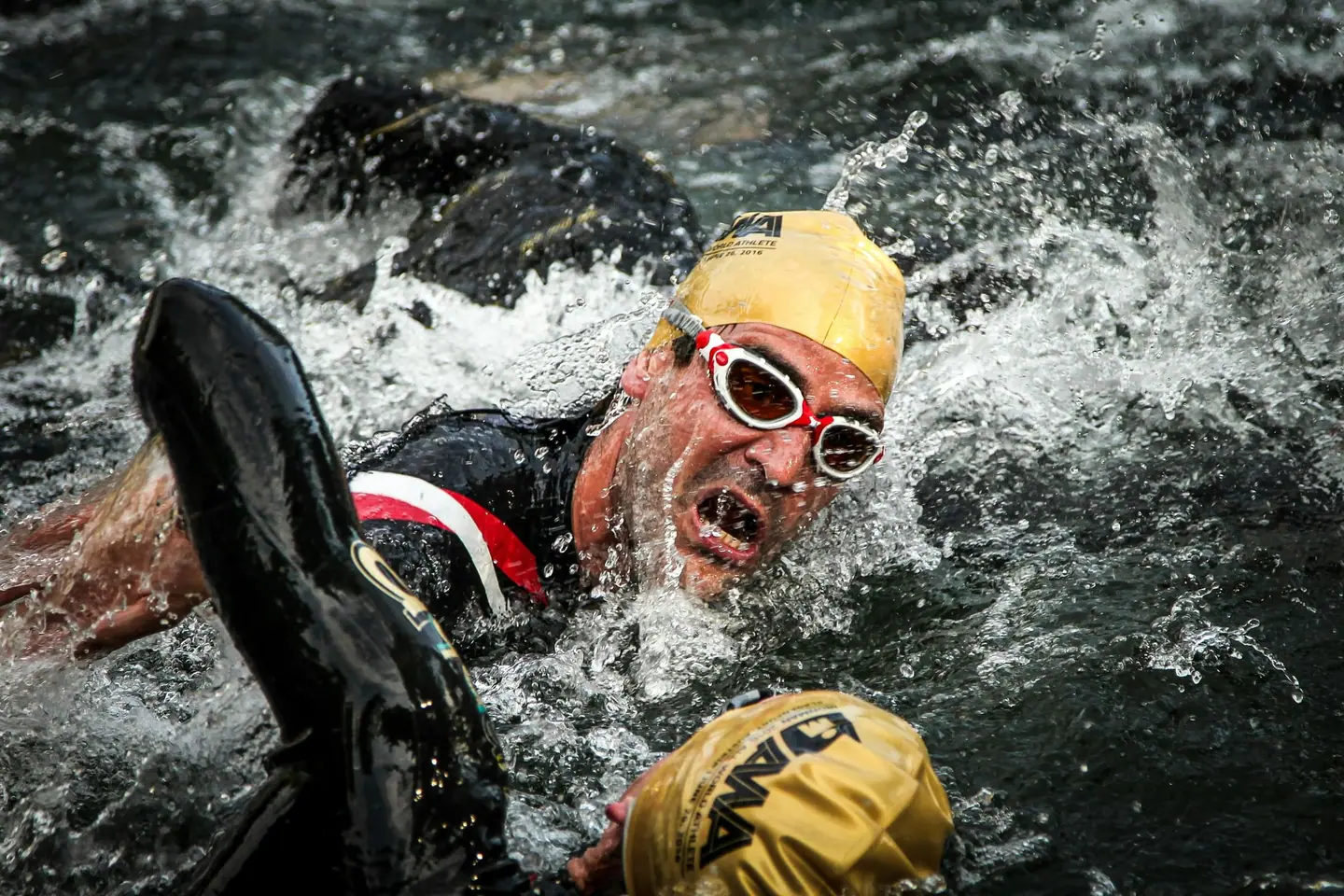
In the water, solid open-water confidence over 30 to 45 minutes is enough. On the bike you need long rides with plenty of climbing, especially one long climb early in the session and another in the last third.
Practise transitions
On the run it is about evenness after the bike: long brick sessions and long runs on forest and gravel paths. Race day is in late June, and the run falls around midday.
Arrive fresh
Get used to heat, practise fuelling on the bike under load and test your equipment on narrow, winding minor roads with long descents.

Courses
Download each leg of BreathMan as its own GPX file for your watch or bike computer.
Let YOUB adapt your plan for BreathMan, lac de Saint-Ferréol dynamically
Ben connects your goal, the course, current load, recovery, and calendar. Your plan stays pointed at race day even when real life is not perfectly plannable.
Everything about BreathMan, lac de Saint-Ferréol.
How long is BreathMan?
BreathMan is 111.9 km long. That distance shapes how much aerobic endurance, pace durability, and race-specific work belong in the training plan.
How much elevation gain does BreathMan have?
BreathMan has around 2,082 m of elevation gain over 111.9 km. That affects pacing, muscular load, and preparation for late-race sections.
What is the profile of the bike course at BreathMan?
The bike course at BreathMan is classified as Hilly, averaging 21.7 vertical metres per kilometre. 16% of the route is flat, 34% climbs moderately (2 to 6%) and 7% is steeper than 6%.
What climbs does the bike course at BreathMan have?
The hardest climb on the bike course at BreathMan starts at kilometre 6, runs for 2.9 km at an average of 5.4% and gains 154 metres. Cycling-convention rating: Cat. 4. 8 climbs are mapped in total.
Is there a GPX file for the BreathMan course?
Yes. Each leg of BreathMan is on this page as its own free GPX download — ready to import into Garmin, Wahoo, Komoot, Strava or any other app that reads GPX.
How should I prepare for BreathMan?
Preparation for BreathMan should account for 111.9 km, 2,082 m of elevation gain, current training load, and available training time. An adaptive plan helps place key sessions without ignoring recovery and real life.
What pacing strategy works for BreathMan?
The pacing strategy for BreathMan should reflect 111.9 km, 2,082 m of elevation gain, and your current fitness. Start controlled and keep margin for sections where the profile or fatigue makes target pace harder.
When does BreathMan, lac de Saint-Ferréol 2027 take place?
BreathMan, lac de Saint-Ferréol 2027 takes place on June 19, 2027.
Where does BreathMan, lac de Saint-Ferréol 2027 take place?
BreathMan, lac de Saint-Ferréol 2027 takes place in Revel, France.
Which distances does BreathMan offer?
BreathMan offers 8 distances — Triathlon L: 111.9 km; Triathlon L Relais: 111.9 km; Triathlon M: 59.5 km; Triathlon M Relais: 59.5 km; Triathlon S: 27.75 km; Triathlon S Relais: 27.75 km and 2 more.
How do I register for BreathMan?
Registration runs through the organiser: breathman-triathlon.com. YOUB shows you the course, elevation profile and training plan for your preparation.