Giant Acorn Triathlon Festival.
The Giant Acorn Olympic Triathlon is the Saturday race of the Giant Acorn Triathlon Festival at Lake Anna State Park in Virginia: 1.5 km in the lake, 24.6 rolling miles through Spotsylvania County and two hilly run laps inside the park. No discipline here is flat, which makes pacing the real task. Also known as Giant Acorn.
Giant Acorn Triathlon 2027: Course, Elevation & Route Profile
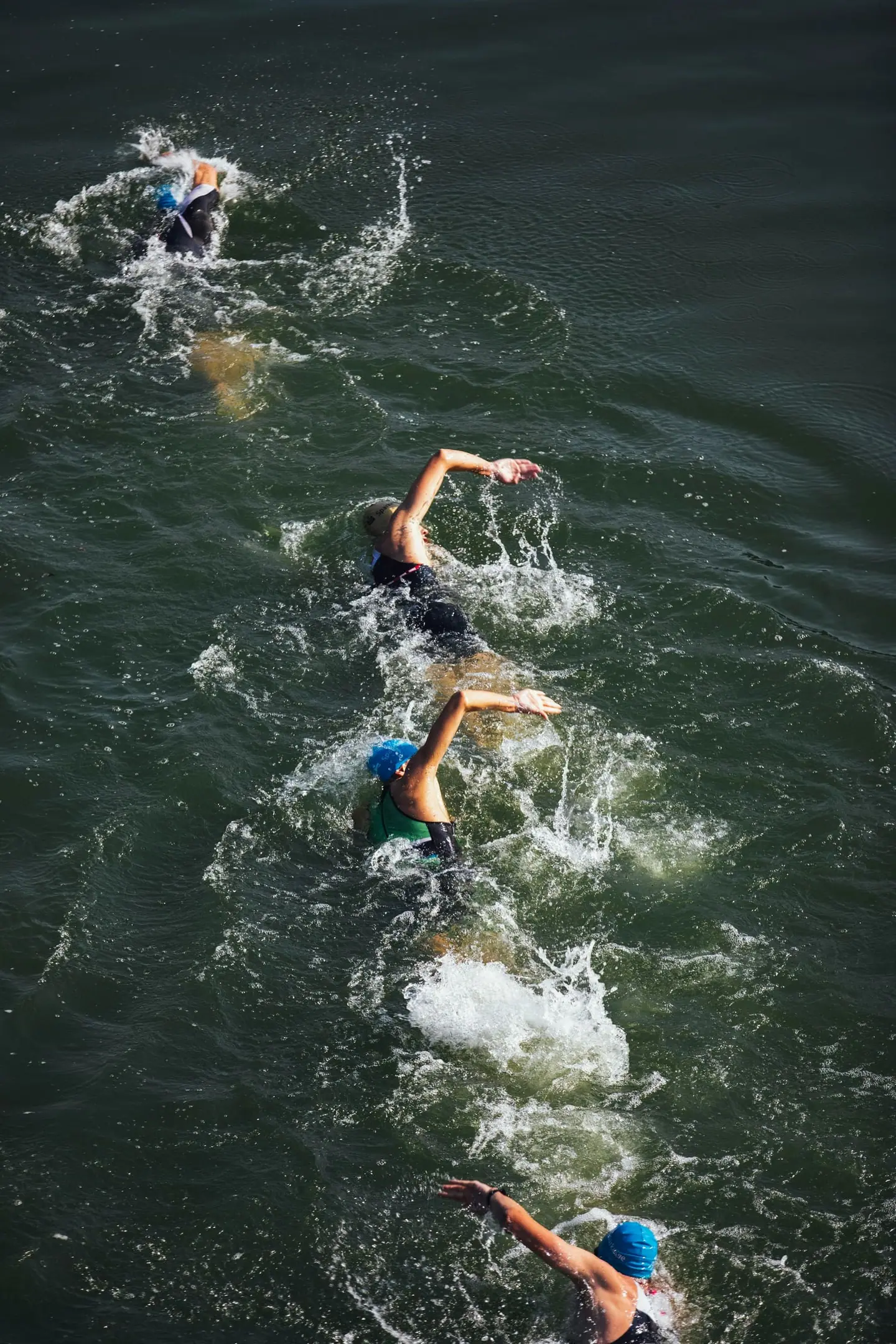
The race starts from the sandy beach of the state park with a time-trial start, two athletes entering the water every three to five seconds. The rectangular swim has two right turns and a sighting buoy roughly every 75 metres; in late September the lake usually sits in the low 70s °F, under the wetsuit cutoff. After the beach exit you head to transition on the waterfront.
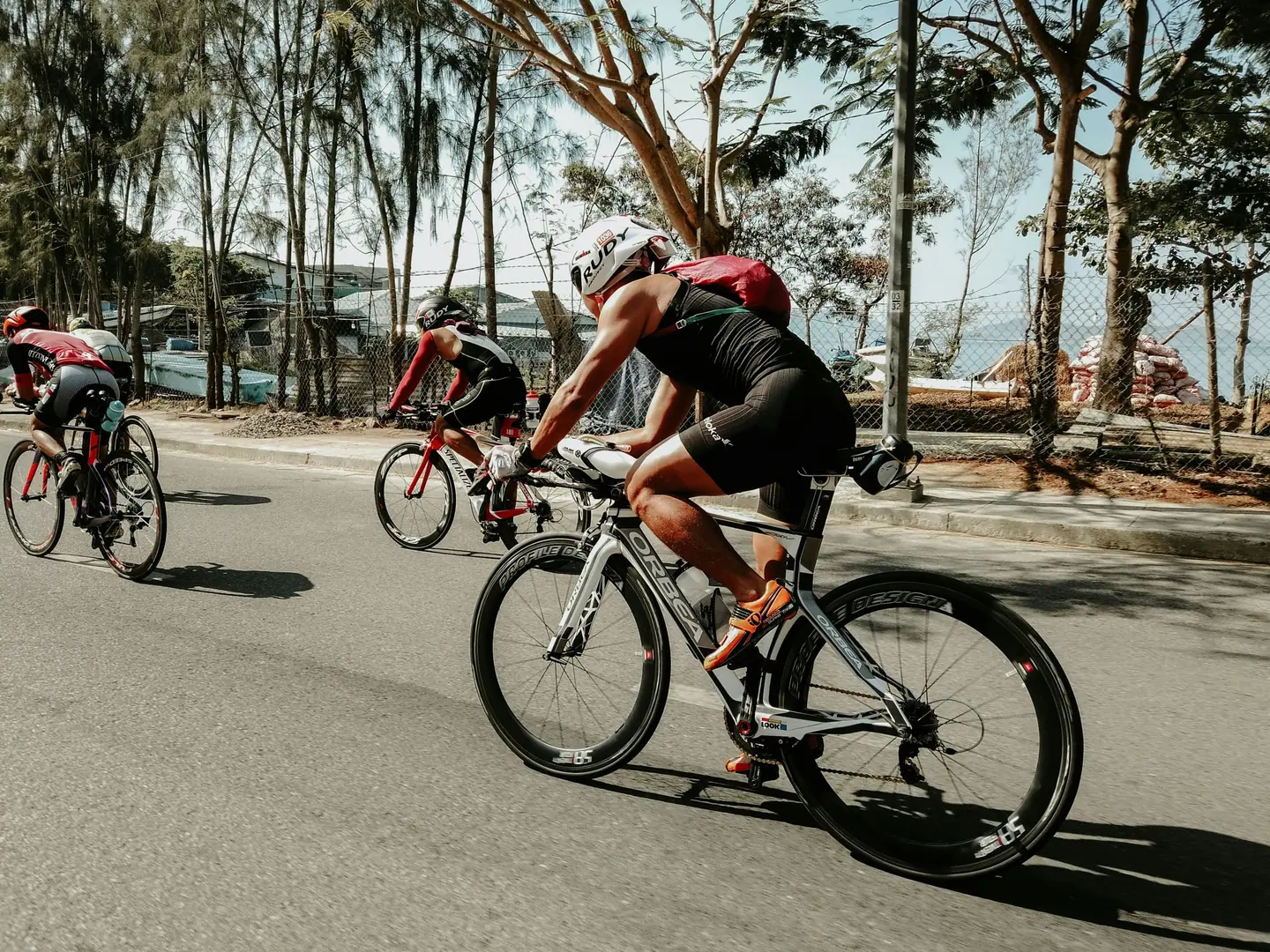
The bike is a lollipop on open country roads with a long plateau and a rolling final third, and no aid station. Then you run the Sprint lap twice: a hard climb out of transition, a shaded middle section through the forest and campground, and a long descent back to the beach.
What sets this race apart is the park itself. From the banked, stadium-style seating on the shore, spectators see the swim course, the run course and the finish at once. Kinetic Multisports runs it as a USA Triathlon sanctioned event, and athletes who add Sunday's sprint turn the weekend into a double.
+323 m
+100 m
Bike course
39.59 km · +323 m| Start | Length | Ø | Max. | Gain | Cat. |
|---|---|---|---|---|---|
| km 0.1 | 0.5 km | 3.7 % | 6.1 % | +19 m | — |
| km 9.3 | 0.7 km | 4.1 % | 7.6 % | +29 m | — |
| km 24.3 | 0.9 km | 3.1 % | 4.2 % | +27 m | — |
| km 25.8 | 0.7 km | 4.1 % | 9 % | +30 m | — |
| km 27.9 | 0.5 km | 4.4 % | 6.2 % | +20 m | — |
| km 29.6 | 0.8 km | 3.2 % | 6.9 % | +24 m | — |
| km 32 | 0.5 km | 3.1 % | 4.2 % | +15 m | — |
Climb categories follow the road-cycling convention and rate the terrain itself (length and gradient) regardless of sport: Cat. 4 marks the easiest rated climbs, Cat. 1 the hardest, and HC (hors catégorie, “beyond categorization”) is reserved for the most brutal ascents. Short climbs below the Cat. 4 threshold stay unrated.
Run course
10 km · +100 m| Start | Length | Ø | Max. | Gain | Cat. |
|---|---|---|---|---|---|
| km 0.1 | 0.5 km | 4.3 % | 7.8 % | +23 m | — |
| km 5 | 0.7 km | 4.1 % | 7.8 % | +28 m | — |
Climb categories follow the road-cycling convention and rate the terrain itself (length and gradient) regardless of sport: Cat. 4 marks the easiest rated climbs, Cat. 1 the hardest, and HC (hors catégorie, “beyond categorization”) is reserved for the most brutal ascents. Short climbs below the Cat. 4 threshold stay unrated.
How to pace Giant Acorn Triathlon.
Settle into the race
The race asks for restraint in the same place in all three disciplines: at the start of a climb. The time-trial start lets you swim your own rhythm; then the bike opens straight away with a climb out of the park, and so does the run.
Spread the effort
The race is decided in the switch from the rolling last part of the bike to the first run lap. Over-push the rollers after 24 km and you reach the hill out of transition with empty legs, losing more time over two laps than you gained on the bike. Ride the final third evenly and the last kilometres easily.
Finish strong
The second run lap is the check: if you can still run its climb rather than walk it, your pacing was right. With no aid on the bike, carry enough fluid for 70 to 100 minutes.
Training plan for Giant Acorn Triathlon: 12-week build
Build all three disciplines
Age-group athletes usually take two and a half to nearly four hours for this Olympic distance. The effort is mostly aerobic, with many short climbs on the bike and run that repeatedly take you over threshold.
Brick sessions
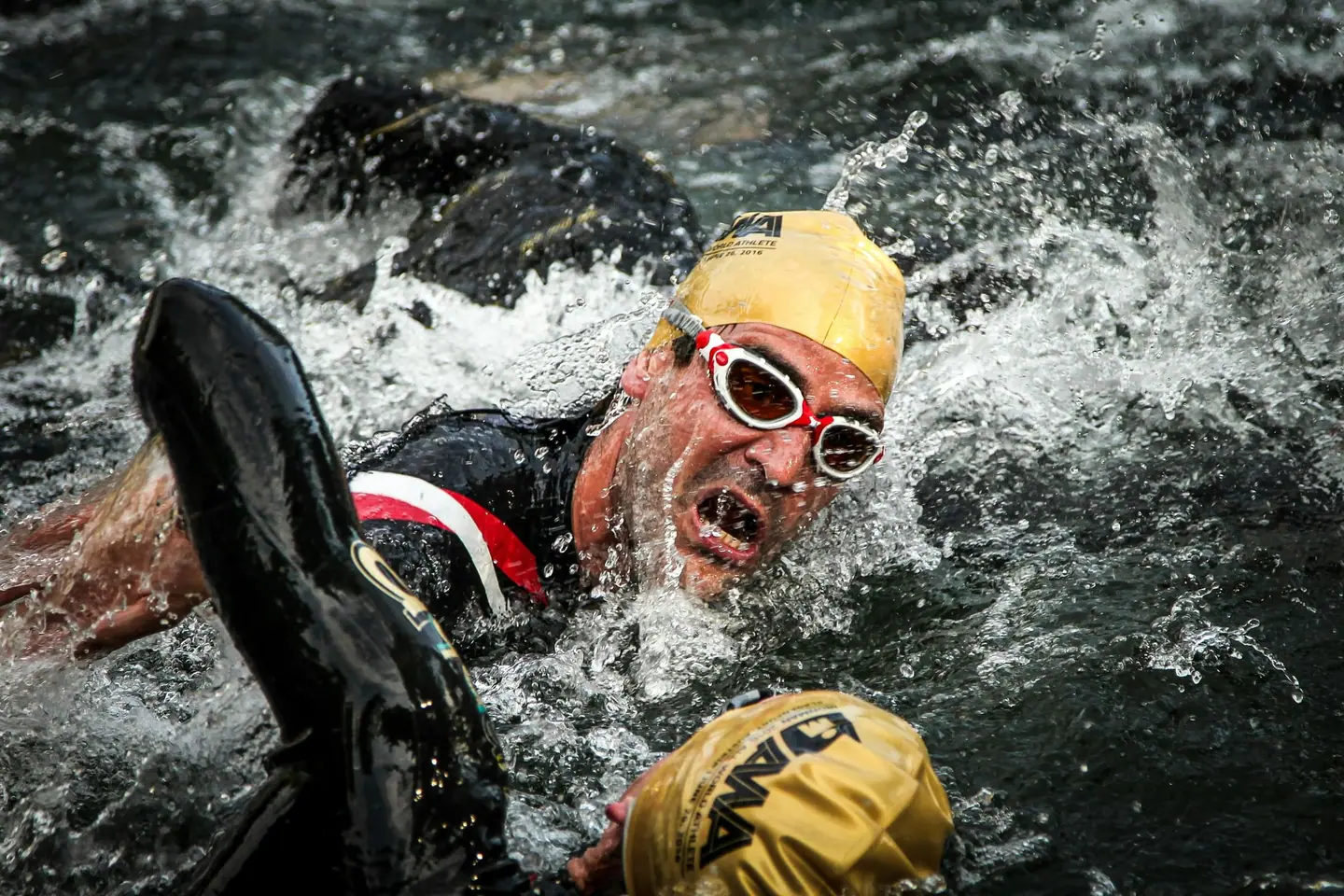
In the water, open-water sessions with buoy sighting and swimming your own rhythm without a draft pay off, since the time-trial start spreads the field early. Practise beach exits and the short run to transition as well.
Practise transitions
The core session is a long brick on rolling terrain: 60 to 90 minutes on the bike with evenly ridden hills in the final third, then straight into a run that opens with a five-minute climb. That combination is exactly what decides the race.
Arrive fresh
Late-September conditions at Lake Anna are usually good, with a mild morning and a shaded run. Still rehearse drinking on the bike without resupply, and ride open country roads regularly, because the bike course is not closed.

Courses
Download each leg of Giant Acorn Triathlon as its own GPX file for your watch or bike computer.
Let YOUB adapt your plan for Giant Acorn Triathlon Festival dynamically
Ben connects your goal, the course, current load, recovery, and calendar. Your plan stays pointed at race day even when real life is not perfectly plannable.
Everything about Giant Acorn Triathlon Festival.
How long is Giant Acorn Triathlon?
Giant Acorn Triathlon is 51.09 km long. That distance shapes how much aerobic endurance, pace durability, and race-specific work belong in the training plan.
What is the profile of the bike course at Giant Acorn Triathlon?
The bike course at Giant Acorn Triathlon is classified as Rolling, averaging 8.2 vertical metres per kilometre. 44% of the route is flat, 27% climbs moderately (2 to 6%) and 0% is steeper than 6%.
What climbs does the bike course at Giant Acorn Triathlon have?
The hardest climb on the bike course at Giant Acorn Triathlon starts at kilometre 25.8, runs for 0.7 km at an average of 4.1% and gains 30 metres. 7 climbs are mapped in total.
Is there a GPX file for the Giant Acorn Triathlon course?
Yes. Each leg of Giant Acorn Triathlon is on this page as its own free GPX download — ready to import into Garmin, Wahoo, Komoot, Strava or any other app that reads GPX.
How should I prepare for Giant Acorn Triathlon?
Preparation for Giant Acorn Triathlon should account for 51.09 km, current training load, and available training time. An adaptive plan helps place key sessions without ignoring recovery and real life.
What pacing strategy works for Giant Acorn Triathlon?
The pacing strategy for Giant Acorn Triathlon should reflect 51.09 km and your current fitness. Start controlled and keep margin for sections where the profile or fatigue makes target pace harder.
When does Giant Acorn Triathlon Festival take place?
Giant Acorn Triathlon Festival takes place on September 25, 2027.
Where does Giant Acorn Triathlon Festival take place?
Giant Acorn Triathlon Festival takes place in Spotsylvania, United States.
Which distances does Giant Acorn Triathlon offer?
Giant Acorn Triathlon offers 6 distances — Giant Acorn Olympic Triathlon: 51.09 km; Giant Acorn Olympic Aquabike: 41.09 km; Giant Acorn Olympic Triathlon Relay: 51.09 km; Giant Acorn Sprint Triathlon: 30.7 km; Giant Acorn Sprint Aquabike: 25.7 km; Giant Acorn Sprint Triathlon Relay: 30.7 km.
How do I register for Giant Acorn Triathlon?
Registration runs through the organiser: kineticmultisports.com. YOUB shows you the course, elevation profile and training plan for your preparation.