Culpeper Triathlon.
The Culpeper Triathlon has been staged at Mountain Run Lake Park, at the foot of the Blue Ridge Mountains in Virginia, since 2005. The Olympic distance combines a 1.5 km swim in Mountain Run Lake with two rolling bike loops through the farmland and a 10 km run by the lake, and none of the three is flat.
Culpeper Triathlon 2027: Course, Elevation & Route Profile
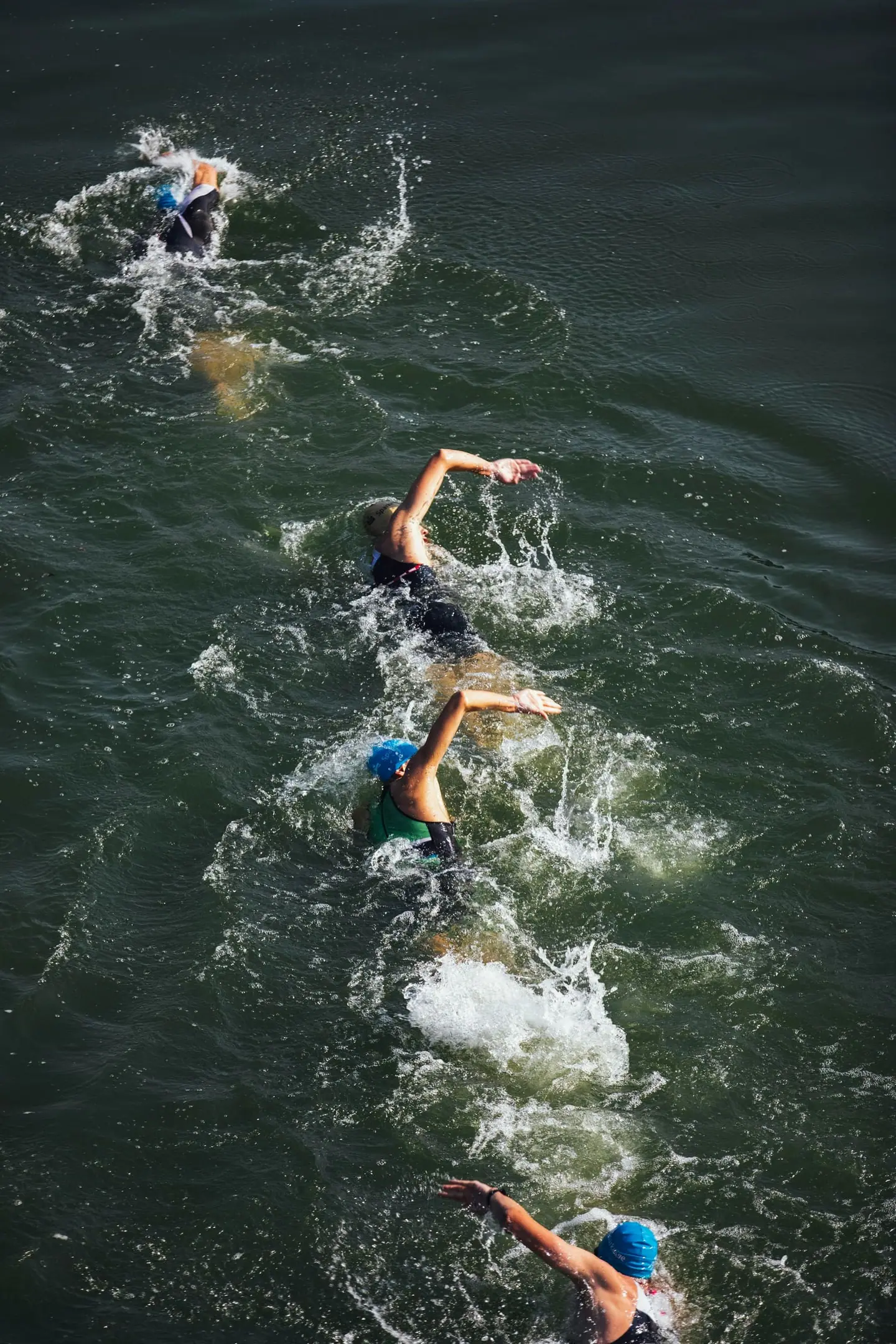
The swim uses a time-trial start, two athletes every few seconds, on a rectangular 750 m course that Olympic athletes swim twice counter-clockwise without leaving the water in between. At the end of July the lake is usually 80 to 82 °F, so wetsuits are normally not allowed. From the swim exit it is only about 50 m into transition.
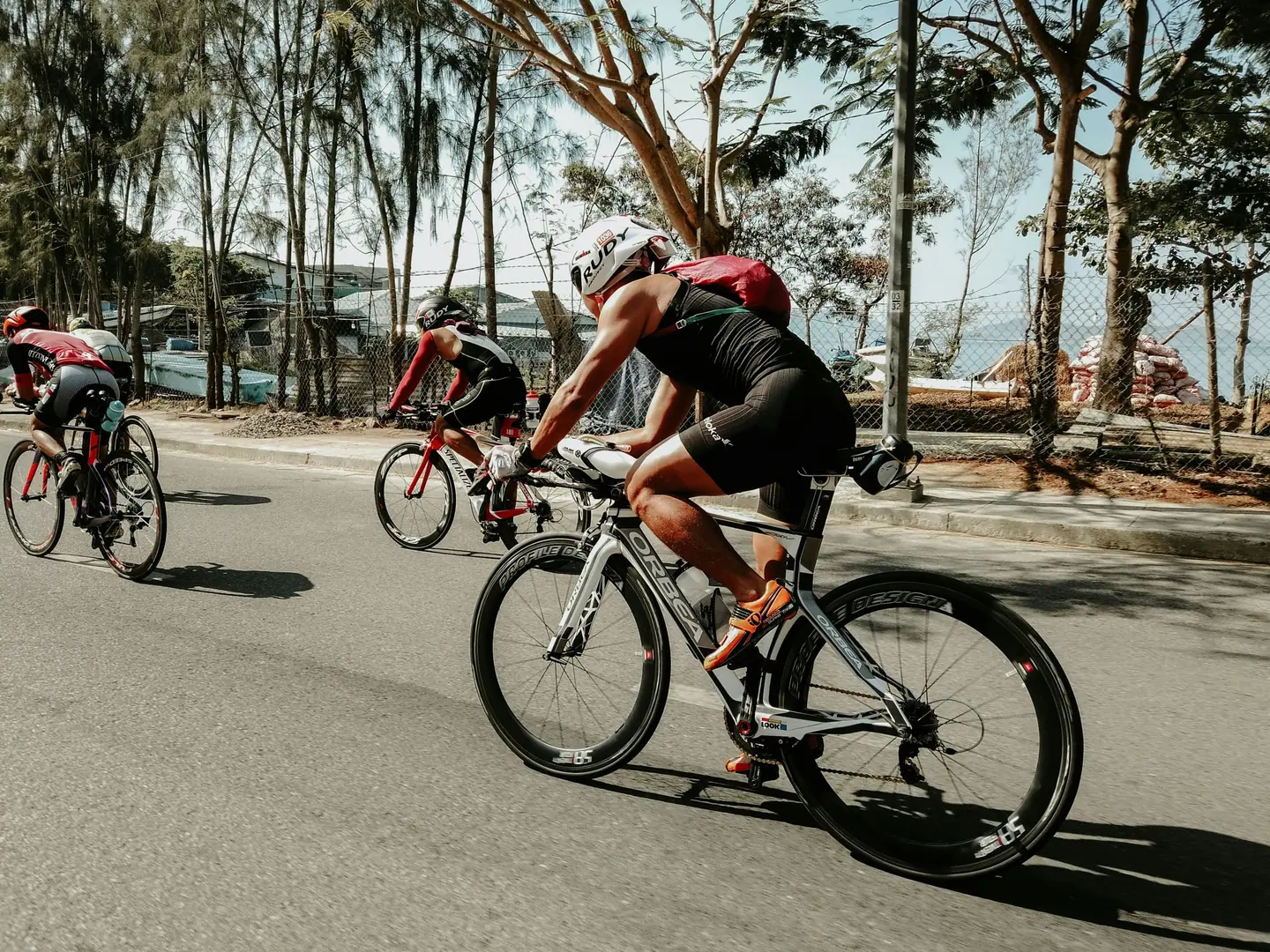
The bike climbs straight out of the park and rides two loops on quiet, well-paved country roads with short, steep ramps and technical descents; at Mile 11.9 Olympic athletes turn right onto the second loop. Then come two laps of the out-and-back along Mountain Run Lake Road, which also starts with a climb out of the park.
By our measurement bike and run add up to about 570 m of climbing, most of it on the bike. The roads stay open, with police controlling the intersections. After the race, Mountain Run Winery, a mile from the start, hosts a post-race party with music and food trucks.
+452 m
+118 m
Bike course
38.62 km · +452 m| Start | Length | Ø | Max. | Gain | Cat. |
|---|---|---|---|---|---|
| km 0.3 | 1 km | 3.7 % | 10.1 % | +36 m | — |
| km 4.4 | 0.3 km | 4.4 % | 5.7 % | +13 m | — |
| km 15.9 | 0.6 km | 4.7 % | 8.2 % | +29 m | — |
| km 17.1 | 0.5 km | 5.1 % | 8.5 % | +24 m | — |
| km 18.1 | 0.5 km | 4.8 % | 6.4 % | +23 m | — |
| km 29.2 | 0.6 km | 4.7 % | 8.1 % | +29 m | — |
| km 30.4 | 0.5 km | 5.2 % | 8.4 % | +25 m | — |
| km 31.5 | 0.5 km | 5 % | 6.4 % | +22 m | — |
Climb categories follow the road-cycling convention and rate the terrain itself (length and gradient) regardless of sport: Cat. 4 marks the easiest rated climbs, Cat. 1 the hardest, and HC (hors catégorie, “beyond categorization”) is reserved for the most brutal ascents. Short climbs below the Cat. 4 threshold stay unrated.
Run course
10 km · +118 m| Start | Length | Ø | Max. | Gain | Cat. |
|---|---|---|---|---|---|
| km 0.3 | 1 km | 3.8 % | 9.7 % | +36 m | — |
| km 5 | 0.9 km | 3.2 % | 8.8 % | +27 m | — |
Climb categories follow the road-cycling convention and rate the terrain itself (length and gradient) regardless of sport: Cat. 4 marks the easiest rated climbs, Cat. 1 the hardest, and HC (hors catégorie, “beyond categorization”) is reserved for the most brutal ascents. Short climbs below the Cat. 4 threshold stay unrated.
How to pace Culpeper Triathlon.
Settle into the race
The race is not decided in the water but on the bike and on the second run lap. Swim evenly and in control without a wetsuit; overdoing it in warm water puts your heart rate up before the first climb.
Spread the effort
On the bike the temptation is to push every one of the many short ramps. Ride them seated at a high cadence and make your time on the straights in the aero position. Every surge you save here is one you need on the run.
Finish strong
The run starts uphill and gets much warmer on the second lap. Take the first kilometre deliberately slowly and use every aid station. A lap-count mistake costs more than any tactic: know the bike turns at Miles 11.9 and 20.8 and the run lap start outside the park.
Training plan for Culpeper Triathlon: 12-week build
Build all three disciplines
Expect about 2:30 to 3:45 hours in total: roughly 25 to 40 minutes swimming, 1:10 to 1:45 hours on the bike and 45 to 70 minutes running, plus transitions.
Brick sessions
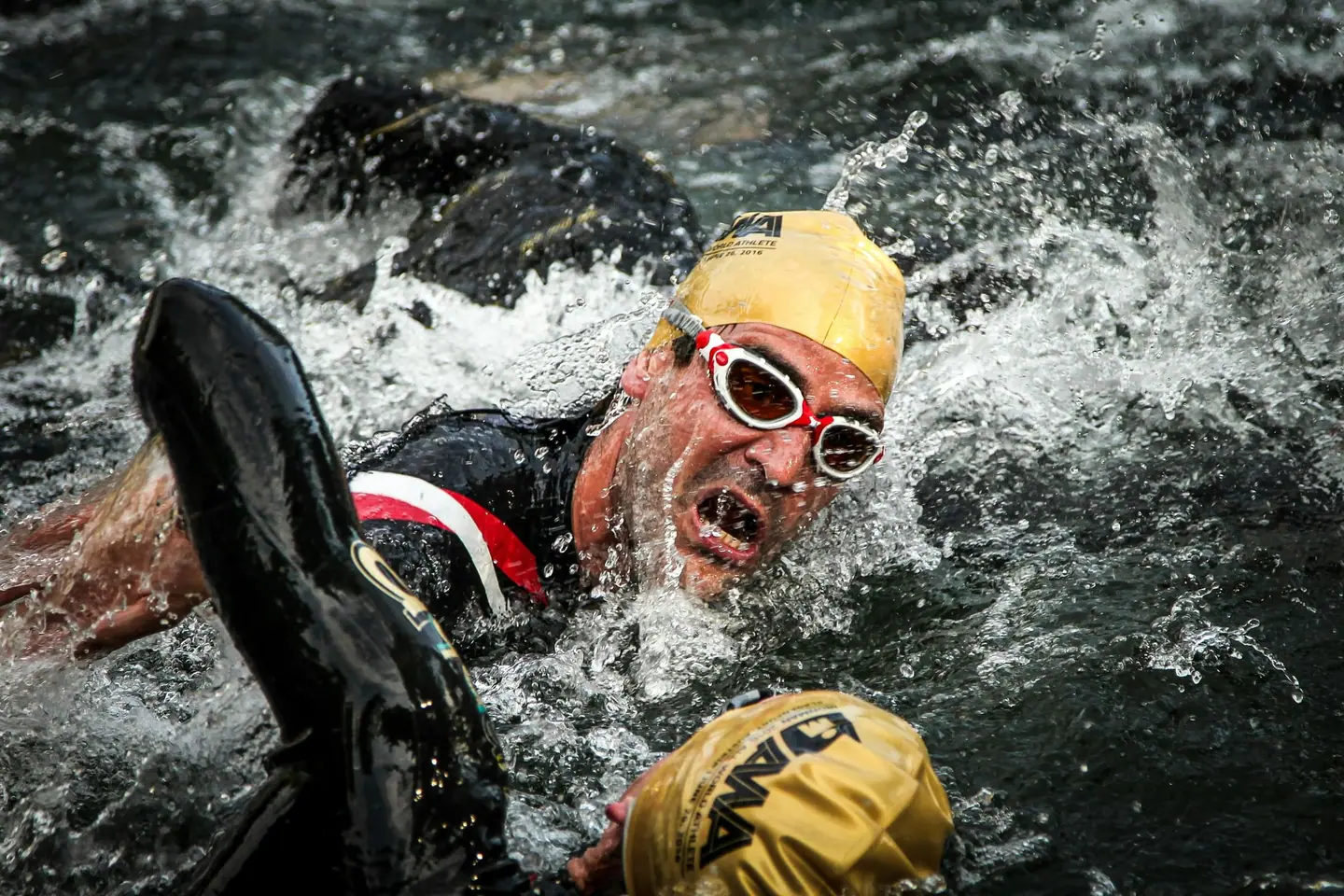
In the water, open-water swimming without a wetsuit is what counts. Swim regularly in a lake over the summer and practise sighting on buoys; the time-trial start keeps the swim uncrowded but asks you to navigate for yourself.
Practise transitions
On the bike and the run, rolling terrain is the focus: 1 to 2 minute uphill intervals on the bike, hill repeats and tempo runs on rolling roads. Brick sessions with a climb in the first minutes of the run prepare you for the start of the run course.
Arrive fresh
The race is held at the end of July. In the weeks before, get used to training in the heat and practise drinking from your own bottles on the bike, because there is no aid out there.

Courses
Download each leg of Culpeper Triathlon as its own GPX file for your watch or bike computer.
Let YOUB adapt your plan for Culpeper Triathlon dynamically
Ben connects your goal, the course, current load, recovery, and calendar. Your plan stays pointed at race day even when real life is not perfectly plannable.
Everything about Culpeper Triathlon.
How long is Culpeper Triathlon?
Culpeper Triathlon is 50.12 km long. That distance shapes how much aerobic endurance, pace durability, and race-specific work belong in the training plan.
What is the profile of the bike course at Culpeper Triathlon?
The bike course at Culpeper Triathlon is classified as Rolling, averaging 12.5 vertical metres per kilometre. 25% of the route is flat, 36% climbs moderately (2 to 6%) and 1% is steeper than 6%.
What climbs does the bike course at Culpeper Triathlon have?
The hardest climb on the bike course at Culpeper Triathlon starts at kilometre 0.3, runs for 1 km at an average of 3.7% and gains 36 metres. 8 climbs are mapped in total.
Is there a GPX file for the Culpeper Triathlon course?
Yes. Each leg of Culpeper Triathlon is on this page as its own free GPX download — ready to import into Garmin, Wahoo, Komoot, Strava or any other app that reads GPX.
How should I prepare for Culpeper Triathlon?
Preparation for Culpeper Triathlon should account for 50.12 km, current training load, and available training time. An adaptive plan helps place key sessions without ignoring recovery and real life.
What pacing strategy works for Culpeper Triathlon?
The pacing strategy for Culpeper Triathlon should reflect 50.12 km and your current fitness. Start controlled and keep margin for sections where the profile or fatigue makes target pace harder.
When does Culpeper Triathlon take place?
Culpeper Triathlon takes place on July 31, 2027.
Where does Culpeper Triathlon take place?
Culpeper Triathlon takes place in Culpeper, United States.
Which distances does Culpeper Triathlon offer?
Culpeper Triathlon offers 6 distances — Culpeper Olympic Triathlon: 50.12 km; Culpeper Olympic Aquabike: 40.12 km; Culpeper Olympic Triathlon Relay: 50.12 km; Culpeper Sprint Triathlon: 28.76 km; Culpeper Sprint Aquabike: 23.76 km; Culpeper Sprint Triathlon Relay: 28.76 km.
How do I register for Culpeper Triathlon?
Registration runs through the organiser: kineticmultisports.com. YOUB shows you the course, elevation profile and training plan for your preparation.