Triathlon du Blavet.
The Triathlon XS at the Triathlon du Blavet is the short Sunday-morning option: 300 metres in the Blavet, an 8 km lap on the plateau roads and 2.5 kilometres on the towpath. It all happens at the Lochrist white-water park, and the day's only climb comes right after transition.
No date has been announced for the next edition yet. The course, elevation and route profile are from the most recent edition.
Triathlon du Blavet: Course, Route Profile & Map
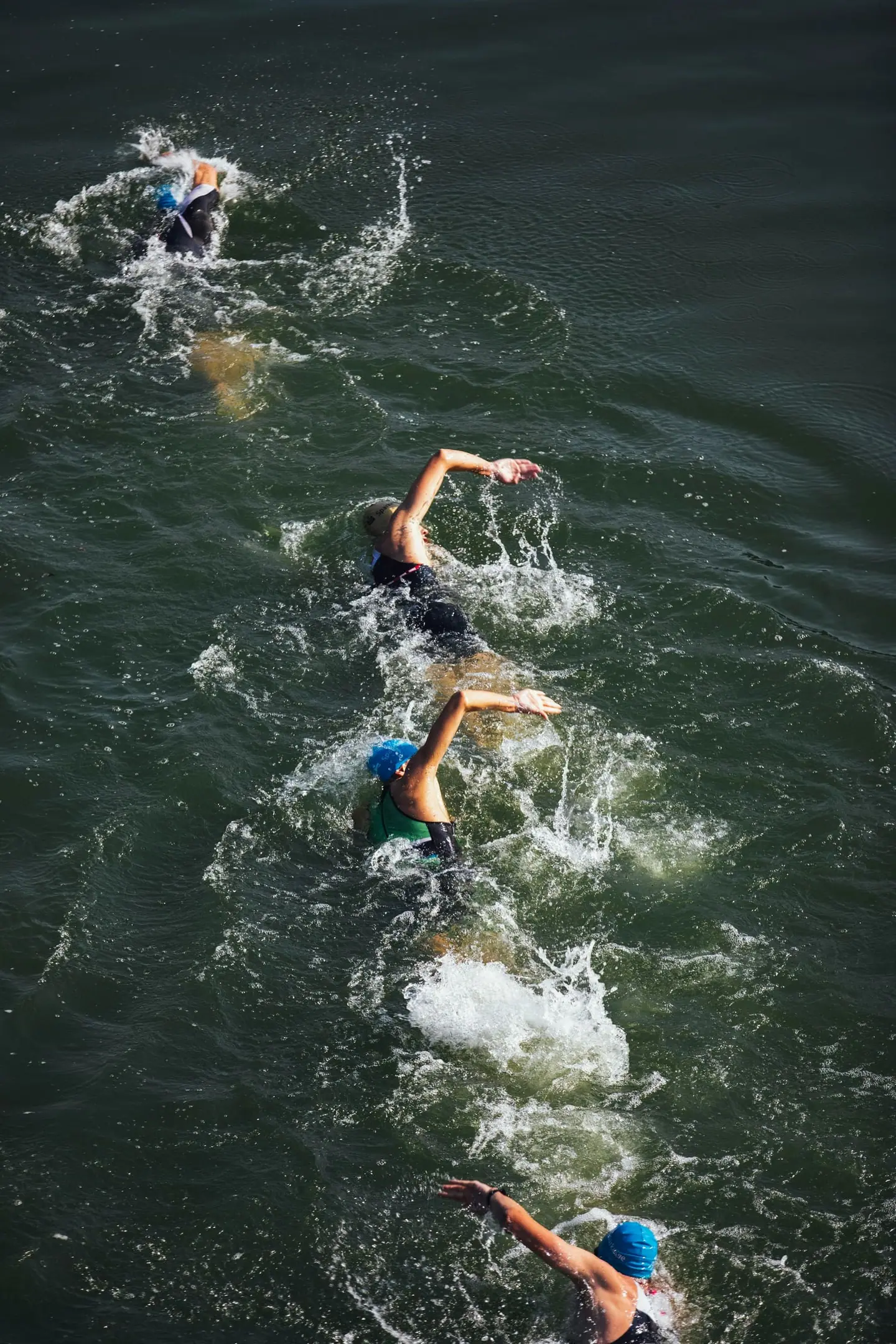
The swim is in the Blavet above the white-water park's lock - in the river, not a lake - a short and manageable 300 metres. Transition sits directly on the bank in the Parc du Bunz, so the distances between disciplines are short.
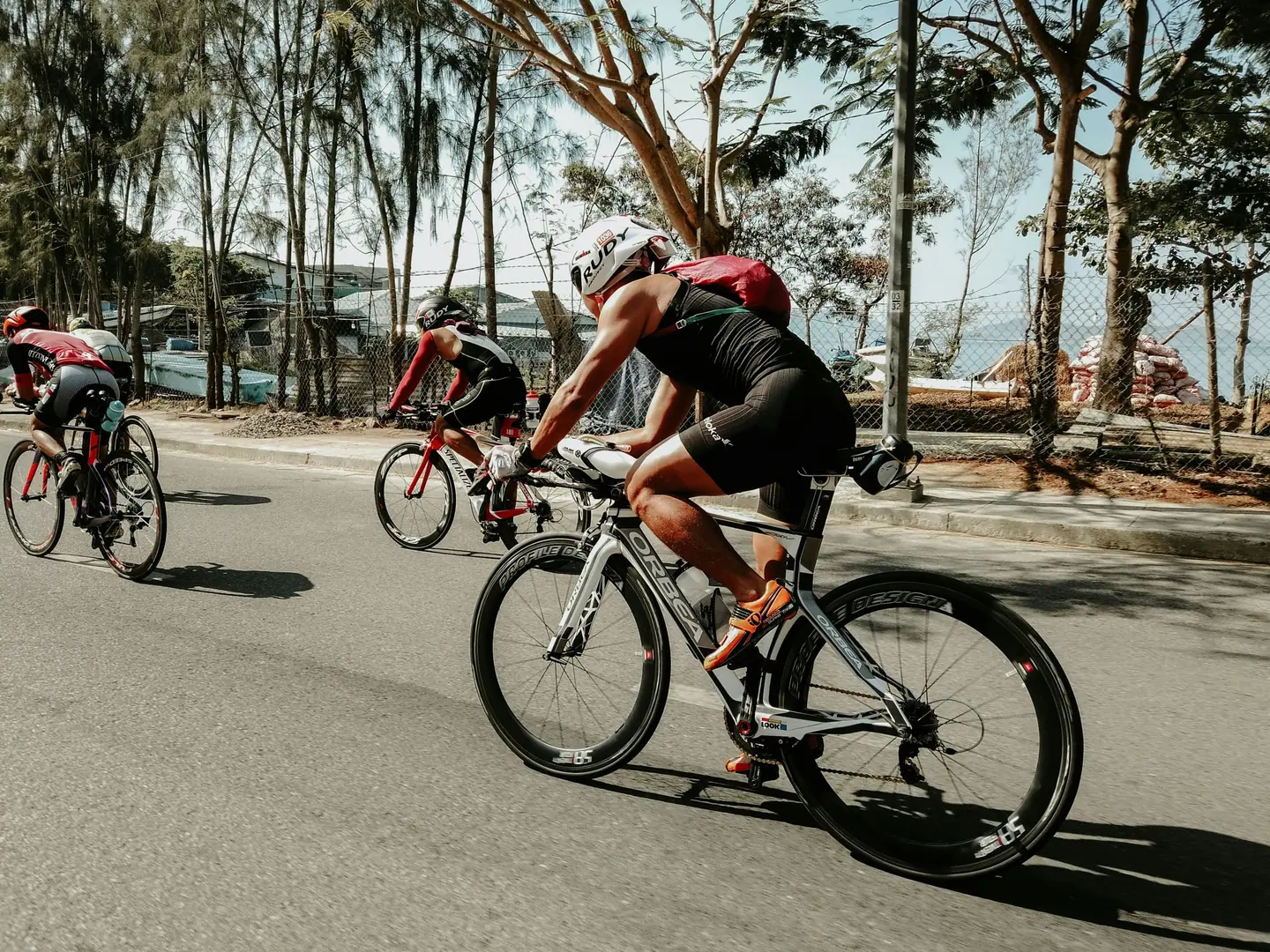
The bike is the only demanding part: one lap out of the valley towards Penquesten, with a kilometre at a good four percent immediately after transition and rolling ground back. The run is entirely flat by contrast - 2.5 kilometres on the halage, the old Blavet towpath, out and back around a turn.
The XS starts at eleven, six hours before the racing day ends, and is open from twelve years of age; drafting is allowed. That makes it the entry-level race of an event the Hennebont Triathlon club has now put on for the eleventh time, in the wooded Blavet valley inland of the Morbihan.
+100 m
Bike course
8 km · +100 m| Start | Length | Ø | Max. | Gain | Cat. |
|---|---|---|---|---|---|
| km 0.8 | 1.2 km | 4.2 % | 8.3 % | +48 m | — |
Climb categories follow the road-cycling convention and rate the terrain itself (length and gradient) regardless of sport: Cat. 4 marks the easiest rated climbs, Cat. 1 the hardest, and HC (hors catégorie, “beyond categorization”) is reserved for the most brutal ascents. Short climbs below the Cat. 4 threshold stay unrated.
How to pace Triathlon du Blavet.
Settle into the race
At super-sprint distance there is no reserve to save - and yet the course cannot be raced evenly. The swim is short enough to attack, but the heart rate then has to survive the climb immediately after.
Spread the effort
The race is decided in T1 and the two kilometres after it. Transition times weigh heavily in proportion, and the climb straight off the mount line punishes a hard swim twice over. Overcook it there and you lose the 2.5 running kilometres, flat though they are.
Finish strong
The trap is precisely that sequence: cold river water, a short sprint in it, then a ramp at once - a combination that shuts the legs down faster than an even effort of the same duration would. On the towpath afterwards nothing in the terrain forces a recovery; the last third has to be carried on your own.
Training plan for Triathlon du Blavet: 12-week build
Build all three disciplines
Total effort for a typical field is roughly 35 to 55 minutes. The demand is high-intensity throughout with one clear spike on the bike climb - more anaerobically tolerant than a middle distance, but without the recovery windows longer formats offer.
Brick sessions
What decides it is the chaining, not any single discipline. Short brick sessions are therefore the core of the preparation: a swim with a hard exit straight onto the bike, and bike-run transitions in which the first 500 metres on foot are deliberately run under control.
Practise transitions
Add transition practice in the narrow sense - wetsuit removal, mounting, shoe changes. With a total time under an hour those seconds decide placings, and they are the fastest-improving part of the race.
Arrive fresh
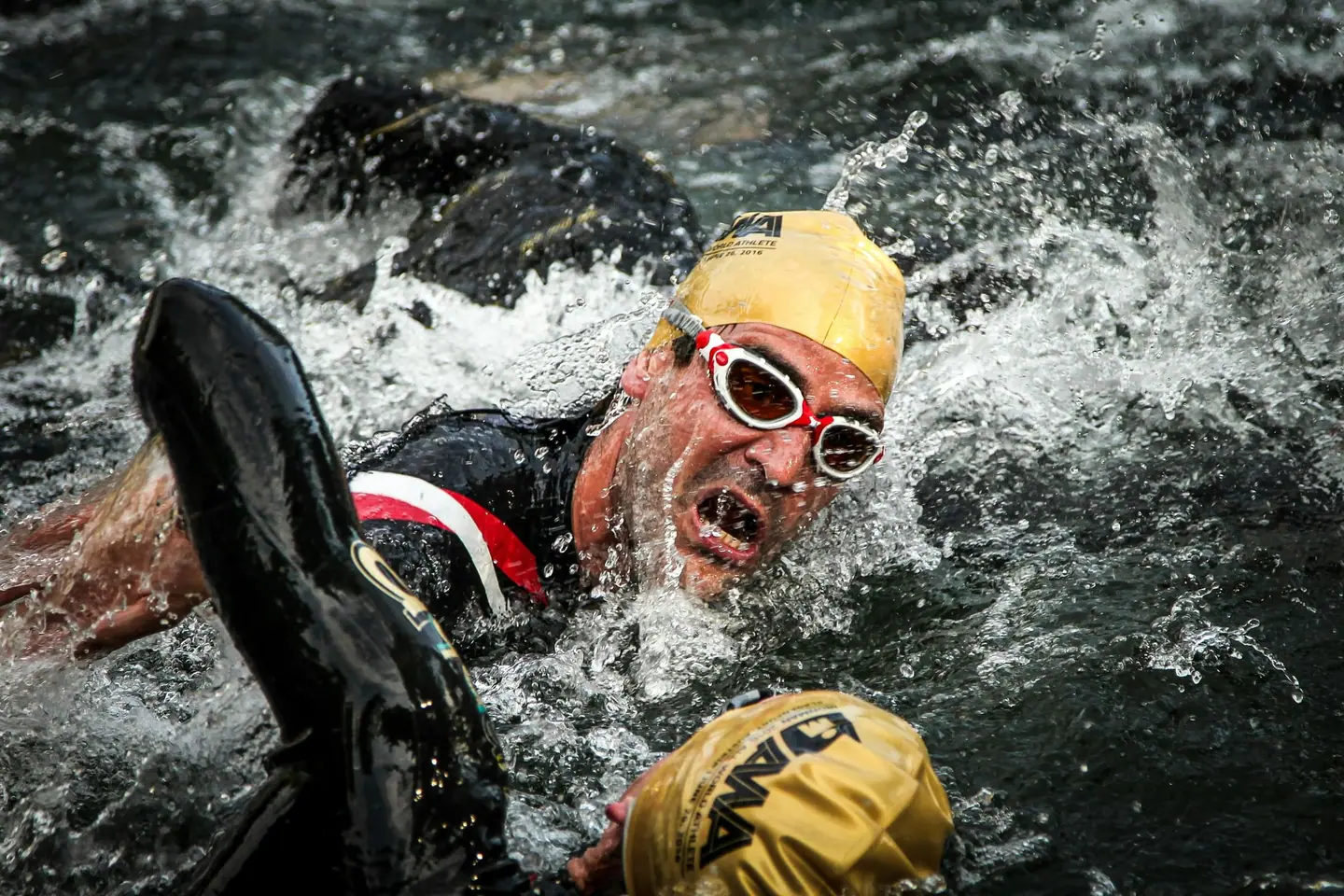
Among the conditions the water matters most: at the end of September the Blavet is a river with current and cool water, and a wetsuit is compulsory below 16 degrees. Open-water swimming in a wetsuit, sighting without pool lines, and going from cold water into immediate effort all belong in the preparation - as does riding narrow and possibly wet lanes.

Courses
Download the Triathlon du Blavet course as a GPX file for your watch or bike computer.
Let YOUB adapt your plan for Triathlon du Blavet dynamically
Ben connects your goal, the course, current load, recovery, and calendar. Your plan stays pointed at race day even when real life is not perfectly plannable.
Everything about Triathlon du Blavet.
How long is Triathlon du Blavet?
Triathlon du Blavet is 10.8 km long. That distance shapes how much aerobic endurance, pace durability, and race-specific work belong in the training plan.
How much elevation gain does Triathlon du Blavet have?
Triathlon du Blavet has around 100 m of elevation gain over 10.8 km. That affects pacing, muscular load, and preparation for late-race sections.
What is the profile of the bike course at Triathlon du Blavet?
The bike course at Triathlon du Blavet is classified as Rolling, averaging 12.1 vertical metres per kilometre. 30% of the route is flat, 31% climbs moderately (2 to 6%) and 2% is steeper than 6%.
What climbs does the bike course at Triathlon du Blavet have?
The hardest climb on the bike course at Triathlon du Blavet starts at kilometre 0.8, runs for 1.2 km at an average of 4.2% and gains 48 metres.
Is there a GPX file for the Triathlon du Blavet course?
Yes. The Triathlon du Blavet course is on this page as a free GPX download — ready to import into Garmin, Wahoo, Komoot, Strava or any other app that reads GPX.
How should I prepare for Triathlon du Blavet?
Preparation for Triathlon du Blavet should account for 10.8 km, 100 m of elevation gain, current training load, and available training time. An adaptive plan helps place key sessions without ignoring recovery and real life.
What pacing strategy works for Triathlon du Blavet?
The pacing strategy for Triathlon du Blavet should reflect 10.8 km, 100 m of elevation gain, and your current fitness. Start controlled and keep margin for sections where the profile or fatigue makes target pace harder.
When does Triathlon du Blavet next take place?
No date has been announced for the next edition yet. The most recent one was held on September 27, 2026.
Where does Triathlon du Blavet take place?
Triathlon du Blavet takes place in Inzinzac-Lochrist, France.
Which distances does Triathlon du Blavet offer?
Triathlon du Blavet offers 3 distances — Triathlon XS: 10.8 km; Triathlon M: 51.5 km; Triathlon M Relais: 51.5 km.
How do I register for Triathlon du Blavet?
Registration runs through the organiser: klikego.com. YOUB shows you the course, elevation profile and training plan for your preparation.