Challenge Peguera-Mallorca.
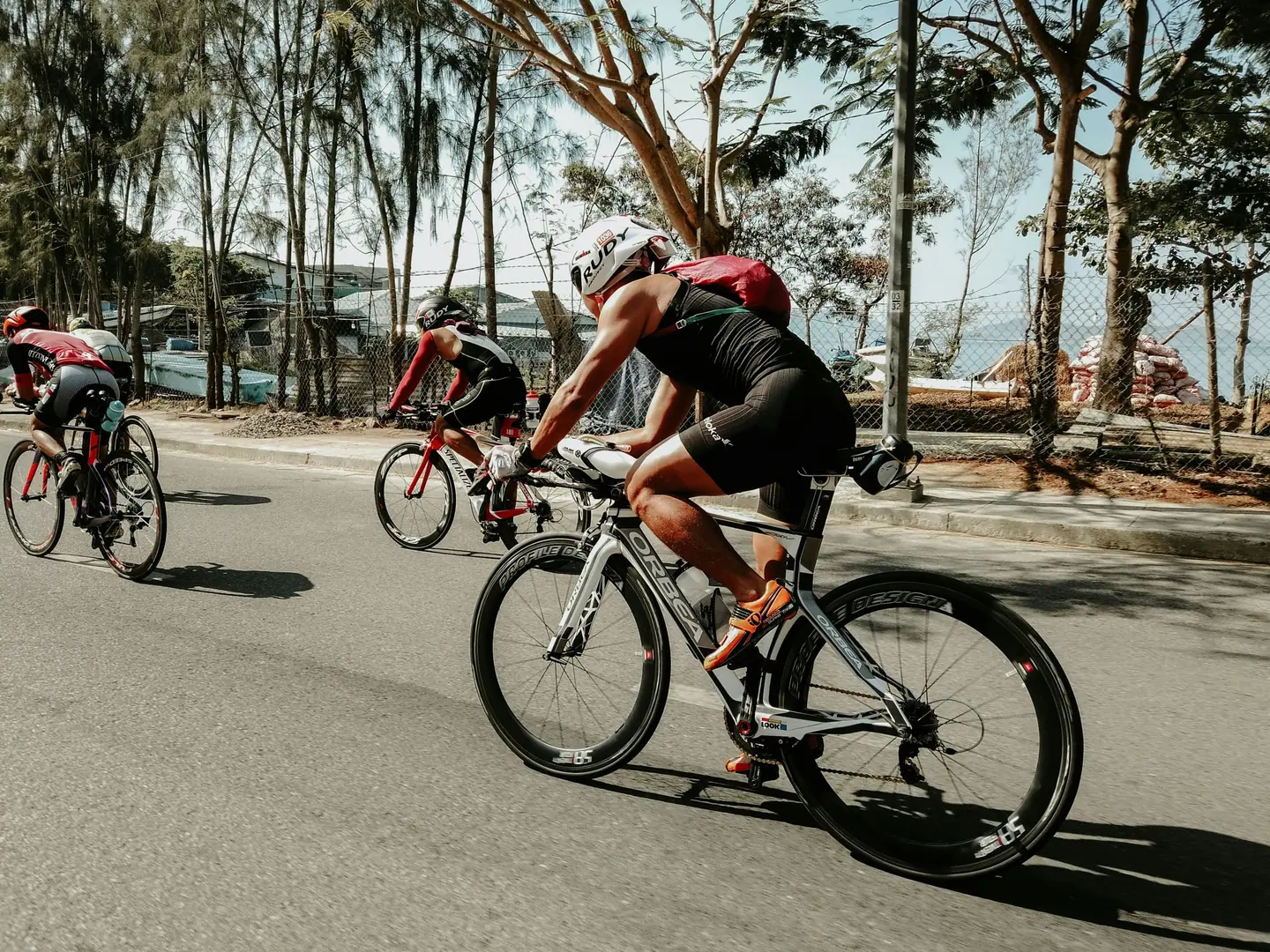
The middle distance at Challenge Peguera-Mallorca is a race of transitions: out of the water onto the sand twice, onto the bike a few metres later and straight inland into the hills, then back to the same square for four flat laps through the town. The people who do well here rarely have the strongest single discipline, they have the cleanest joins between the three.
No date has been announced for the next edition yet. The course, elevation and route profile are from the most recent edition.
Challenge Peguera-Mallorca: Course, Elevation & Route Profile
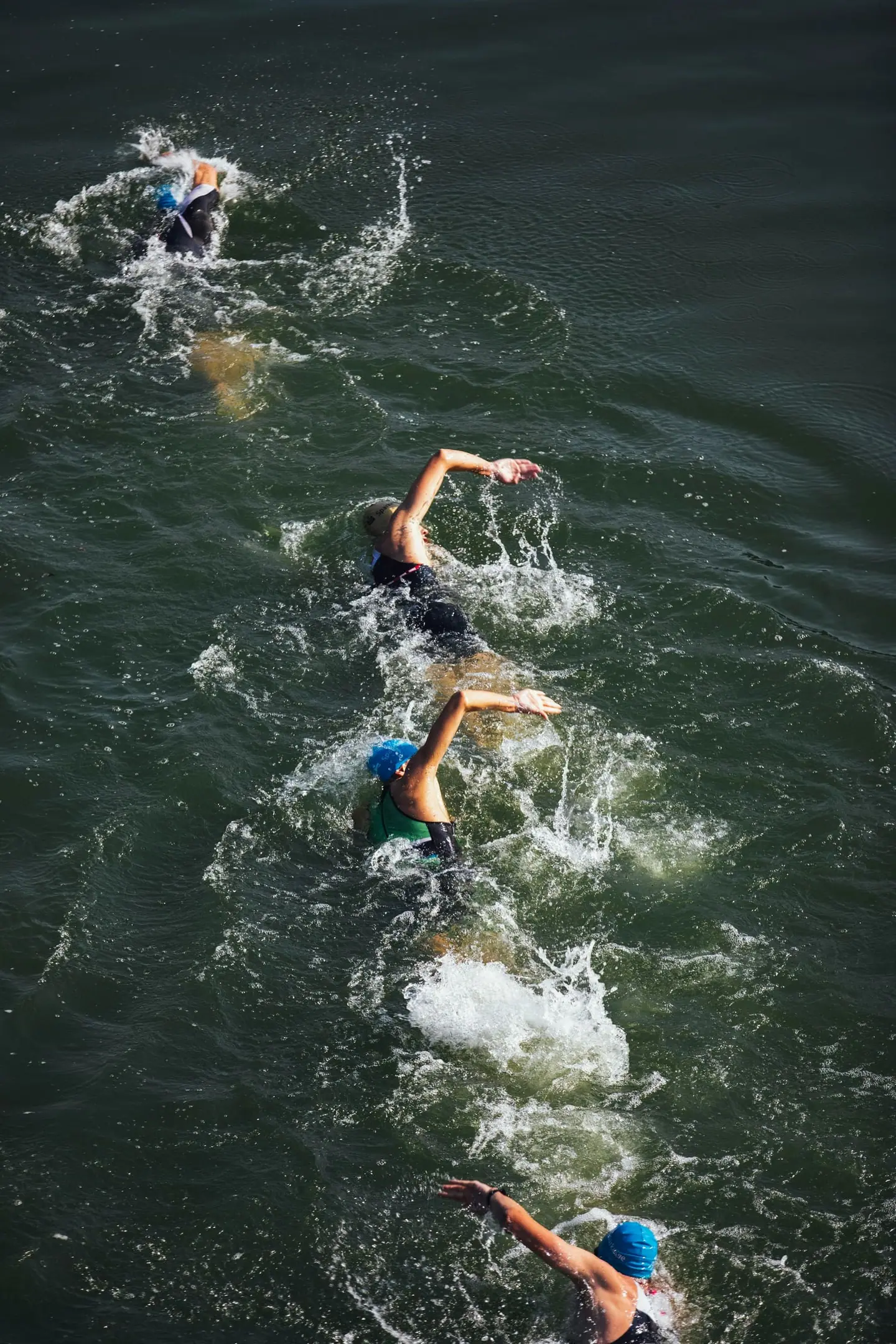
The day opens with a single start off the sand at Platja de Torà. The 1.9 kilometres are swum as two loops, and between them you leave the water, run across the beach and go back in. From the exit it is only about 150 metres to transition, and transition stays the same place all day: you take the bike from here, you come back here 90 kilometres later, and from here a link of roughly 500 metres leads onto the run circuit.
T1 is short, and that is precisely the problem. You come out of the water with your heart rate high, you are on the bike within a couple of minutes, and you turn inland while still inside the town, where the road begins to climb. T2 reverses the situation: after hours on rolling, technical terrain you step onto a flat circuit where nothing regulates your pace for you. On top of that sits a time structure worth knowing, because it ends races: one cutoff out on the bike course at kilometre 60.5 and a second on the return to transition.
The setting is a holiday town, not a sports ground. Start, transition, run laps and finish all sit in the centre of Peguera, the roads are closed, and because the run passes the finish four times you meet the same crowd again and again. The race is put on by the Fundación Calvià, it is an official qualifier for Challenge Family's The Championship, and the entry list sells out regularly.
+1,243 m
+198 m
Bike course
90 km · +1,243 m| Start | Length | Ø | Max. | Gain | Cat. |
|---|---|---|---|---|---|
| km 4.1 | 1.4 km | 5.6 % | 12.7 % | +78 m | — |
| km 15.2 | 1.5 km | 3.2 % | 5.4 % | +48 m | — |
| km 30 | 1 km | 3.6 % | 5.2 % | +36 m | — |
| km 40.2 | 1.8 km | 3.5 % | 7.4 % | +62 m | — |
| km 47.6 | 1.4 km | 5.7 % | 12.7 % | +78 m | — |
| km 58.7 | 1.6 km | 3.1 % | 5.6 % | +49 m | — |
| km 73.5 | 1 km | 3.6 % | 5.2 % | +36 m | — |
| km 83.7 | 1.8 km | 3.5 % | 7.3 % | +62 m | — |
Climb categories follow the road-cycling convention and rate the terrain itself (length and gradient) regardless of sport: Cat. 4 marks the easiest rated climbs, Cat. 1 the hardest, and HC (hors catégorie, “beyond categorization”) is reserved for the most brutal ascents. Short climbs below the Cat. 4 threshold stay unrated.
Run course
21.1 km · +198 m| Start | Length | Ø | Max. | Gain | Cat. |
|---|
Climb categories follow the road-cycling convention and rate the terrain itself (length and gradient) regardless of sport: Cat. 4 marks the easiest rated climbs, Cat. 1 the hardest, and HC (hors catégorie, “beyond categorization”) is reserved for the most brutal ascents. Short climbs below the Cat. 4 threshold stay unrated.
How to pace Challenge Peguera-Mallorca.
Settle into the race
The 1.9 kilometre swim is the shortest lever of the day and the most expensive one to treat as a race of its own. Swim the first loop under control, use the beach section between the loops to get your breathing back rather than to sprint, and start the bike at a heart rate that can settle again within ten minutes. Those first ten minutes are already uphill.
Spread the effort
The day is settled in the second half of the bike and on the third run lap. Take the first set of inland hills with fresh legs and you pay for it two hours later on a completely flat circuit, where no terrain hides the mistake. Leave T2 deliberately slower than it feels right to.
Finish strong
Fuelling here is a planning job. The bike is the only leg on which solid food makes sense, and whatever is not in you by T2 will not be recovered on a shadeless promenade under midday sun. Work backwards: how much you need on the bike is decided by how you want to feel on lap three.
Training plan for Challenge Peguera-Mallorca: 12-week build
Build all three disciplines
Reckon on four to seven hours for the middle distance, depending on your riding. The character of the effort changes fundamentally three times: a short intense swim start, a long section of constantly varying power, and finally a uniform aerobic grind in which nothing varies any more except your fatigue.
Brick sessions
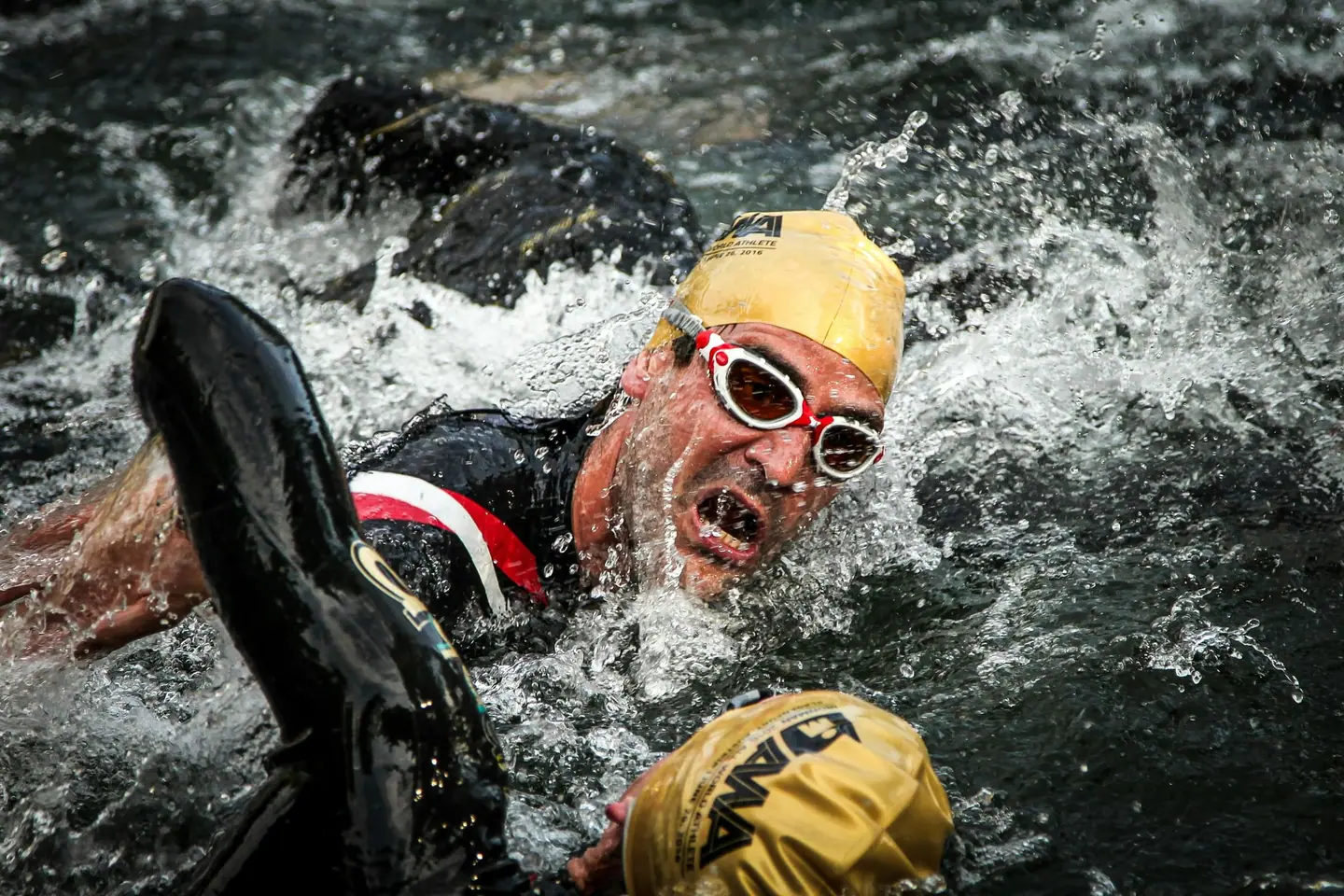
The first training priority is the joins, not the individual disciplines. Practise swimming with an exit and a re-entry: standing up, running across sand, going back in and finding your rhythm again straight away is a skill of its own, and this race asks for it. Rehearse the transition routine with your colour-coded bags as well, instead of improvising it on race morning.
Practise transitions
The second priority is the race day as a whole. Build at least two long sessions into your preparation that run swim, bike and run in that order and on your intended race nutrition, even without covering full distance. The aim is not volume but a test of the plan: fluid intake, calories per hour, time spent in transition.
Arrive fresh
On conditions: for northern European athletes this race falls at the end of the season, after weeks of training in cooler air at home. Peguera offers the opposite, a sea the organiser describes from past editions as calm and a sunny, warm middle of the day. Deliberately schedule warm sessions in the final weeks, and swim in salt water with sighting practice rather than relying on the pool.

Courses
Download each leg of Challenge Peguera-Mallorca as its own GPX file for your watch or bike computer.
Let YOUB adapt your plan for Challenge Peguera-Mallorca dynamically
Ben connects your goal, the course, current load, recovery, and calendar. Your plan stays pointed at race day even when real life is not perfectly plannable.
Everything about Challenge Peguera-Mallorca.
How long is Challenge Peguera-Mallorca?
Challenge Peguera-Mallorca is 113 km long. That distance shapes how much aerobic endurance, pace durability, and race-specific work belong in the training plan.
How much elevation gain does Challenge Peguera-Mallorca have?
Challenge Peguera-Mallorca has around 1,441 m of elevation gain over 113 km. That affects pacing, muscular load, and preparation for late-race sections.
What is the profile of the bike course at Challenge Peguera-Mallorca?
The bike course at Challenge Peguera-Mallorca is classified as Rolling, averaging 12.4 vertical metres per kilometre. 29% of the route is flat, 32% climbs moderately (2 to 6%) and 2% is steeper than 6%.
What climbs does the bike course at Challenge Peguera-Mallorca have?
The hardest climb on the bike course at Challenge Peguera-Mallorca starts at kilometre 4.1, runs for 1.4 km at an average of 5.6% and gains 78 metres. 8 climbs are mapped in total.
Is there a GPX file for the Challenge Peguera-Mallorca course?
Yes. Each leg of Challenge Peguera-Mallorca is on this page as its own free GPX download — ready to import into Garmin, Wahoo, Komoot, Strava or any other app that reads GPX.
How should I prepare for Challenge Peguera-Mallorca?
Preparation for Challenge Peguera-Mallorca should account for 113 km, 1,441 m of elevation gain, current training load, and available training time. An adaptive plan helps place key sessions without ignoring recovery and real life.
What pacing strategy works for Challenge Peguera-Mallorca?
The pacing strategy for Challenge Peguera-Mallorca should reflect 113 km, 1,441 m of elevation gain, and your current fitness. Start controlled and keep margin for sections where the profile or fatigue makes target pace harder.
When does Challenge Peguera-Mallorca next take place?
No date has been announced for the next edition yet. The most recent one was held on October 17, 2026.
Where does Challenge Peguera-Mallorca take place?
Challenge Peguera-Mallorca takes place in Peguera, Spain.
Which distances does Challenge Peguera-Mallorca offer?
Challenge Peguera-Mallorca offers 4 distances — Middle Distance: 113 km; Relay Middle Distance: 113 km; Challenge Women Mallorca Run: 4 km; Challenge4ALL: 2 km.
How do I register for Challenge Peguera-Mallorca?
Registration runs through the organiser: challenge-mallorca.com. YOUB shows you the course, elevation profile and training plan for your preparation.