Challenge Salou - Costa Daurada.
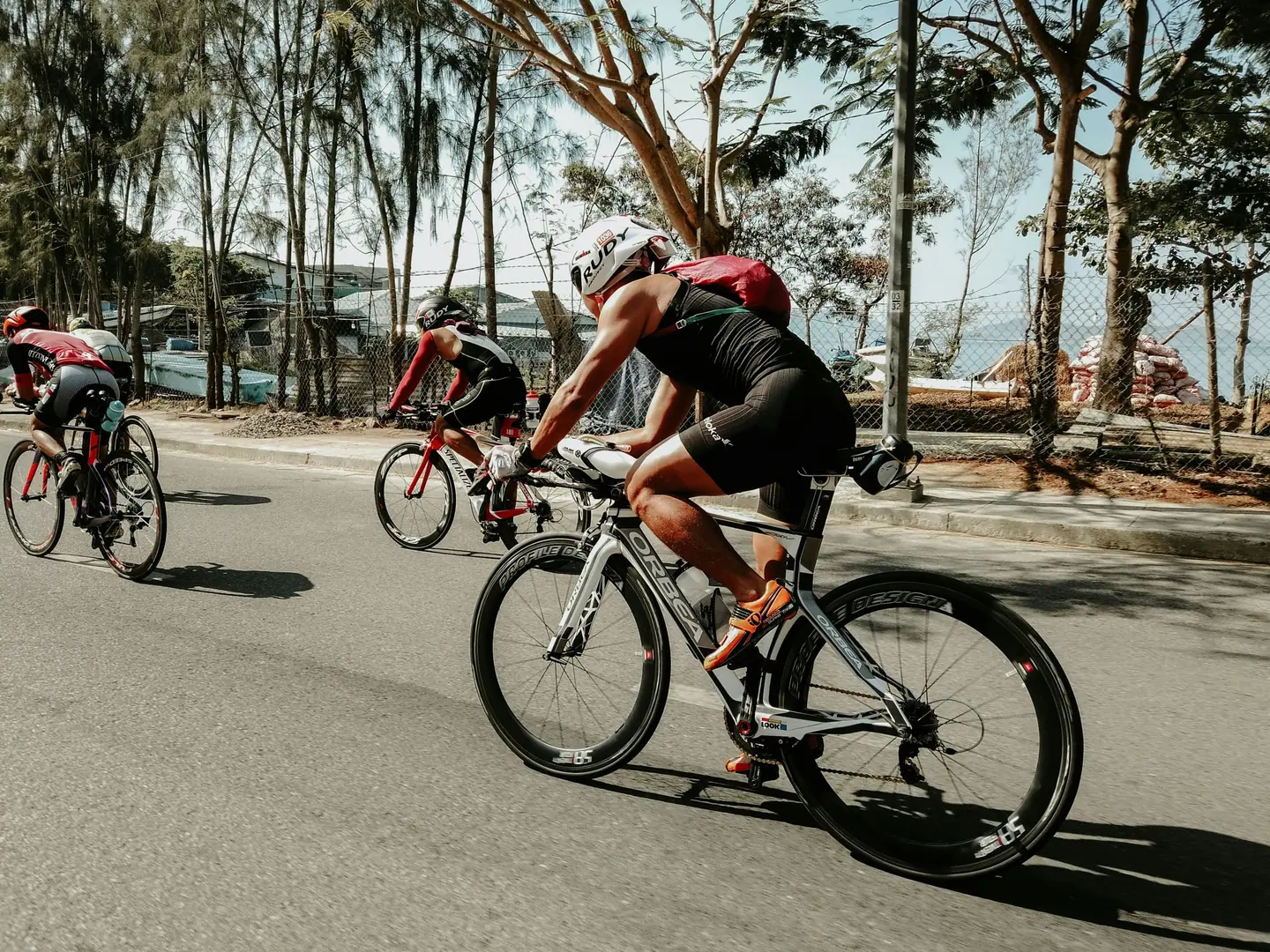
The T100 Distance at Challenge Salou - Costa Daurada is a middle distance without a single mountain: two kilometres in the Mediterranean, eighty on a closed motorway, eighteen along the beachfront promenade. What decides it is not climbing ability but how cleanly you string the three legs together and how little you give away in the two transitions.
Challenge Salou - Costa Daurada 2027: Course, Elevation & Route Profile
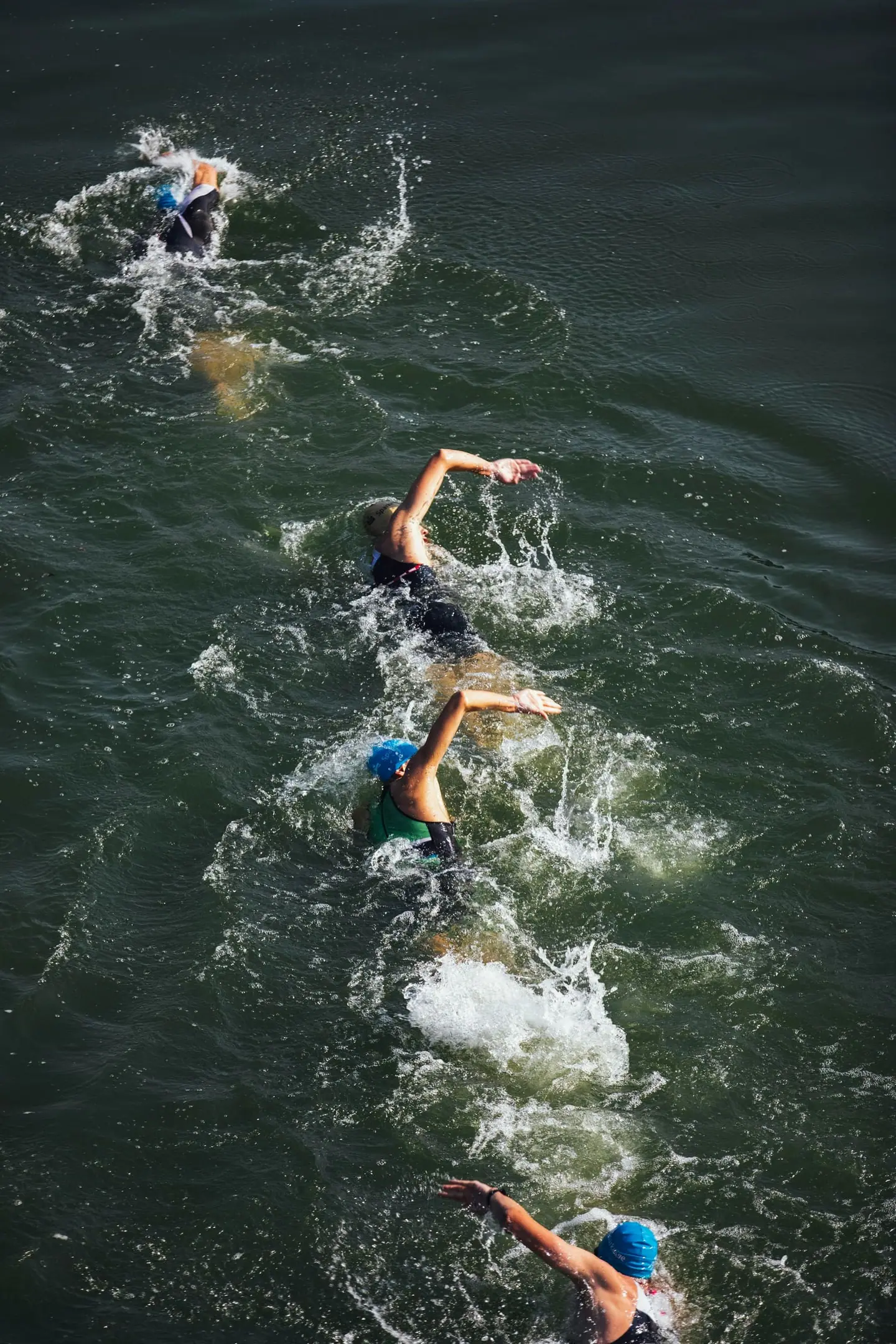
The day starts on the Platja de Llevant with two swim laps in shallow water, looking out towards the Ebro delta and the Serra de la Mussara. From the water you run into the transition area on the Passeig Jaume I, head inland for three laps of a motorway closed for the race, come back to the same area and finish with four laps of the seafront promenade into the race village.
What stands out is how compact the whole thing is. All three legs start from the same point, all three are lap circuits, and the crowd along the promenade sees you several times over. Salou is a beach resort, already warm in early May and effectively without shade once you are out on the dual carriageway. The race is part of the Challenge Family series and has been held here for more than a decade.
Three rules shape how the race unfolds. Starts go off in waves by category and age group, so you race the clock rather than the people around you. Drafting is banned on the bike, enforced by officials with time penalties served in a penalty box on course. And there are three cut-offs: after the swim, at the end of the bike and at the finish. The middle one is the hard one, because the motorway reopens to traffic behind it.
+534 m
+57 m
Bike course
80 km · +534 m| Start | Length | Ø | Max. | Gain | Cat. |
|---|---|---|---|---|---|
| km 16.8 | 0.5 km | 3.6 % | 3.8 % | +19 m | — |
| km 43.5 | 0.6 km | 3.5 % | 3.8 % | +19 m | — |
| km 70.1 | 0.6 km | 3.6 % | 3.8 % | +20 m | — |
Climb categories follow the road-cycling convention and rate the terrain itself (length and gradient) regardless of sport: Cat. 4 marks the easiest rated climbs, Cat. 1 the hardest, and HC (hors catégorie, “beyond categorization”) is reserved for the most brutal ascents. Short climbs below the Cat. 4 threshold stay unrated.
Run course
18 km · +57 m| Start | Length | Ø | Max. | Gain | Cat. |
|---|
Climb categories follow the road-cycling convention and rate the terrain itself (length and gradient) regardless of sport: Cat. 4 marks the easiest rated climbs, Cat. 1 the hardest, and HC (hors catégorie, “beyond categorization”) is reserved for the most brutal ascents. Short climbs below the Cat. 4 threshold stay unrated.
How to pace Challenge Salou - Costa Daurada.
Settle into the race
The effort is spread very unevenly across the day, and handling that is the real task. The swim costs you roughly a tenth of your race time but can ruin the rest of it if you take the first minutes anaerobically. Swim the two laps deliberately controlled, even when your wave pulls away from you.
Spread the effort
The transitions are timed race sections, not breaks. Bike and transition bags are checked in the day before, your helmet has to be fastened before you lift the bike off the rack, and nothing loose may be left on the ground. A calm, rehearsed T2 gains you more than a forced final bike lap, which you then pay for twice out on the promenade.
Finish strong
The race is decided in the second half of the run. Until then almost everything feels manageable: shallow water, a wide road surface, a flat promenade, nothing that forces you to slow down. That is exactly the trap. Fix your target power and run pace before the start, hold to them, and budget for the fact that every pass under the no-drafting rule costs both energy and attention.
Training plan for Challenge Salou - Costa Daurada: 12-week build
Build all three disciplines
Expect somewhere between four and a half and seven hours depending on your level. The demand is one continuous aerobic block with no recovery built into it: there is no descent to freewheel down and no climb that breaks the rhythm for you.
Brick sessions
The decisive phase is the move from bike to run, and your ability to hold a chosen pace for the best part of an hour afterwards. Long brick sessions therefore belong at the centre of your preparation rather than at its edges: several long rides finished with 30 to 60 minutes of running at target race pace.
Practise transitions
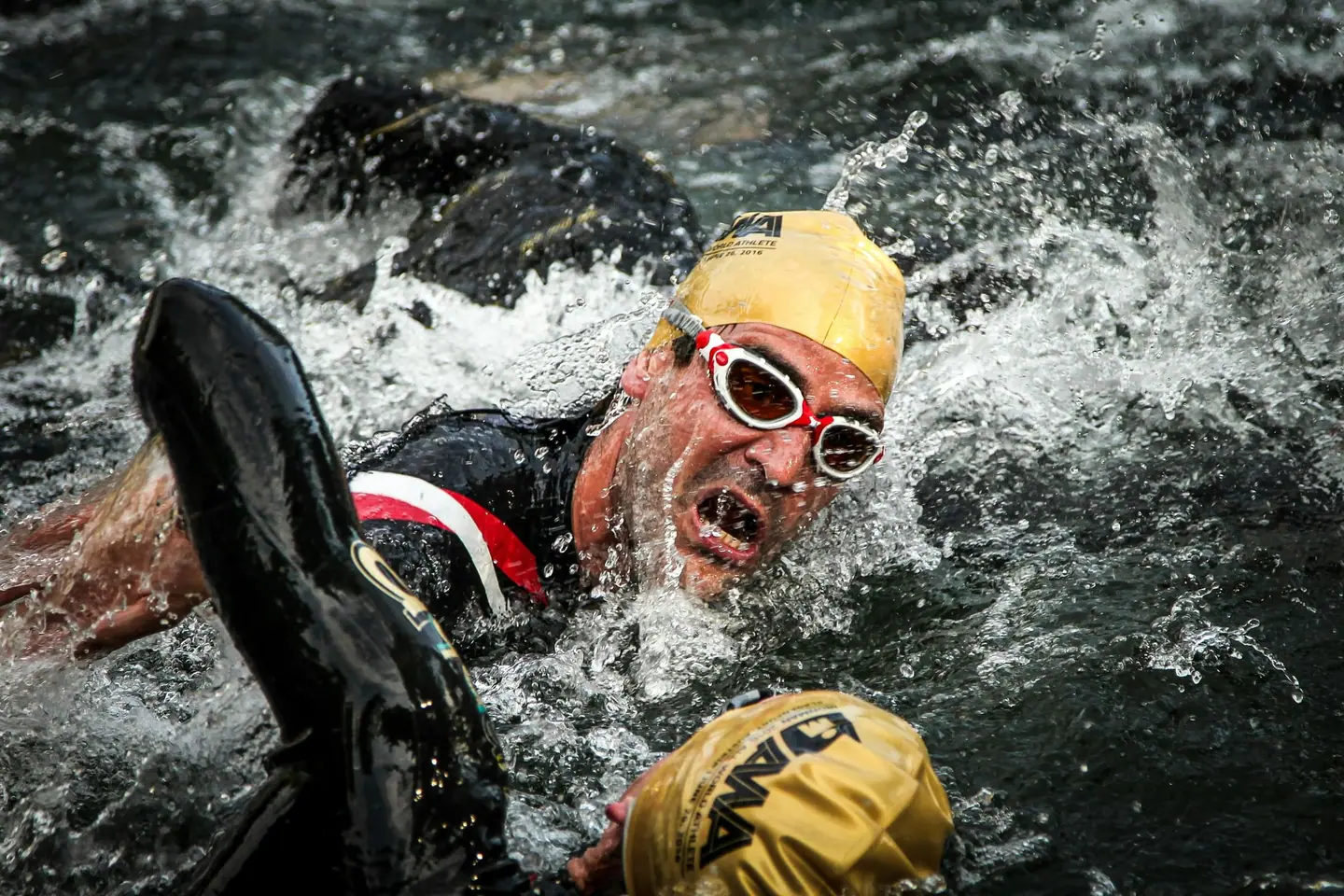
Conditions are a training topic in their own right. The Mediterranean is still cool in early May, and whether the swim is a wetsuit swim is decided by the organisation shortly before the race from the measured water temperature and announced at the briefing, so swim both versions in training. Neither the motorway nor the promenade offers shade, and because the race sits early in the season, the heat is a genuine step up for northern European starters.
Arrive fresh
Three things are trained by execution rather than by fitness: sighting in open water on a circuit you swim twice, riding and passing in an aero position with enough clearance, and the transitions themselves, run through once in full including the bag handling. In a race that hands out no terrain advantages, that is where the best return on your time sits.

Courses
Download each leg of Challenge Salou - Costa Daurada as its own GPX file for your watch or bike computer.
Let YOUB adapt your plan for Challenge Salou - Costa Daurada dynamically
Ben connects your goal, the course, current load, recovery, and calendar. Your plan stays pointed at race day even when real life is not perfectly plannable.
Everything about Challenge Salou - Costa Daurada.
How long is Challenge Salou - Costa Daurada?
Challenge Salou - Costa Daurada is 100 km long. That distance shapes how much aerobic endurance, pace durability, and race-specific work belong in the training plan.
What is the profile of the bike course at Challenge Salou - Costa Daurada?
The bike course at Challenge Salou - Costa Daurada is classified as Flat, averaging 6.1 vertical metres per kilometre. 54% of the route is flat, 24% climbs moderately (2 to 6%) and 0% is steeper than 6%.
What climbs does the bike course at Challenge Salou - Costa Daurada have?
The hardest climb on the bike course at Challenge Salou - Costa Daurada starts at kilometre 70.1, runs for 0.6 km at an average of 3.6% and gains 20 metres. 3 climbs are mapped in total.
Is there a GPX file for the Challenge Salou - Costa Daurada course?
Yes. Each leg of Challenge Salou - Costa Daurada is on this page as its own free GPX download — ready to import into Garmin, Wahoo, Komoot, Strava or any other app that reads GPX.
How should I prepare for Challenge Salou - Costa Daurada?
Preparation for Challenge Salou - Costa Daurada should account for 100 km, current training load, and available training time. An adaptive plan helps place key sessions without ignoring recovery and real life.
What pacing strategy works for Challenge Salou - Costa Daurada?
The pacing strategy for Challenge Salou - Costa Daurada should reflect 100 km and your current fitness. Start controlled and keep margin for sections where the profile or fatigue makes target pace harder.
When does Challenge Salou - Costa Daurada take place?
Challenge Salou - Costa Daurada takes place on May 9, 2027.
Where does Challenge Salou - Costa Daurada take place?
Challenge Salou - Costa Daurada takes place in Salou, Spain.
Which distances does Challenge Salou - Costa Daurada offer?
Challenge Salou - Costa Daurada offers 4 distances — T100 Distance: 100 km; T100 Distance Relay: 100 km; Short Distance: 64 km; Family Run 2K: 2 km.
How do I register for Challenge Salou - Costa Daurada?
Registration runs through the organiser: challenge-salou.com. YOUB shows you the course, elevation profile and training plan for your preparation.