Diamond in the Rough Triathlon.
The Diamond in the Rough Olympic Triathlon in Perryville combines 1.5 km in the Chesapeake Bay, a demanding 43 km bike loop through Cecil County and 10 flat kilometres of running by the water. The organiser itself says this should not be your first triathlon, and the bike is the main reason.
Diamond in the Rough Triathlon 2027: Course, Elevation & Route Profile
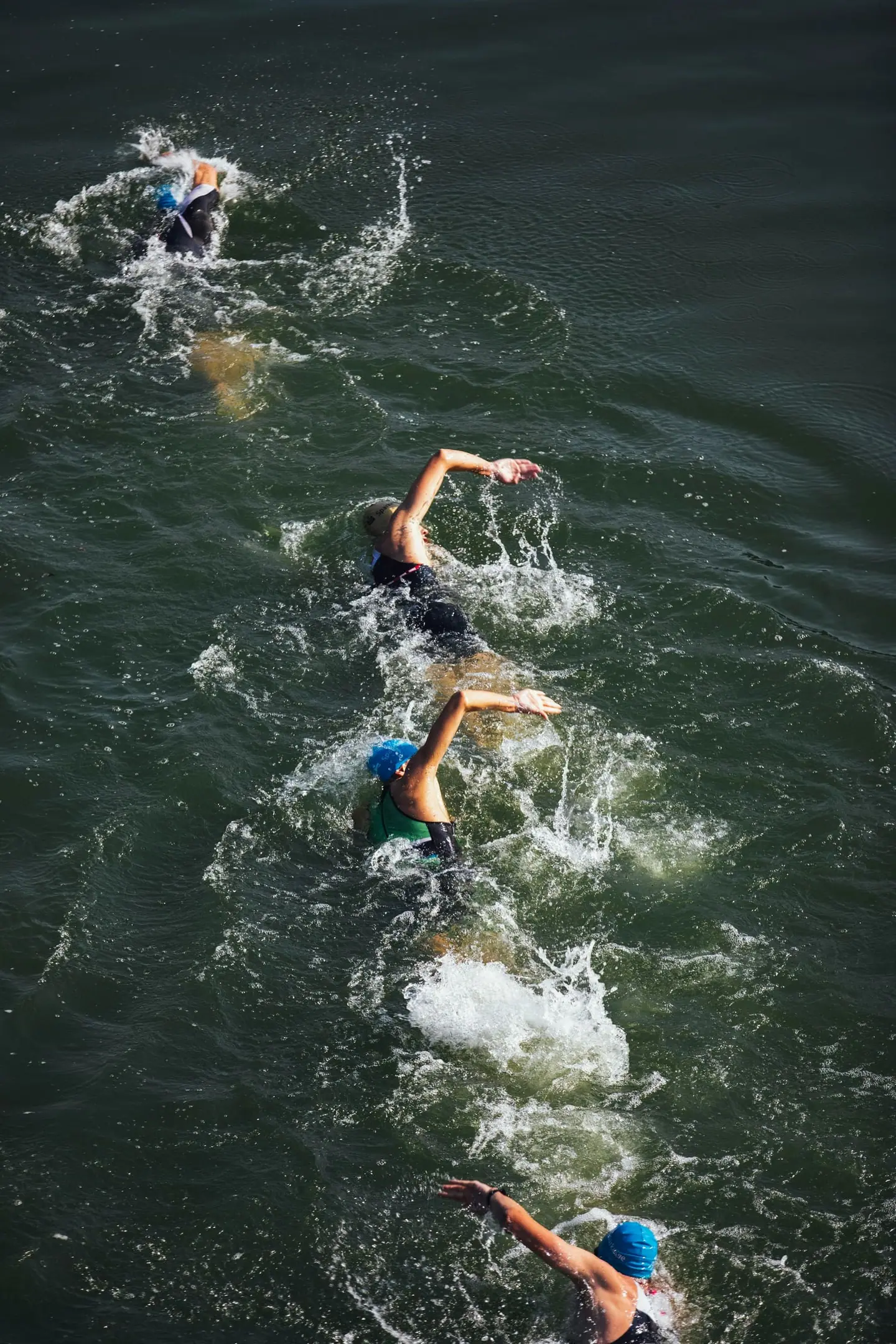
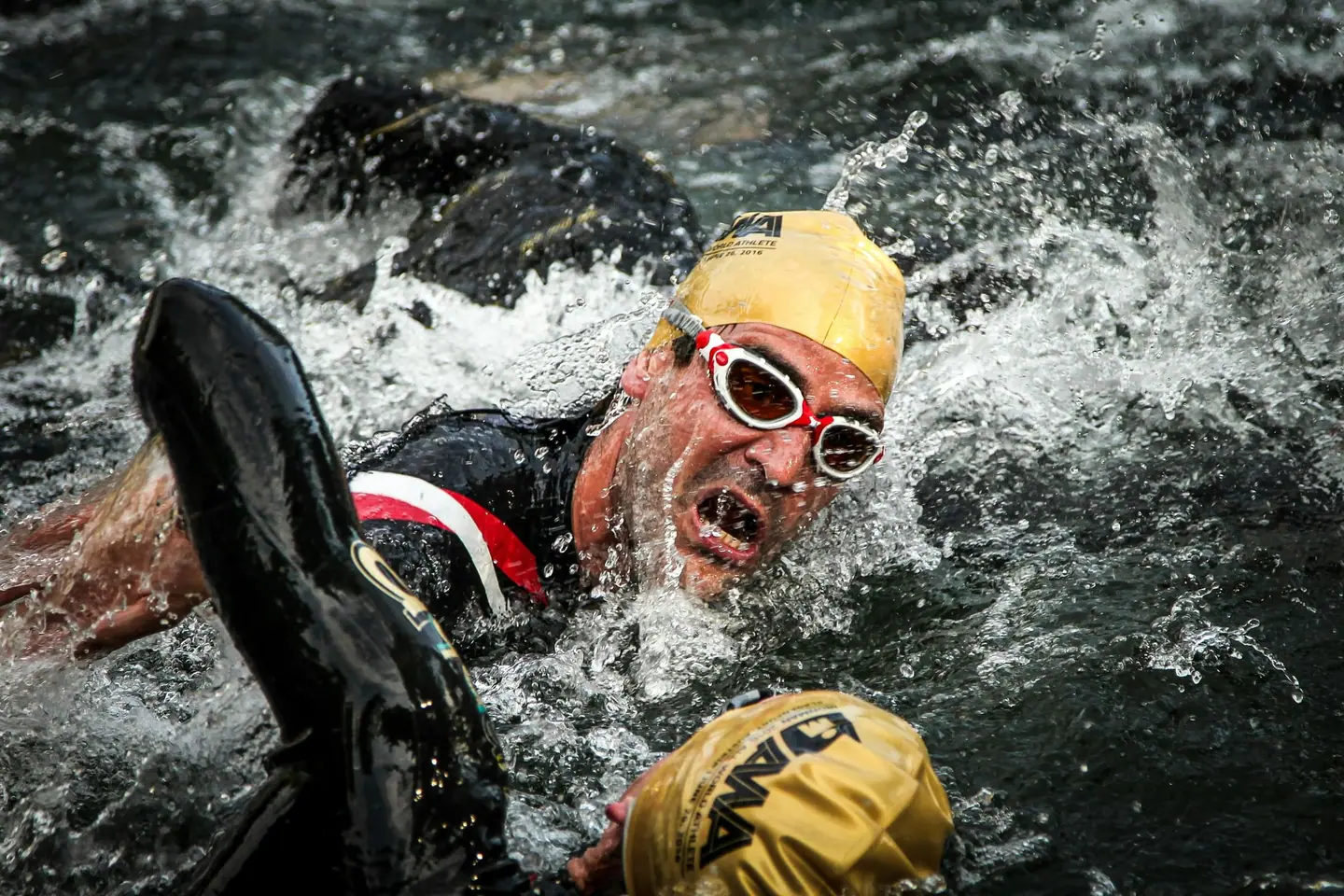
The swim starts as a time trial from the end of a T-dock about 50 m off the shore of Perryville Community Park, two athletes every few seconds; jumping in is allowed, diving is not, because the water there is only 3 to 5 feet deep. You swim two laps of a rectangular course and stay in the water between them. In July the bay usually sits in the low to mid 80s Fahrenheit, which usually means a wetsuit costs you award eligibility.
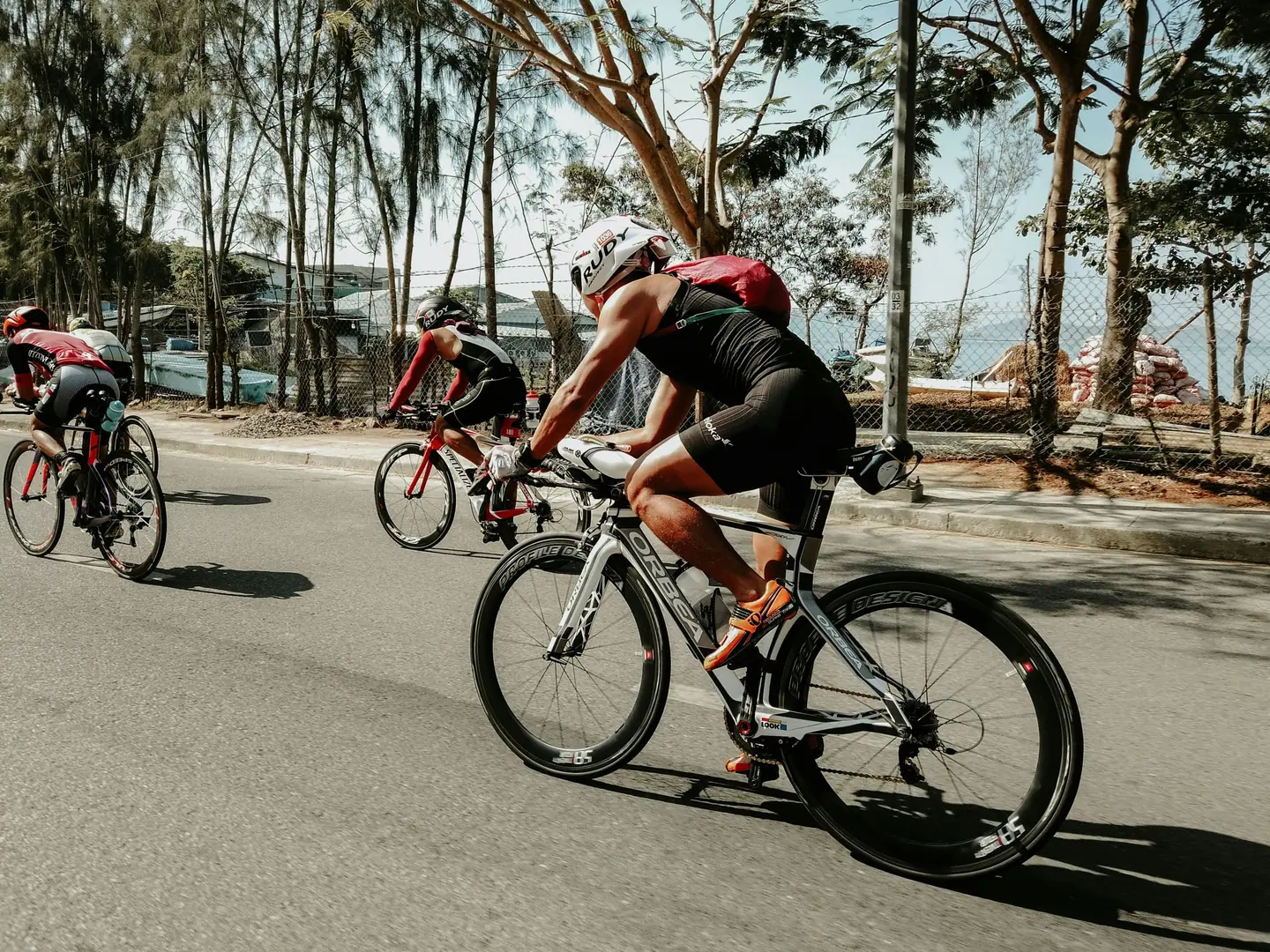
The bike is a single loop north through farmland, with plenty of rollers, sharp downhill corners and the fast River Road along the Susquehanna, followed by the hardest climb back up to Perryville. The run then takes two flat out-and-back laps across the grounds of the Perry Point VA Medical Center, with almost no shade.
The race site sits on wooded bluffs above the top of the Chesapeake Bay, midway between Baltimore and Philadelphia. Kinetic Multisports runs it as part of its East Coast series.
+439 m
+36 m
Bike course
43.13 km · +439 m| Start | Length | Ø | Max. | Gain | Cat. |
|---|---|---|---|---|---|
| km 2 | 0.4 km | 4.2 % | 5.2 % | +16 m | — |
| km 5.9 | 0.3 km | 6.2 % | 10.8 % | +19 m | — |
| km 6.8 | 1.8 km | 3.5 % | 5.8 % | +62 m | — |
| km 10.4 | 0.5 km | 3.4 % | 6.5 % | +17 m | — |
| km 12.1 | 0.6 km | 3.4 % | 5.3 % | +20 m | — |
| km 15.3 | 0.4 km | 4.9 % | 7 % | +18 m | — |
| km 31.9 | 1.1 km | 6.8 % | 8.2 % | +73 m | — |
| km 33.4 | 0.7 km | 5 % | 8.5 % | +33 m | — |
Climb categories follow the road-cycling convention and rate the terrain itself (length and gradient) regardless of sport: Cat. 4 marks the easiest rated climbs, Cat. 1 the hardest, and HC (hors catégorie, “beyond categorization”) is reserved for the most brutal ascents. Short climbs below the Cat. 4 threshold stay unrated.
Run course
10 km · +36 m| Start | Length | Ø | Max. | Gain | Cat. |
|---|
Climb categories follow the road-cycling convention and rate the terrain itself (length and gradient) regardless of sport: Cat. 4 marks the easiest rated climbs, Cat. 1 the hardest, and HC (hors catégorie, “beyond categorization”) is reserved for the most brutal ascents. Short climbs below the Cat. 4 threshold stay unrated.
How to pace Diamond in the Rough Triathlon.
Settle into the race
The race is won on the bike and lost on the run. Swim evenly in the warm, likely wetsuit-free water and do not go out too fast, because without the buoyancy an overcooked start costs more than usual.
Spread the effort
On the bike, the climb from the river after more than 30 km is where your run is decided. Ride the rolling first 20 km and that climb under control and you still have legs for 10 flat kilometres in the heat. Use River Road to make up time and then overdo the climb after it, and you pay on the second run lap.
Finish strong
Drink enough on the bike, since there are no aid stations there, and use every station on the run.
Training plan for Diamond in the Rough Triathlon: 12-week build
Build all three disciplines
Expect about 2:30 to 3:30 hours in total, a good half of it on the bike. The effort is sustained just below threshold, restless on the rolling bike and even on the run.
Brick sessions
The bike loop is the focus: long rides on rolling terrain with the hardest section at the end, plus downhill cornering skills. The organiser explicitly recommends pre-riding the course.
Practise transitions
Bricks with 30 to 45 minutes of running after a rolling ride prepare you for the flat, shadeless run. Swim training should include open water without a wetsuit, so your body position and pace hold up without the extra buoyancy.
Arrive fresh
Above all it is a July heat race. Train part of your sessions in the warmth, practise drinking on the bike and plan your fluid and salt intake for close to three hours in sun and humid air.

Courses
Download each leg of Diamond in the Rough Triathlon as its own GPX file for your watch or bike computer.
Let YOUB adapt your plan for Diamond in the Rough Triathlon dynamically
Ben connects your goal, the course, current load, recovery, and calendar. Your plan stays pointed at race day even when real life is not perfectly plannable.
Everything about Diamond in the Rough Triathlon.
How long is Diamond in the Rough Triathlon?
Diamond in the Rough Triathlon is 54.63 km long. That distance shapes how much aerobic endurance, pace durability, and race-specific work belong in the training plan.
What is the profile of the bike course at Diamond in the Rough Triathlon?
The bike course at Diamond in the Rough Triathlon is classified as Rolling, averaging 10.2 vertical metres per kilometre. 45% of the route is flat, 27% climbs moderately (2 to 6%) and 1% is steeper than 6%.
What climbs does the bike course at Diamond in the Rough Triathlon have?
The hardest climb on the bike course at Diamond in the Rough Triathlon starts at kilometre 31.9, runs for 1.1 km at an average of 6.8% and gains 73 metres. 8 climbs are mapped in total.
Is there a GPX file for the Diamond in the Rough Triathlon course?
Yes. Each leg of Diamond in the Rough Triathlon is on this page as its own free GPX download — ready to import into Garmin, Wahoo, Komoot, Strava or any other app that reads GPX.
How should I prepare for Diamond in the Rough Triathlon?
Preparation for Diamond in the Rough Triathlon should account for 54.63 km, current training load, and available training time. An adaptive plan helps place key sessions without ignoring recovery and real life.
What pacing strategy works for Diamond in the Rough Triathlon?
The pacing strategy for Diamond in the Rough Triathlon should reflect 54.63 km and your current fitness. Start controlled and keep margin for sections where the profile or fatigue makes target pace harder.
When does Diamond in the Rough Triathlon take place?
Diamond in the Rough Triathlon takes place on July 11, 2027.
Where does Diamond in the Rough Triathlon take place?
Diamond in the Rough Triathlon takes place in Perryville, United States.
Which distances does Diamond in the Rough Triathlon offer?
Diamond in the Rough Triathlon offers 6 distances — Diamond in the Rough Olympic Triathlon: 54.63 km; Diamond in the Rough Olympic Aquabike: 44.63 km; Diamond in the Rough Olympic Triathlon Relay: 54.63 km; Diamond in the Rough Sprint Triathlon: 18.63 km; Diamond in the Rough Sprint Aquabike: 13.63 km; Diamond in the Rough Sprint Triathlon Relay: 18.63 km.
How do I register for Diamond in the Rough Triathlon?
Registration runs through the organiser: kineticmultisports.com. YOUB shows you the course, elevation profile and training plan for your preparation.