Rock Hall Triathlon.
The Rock Hall Olympic Triathlon starts with a swim along the docks of Rock Hall's sheltered harbour on the Chesapeake Bay, rides one big flat loop through the farmland of the Eastern Shore and finishes with two run laps through town. It is fast, and that is exactly where its challenge lies.
Rock Hall Triathlon 2027: Course, Route Profile & Map
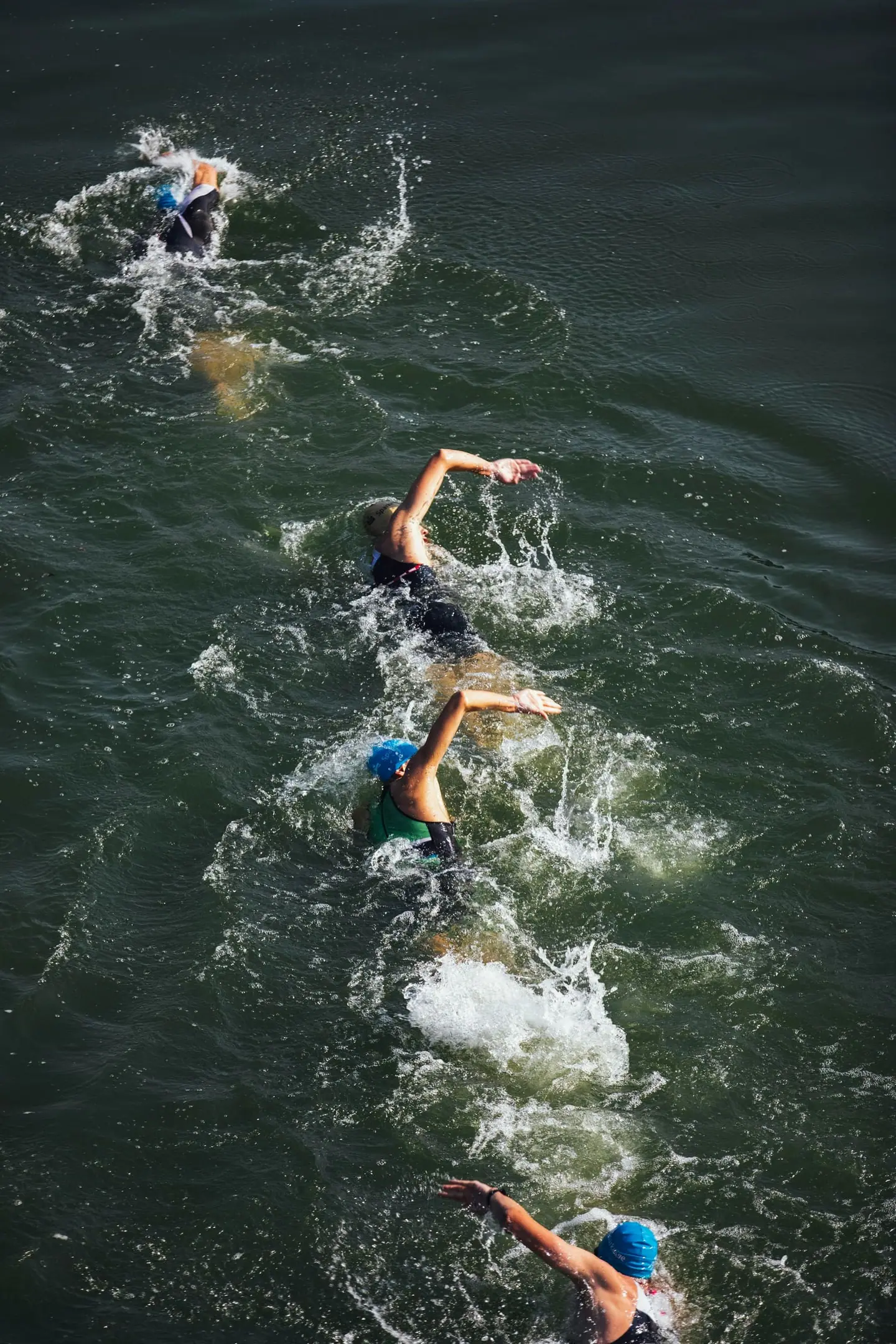
Rock Hall is a small, quiet harbour town in Kent County, only about 18 miles from Baltimore across the bay but much further by road; the organiser advises allowing plenty of travel time. The swim is in the harbour, which a breakwater shelters from wind and waves. You start in the water at the bulkhead by the Oysterman statue, in a time-trial start in pairs, and swim 1.75 laps round the edge of the basin to the end of a marina dock. The centre of the basin is only two to three feet deep, so a nervous swimmer can stand up there. Water in the mid 70s °F is expected.
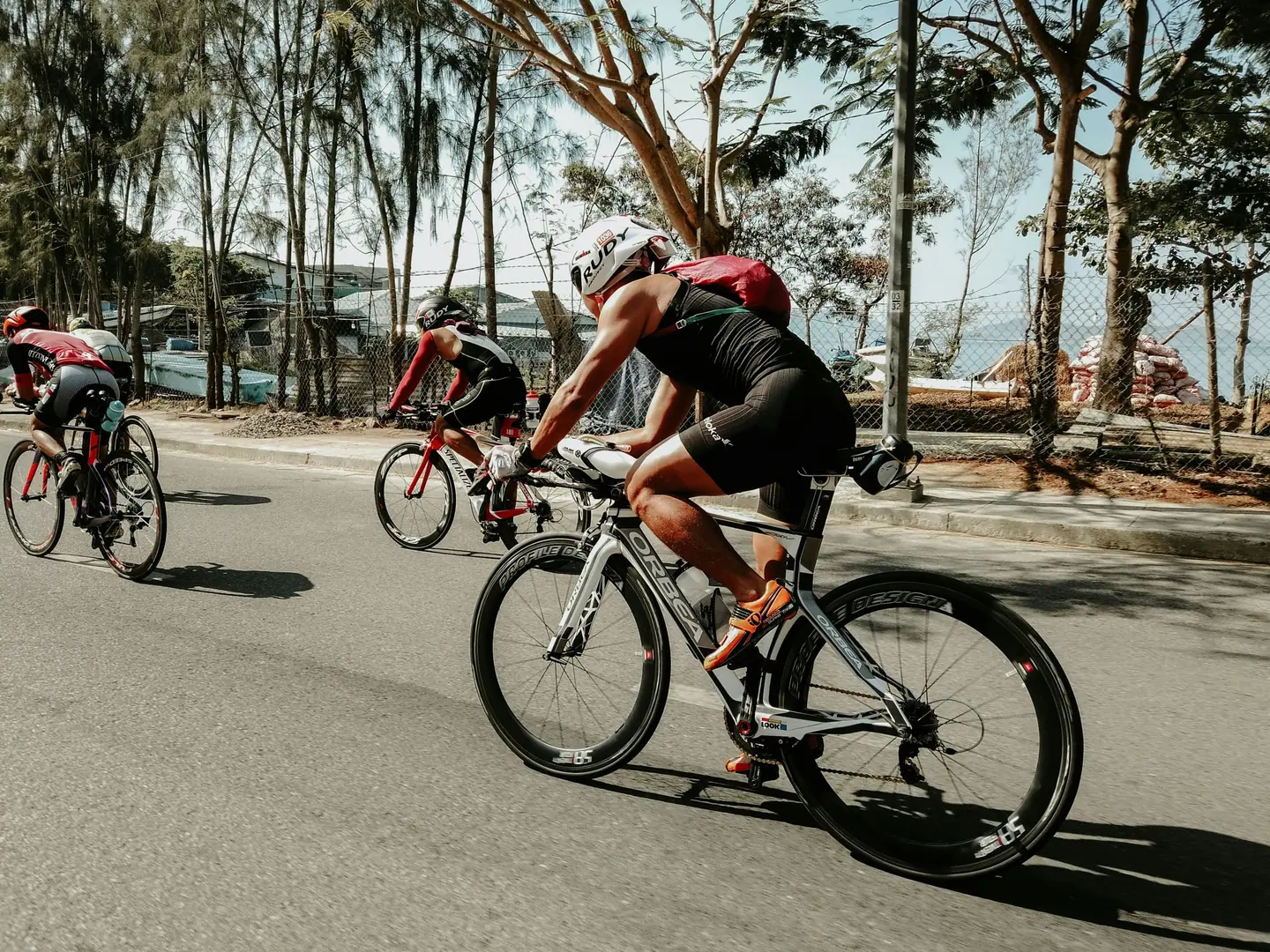
Out of the water you climb a ladder and run a few hundred metres along the dock to transition at Rock Hall Landing Marina. The bike loop is ridden once, open to traffic, with a short hill at mile 13 and plenty of wind when it comes off the bay. Then come two flat run laps through the residential streets.
The race is the Saturday of a triathlon weekend, with the sprint on Sunday and a discount for doing both. Kinetic Multisports races are USA Triathlon sanctioned.
+120 m
+10 m
Bike course
39.43 km · +120 m| Start | Length | Ø | Max. | Gain | Cat. |
|---|---|---|---|---|---|
| km 20.9 | 0.4 km | 4 % | 5 % | +17 m | — |
Climb categories follow the road-cycling convention and rate the terrain itself (length and gradient) regardless of sport: Cat. 4 marks the easiest rated climbs, Cat. 1 the hardest, and HC (hors catégorie, “beyond categorization”) is reserved for the most brutal ascents. Short climbs below the Cat. 4 threshold stay unrated.
Run course
10 km · +10 m| Start | Length | Ø | Max. | Gain | Cat. |
|---|
Climb categories follow the road-cycling convention and rate the terrain itself (length and gradient) regardless of sport: Cat. 4 marks the easiest rated climbs, Cat. 1 the hardest, and HC (hors catégorie, “beyond categorization”) is reserved for the most brutal ascents. Short climbs below the Cat. 4 threshold stay unrated.
How to pace Rock Hall Triathlon.
Settle into the race
On a flat course the race is not decided on a climb but by how evenly you spread the effort. Swim under control along the edge of the basin, use the easy strides along the dock to bring your heart rate down, and mount the bike with a plan.
Spread the effort
The bike loop is where discipline matters. A tailwind makes everything feel easy and a headwind tempts you to push, and both cost you on the run if you follow the speed instead of the power. With no aid on the bike, that is where you drink what you will need for the second run lap.
Finish strong
The race is decided on the second run lap. Whoever rode evenly and drank on lap one can hold the pace there while others fade in the June warmth.
Training plan for Rock Hall Triathlon: 12-week build
Build all three disciplines
Age-group athletes usually take two to three hours for the Olympic distance here. The effort is steadily aerobic up to threshold, with no hills to force breaks or demand spikes.
Brick sessions
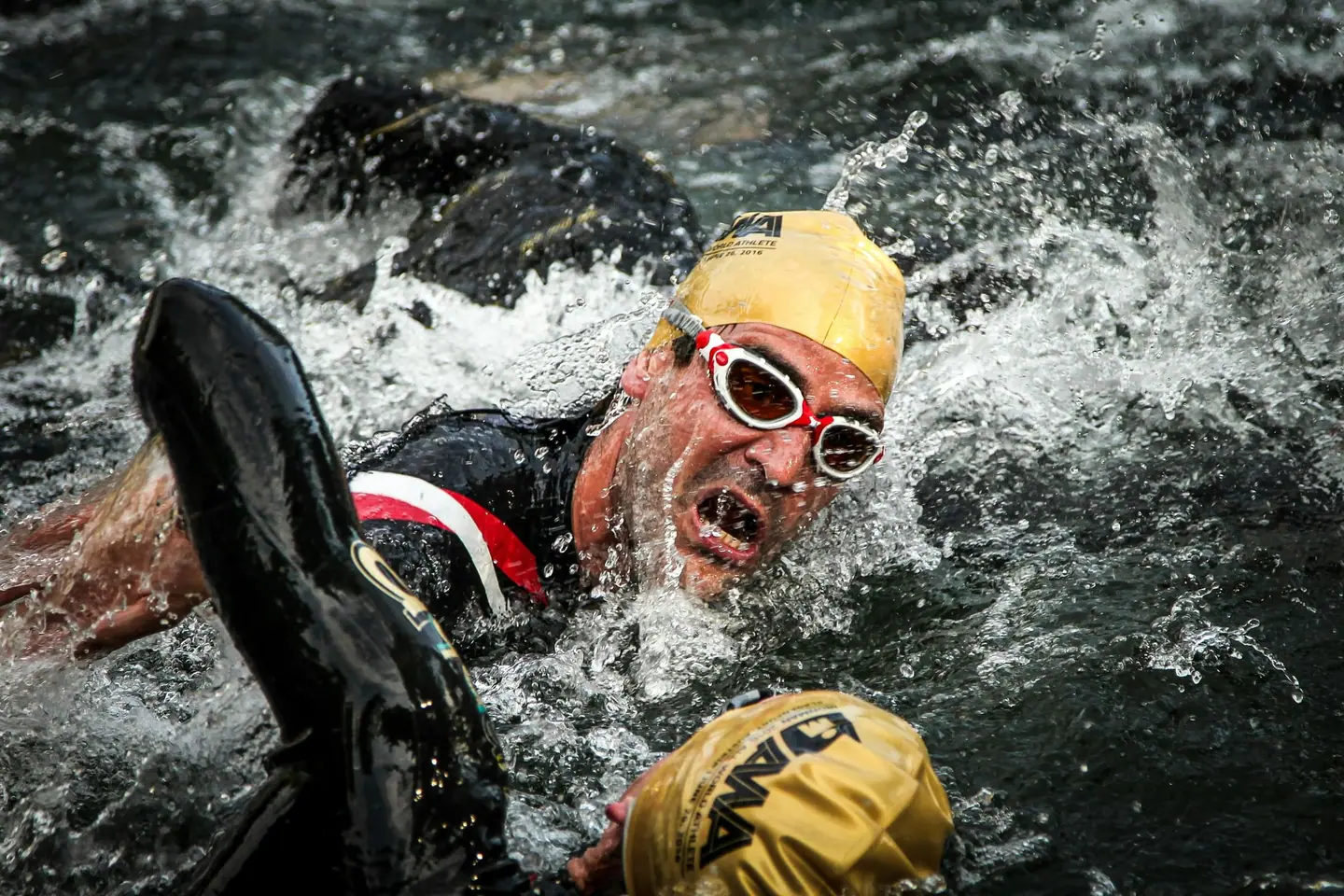
For the swim, open-water practice sighting along a shoreline pays off, since the course follows the edge of the harbour, as do drills climbing out on a ladder and running straight off. Whether wetsuits are allowed depends on the water temperature on race day, so train without one too.
Practise transitions
On the bike what counts is time in the aero position in the wind; on the run, the ability to hold an even pace after more than an hour in the saddle. Long bricks combine both: 60 to 90 minutes flat at race effort, then straight into 30 to 40 minutes of running.
Arrive fresh
The race falls in early June, often in humid warmth on the bay. In the weeks before, rehearse the full sequence once with transitions and fuelling, ideally in similar conditions.

Courses
Download each leg of Rock Hall Triathlon as its own GPX file for your watch or bike computer.
Let YOUB adapt your plan for Rock Hall Triathlon dynamically
Ben connects your goal, the course, current load, recovery, and calendar. Your plan stays pointed at race day even when real life is not perfectly plannable.
Everything about Rock Hall Triathlon.
How long is Rock Hall Triathlon?
Rock Hall Triathlon is 50.93 km long. That distance shapes how much aerobic endurance, pace durability, and race-specific work belong in the training plan.
What is the profile of the bike course at Rock Hall Triathlon?
The bike course at Rock Hall Triathlon is classified as Flat, averaging 3.1 vertical metres per kilometre. 81% of the route is flat, 10% climbs moderately (2 to 6%) and 0% is steeper than 6%.
What climbs does the bike course at Rock Hall Triathlon have?
The hardest climb on the bike course at Rock Hall Triathlon starts at kilometre 20.9, runs for 0.4 km at an average of 4% and gains 17 metres.
Is there a GPX file for the Rock Hall Triathlon course?
Yes. Each leg of Rock Hall Triathlon is on this page as its own free GPX download — ready to import into Garmin, Wahoo, Komoot, Strava or any other app that reads GPX.
How should I prepare for Rock Hall Triathlon?
Preparation for Rock Hall Triathlon should account for 50.93 km, current training load, and available training time. An adaptive plan helps place key sessions without ignoring recovery and real life.
What pacing strategy works for Rock Hall Triathlon?
The pacing strategy for Rock Hall Triathlon should reflect 50.93 km and your current fitness. Start controlled and keep margin for sections where the profile or fatigue makes target pace harder.
When does Rock Hall Triathlon take place?
Rock Hall Triathlon takes place on June 5, 2027.
Where does Rock Hall Triathlon take place?
Rock Hall Triathlon takes place in Rock Hall, United States.
Which distances does Rock Hall Triathlon offer?
Rock Hall Triathlon offers 4 distances — Rock Hall Olympic Triathlon: 50.93 km; Rock Hall Sprint Triathlon: 29.89 km; Rock Hall Olympic Aquabike: 40.93 km; Rock Hall Sprint Aquabike: 24.89 km.
How do I register for Rock Hall Triathlon?
Registration runs through the organiser: kineticmultisports.com. YOUB shows you the course, elevation profile and training plan for your preparation.