Waterman's Triathlon Festival.
The Long Course at the Waterman's Triathlon is a half-distance race in the harbour town of Rock Hall on the Eastern Shore of the Chesapeake Bay: 1.2 miles in the sheltered harbour, two bike loops over 56 miles through Kent County and three flat run loops through town. There are hardly any climbs, which is exactly why this race is decided by steadiness and fuelling. Also known as Waterman's Triathlons and Watermans Triathlon.
Waterman's Triathlon 2027: Course, Route Profile & Map
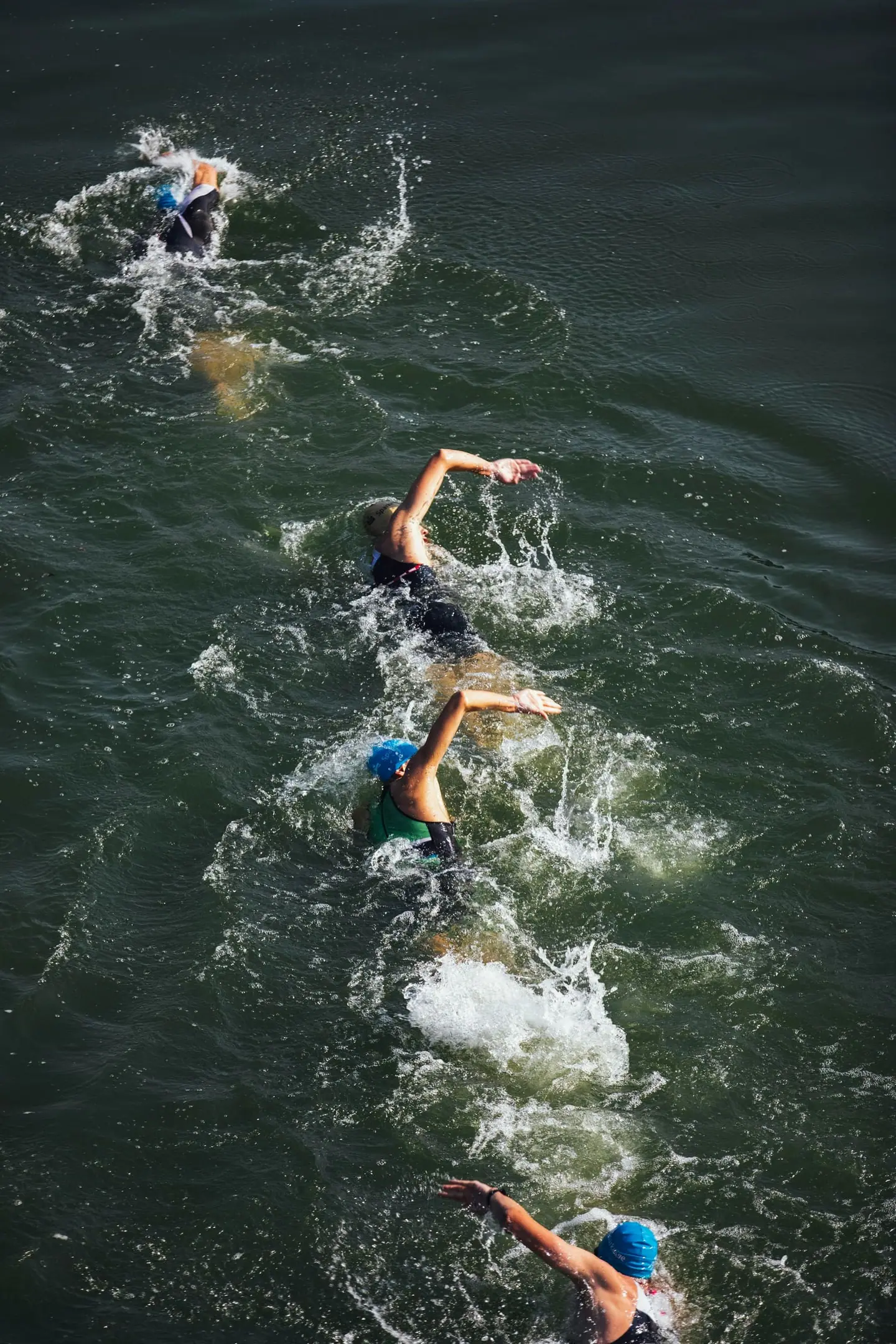
The Long Course starts in the water in front of the Waterman's Restaurant, a little away from the Olympic start, so that two loops make the full 1.2 miles. The swim uses a time-trial start, two athletes every two to three seconds, along the edge of the harbour between moored boats; a breakwater keeps out wind and chop, and the middle of the basin is shallow enough to stand up in. You exit up a ladder at the end of A-Dock and then run a few hundred metres along the dock to transition.
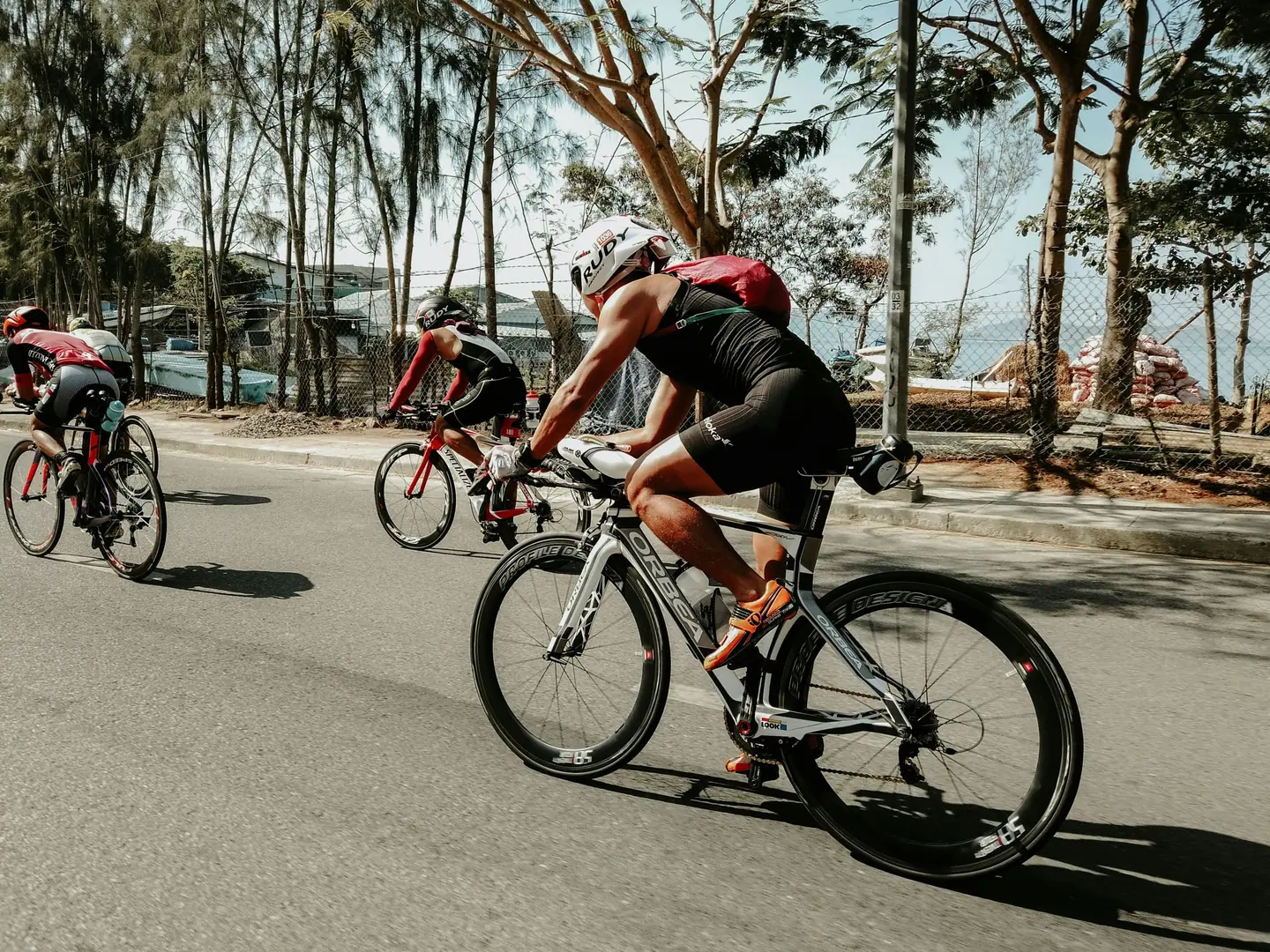
The two bike loops cross the open cropland of Kent County, with three aid stations and plenty of wind over the fields. The run opens with a short out-and-back on Chesapeake Boulevard, followed by three loops of about 4.2 miles through the residential streets, with aid every 1 to 1.5 miles.
Kinetic Multisports runs the festival as a USA Triathlon sanctioned event with more than a thousand athletes over the weekend; the Saturday races sold out last year. In early October the harbour water usually sits in the upper 60s to low 70s °F.
+266 m
+27 m
Bike course
90.12 km · +266 m| Start | Length | Ø | Max. | Gain | Cat. |
|---|
Climb categories follow the road-cycling convention and rate the terrain itself (length and gradient) regardless of sport: Cat. 4 marks the easiest rated climbs, Cat. 1 the hardest, and HC (hors catégorie, “beyond categorization”) is reserved for the most brutal ascents. Short climbs below the Cat. 4 threshold stay unrated.
Run course
21.08 km · +27 m| Start | Length | Ø | Max. | Gain | Cat. |
|---|
Climb categories follow the road-cycling convention and rate the terrain itself (length and gradient) regardless of sport: Cat. 4 marks the easiest rated climbs, Cat. 1 the hardest, and HC (hors catégorie, “beyond categorization”) is reserved for the most brutal ascents. Short climbs below the Cat. 4 threshold stay unrated.
How to pace Waterman's Triathlon.
Settle into the race
On a half distance this flat there is no climb to slow you down and no descent to win time back. Pacing starts in the water: the time-trial start spreads the field, so swim your own rhythm and use the long run along the dock to settle your heart rate and breathing.
Spread the effort
The race is decided between 45 km on the bike and the start of the second run loop. Ride over target into the wind on the second bike loop, or neglect fuelling, and you only notice on the run, but then clearly. Ride a power that feels almost too easy on the first loop and eat at all three stations.
Finish strong
The trap is the pace on the first run loop. On completely flat asphalt with plenty of Olympic athletes around you, it is easy to start too fast; the third loop shows whether your plan was right.
Training plan for Waterman's Triathlon: 12-week build
Build all three disciplines
Age-group athletes usually take five to seven and a half hours for this half distance. The effort is long, aerobic and very uniform, with hardly any spikes but high demands on position, fuelling and concentration.
Brick sessions
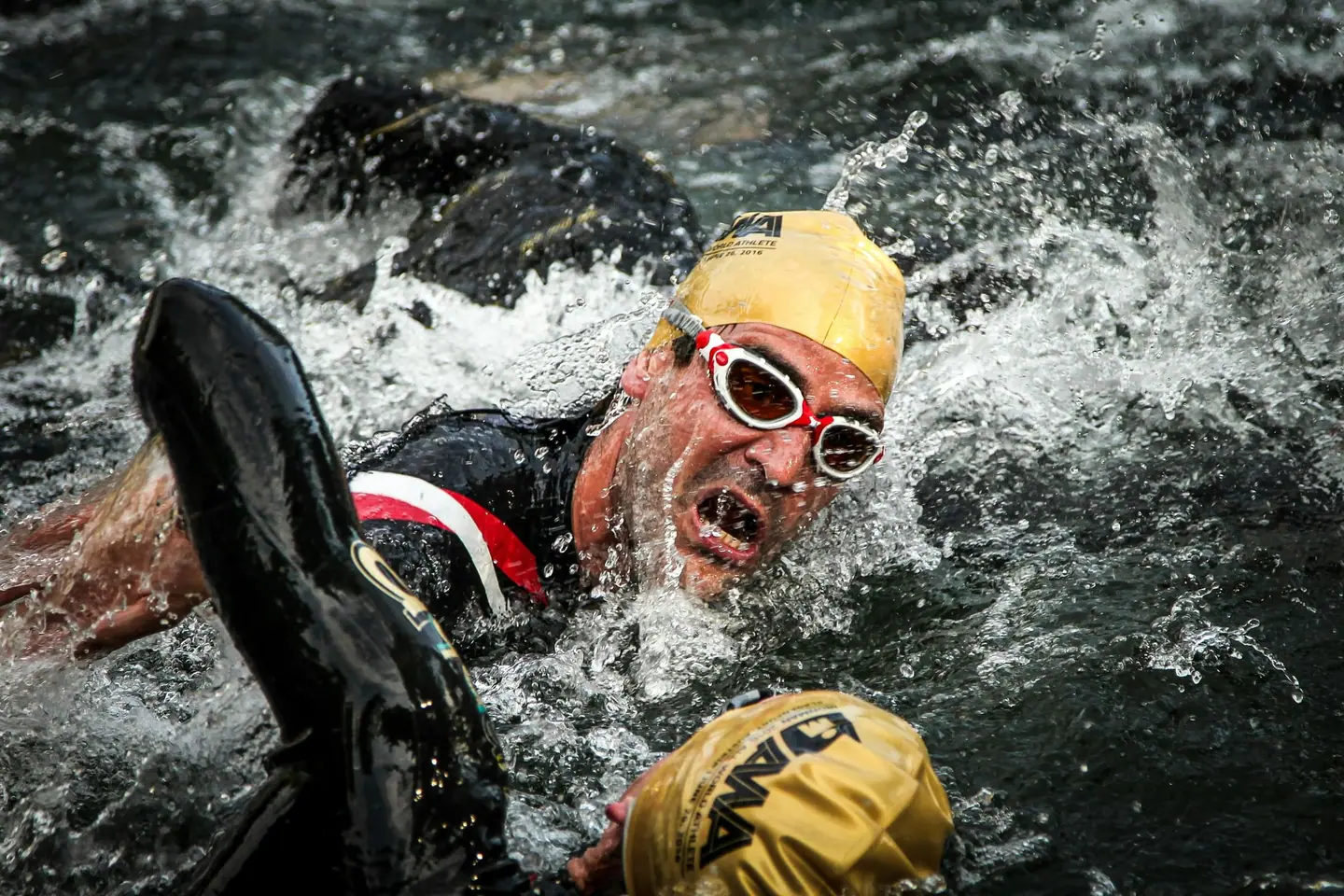
In the water, open-water sessions with sighting and an even pace without a draft pay off, since the time-trial start spreads the field. Practise exiting up a ladder and running to transition; some athletes leave shoes on the dock for it.
Practise transitions
The key sessions are long rides in the aero position on flat, open ground with blocks at race effort, and brick runs of 45 to 75 minutes straight afterwards. Train deliberately in the wind and choose your wheels accordingly.
Arrive fresh
Early October is usually mild, but the bike and run spend hours without shade. Test your fuelling for six hours or more, including bottle hand-ups on the bike and what the run stations offer.

Courses
Download each leg of Waterman's Triathlon as its own GPX file for your watch or bike computer.
Let YOUB adapt your plan for Waterman's Triathlon Festival dynamically
Ben connects your goal, the course, current load, recovery, and calendar. Your plan stays pointed at race day even when real life is not perfectly plannable.
Everything about Waterman's Triathlon Festival.
How long is Waterman's Triathlon?
Waterman's Triathlon is 113.14 km long. That distance shapes how much aerobic endurance, pace durability, and race-specific work belong in the training plan.
What is the profile of the bike course at Waterman's Triathlon?
The bike course at Waterman's Triathlon is classified as Flat, averaging 3 vertical metres per kilometre. 81% of the route is flat, 10% climbs moderately (2 to 6%) and 0% is steeper than 6%.
Is there a GPX file for the Waterman's Triathlon course?
Yes. Each leg of Waterman's Triathlon is on this page as its own free GPX download — ready to import into Garmin, Wahoo, Komoot, Strava or any other app that reads GPX.
How should I prepare for Waterman's Triathlon?
Preparation for Waterman's Triathlon should account for 113.14 km, current training load, and available training time. An adaptive plan helps place key sessions without ignoring recovery and real life.
What pacing strategy works for Waterman's Triathlon?
The pacing strategy for Waterman's Triathlon should reflect 113.14 km and your current fitness. Start controlled and keep margin for sections where the profile or fatigue makes target pace harder.
When does Waterman's Triathlon Festival take place?
Waterman's Triathlon Festival takes place on October 2, 2027.
Where does Waterman's Triathlon Festival take place?
Waterman's Triathlon Festival takes place in Rock Hall, United States.
Which distances does Waterman's Triathlon offer?
Waterman's Triathlon offers 9 distances — Waterman's Long Course Triathlon: 113.14 km; Waterman's Long Course Aquabike: 92.05 km; Waterman's Long Course Triathlon Relay: 113.14 km; Waterman's Olympic Triathlon: 51.5 km; Waterman's Olympic Aquabike: 41.5 km; Waterman's Olympic Triathlon Relay: 51.5 km and 3 more.
How do I register for Waterman's Triathlon?
Registration runs through the organiser: kineticmultisports.com. YOUB shows you the course, elevation profile and training plan for your preparation.