Pushing the Limits
The Science of Fatigue
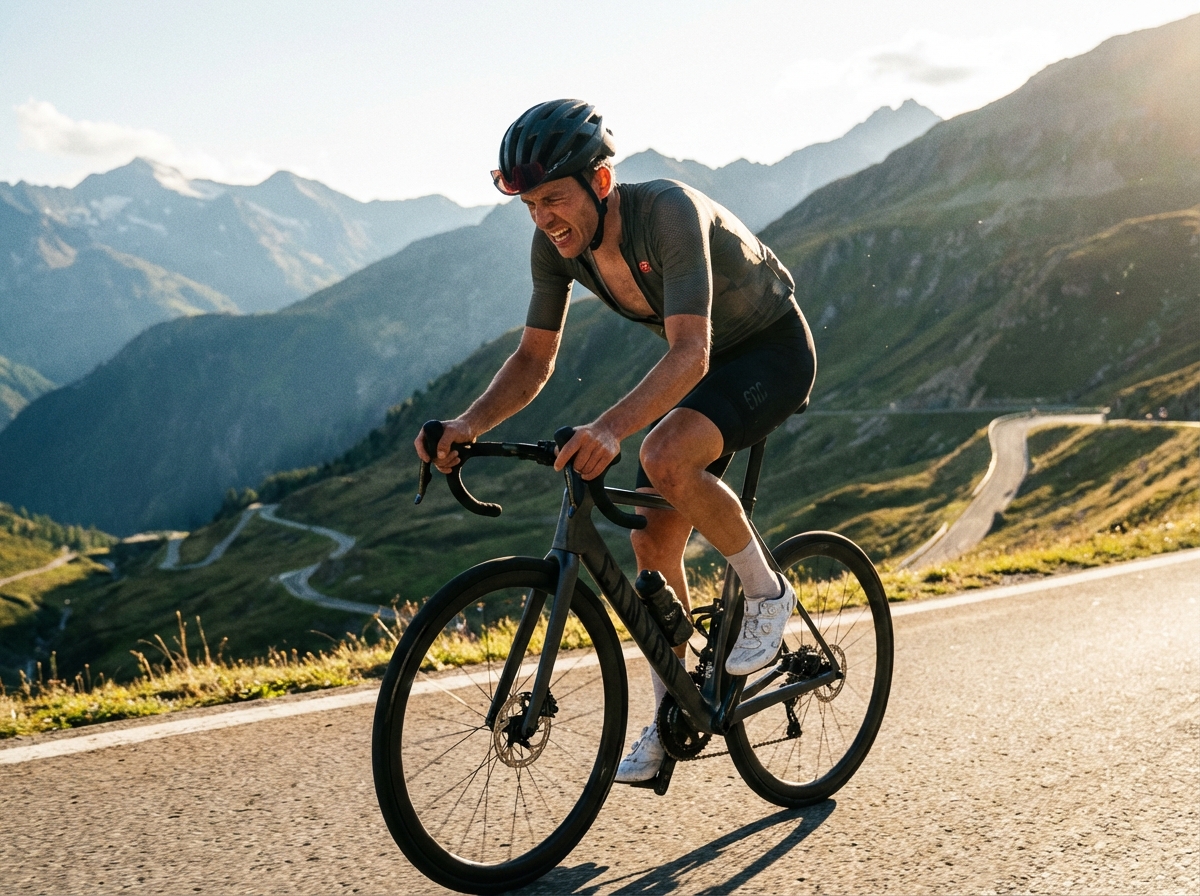
TL;DR: Part 1 of the fatigue series examines the debate between the classic mechanical model (fatigue as pure physical overload) and psychological factors, showing that our limits are elastic and heavily influenced by the brain and motivation
Kilometer 30. The "man with the hammer" has struck (you've "hit the wall"). You have to walk. You seriously doubt whether you'll even reach the finish line today. Your body is telling you clearly: "Stop!". You just can't go on.
Kilometer 41. Just one last kilometer to go. Suddenly, you start running again. You can even do more: You pick up the pace, accelerate over the final meters, and sprint to the finish.
How can that be?
Obviously, it was still physically possible to run; meaning you didn't actually have to walk back at kilometer 30 either. So what stopped you? What mechanism is yelling "Stop!" here? Is it physical systems that are completely exhausted and failing to function, or is it a warning signal from your brain trying to protect your body from serious damage? To this day, science has no definitive answer to the question:
What exactly is fatigue and where does it originate?
However, a look into the history of this research reveals incredible complexity. Over the next few weeks, we want to dive deeper into exactly that. Because: The better we understand what limits us, the more confidently we can perform in competition.
The "Physiological Model" according to Archibald Vivian Hill
In the early 20th century, Archibald Vivian Hill shaped the image of the human body as a purely mechanical machine. He assumed that fatigue was a purely physiological "problem"—like a car running out of gas or its engine overheating.
His theory essentially states that during maximum exertion, the oxygen demand of the muscles exceeds the heart's capacity. This allegedly leads to an oxygen shortage in the muscle and the accumulation of "toxic" lactate. Hill believed that the pumping capacity of the heart was the sole factor determining human endurance.
Today, we know more about the details and understand that oxygen supply is just one of many factors. Yet, the basic idea remains the foundation of performance diagnostics: we measure physiological processes like VO₂ max or lactate thresholds to determine what speeds we can run. We are looking for the limit of the "engine."
The Logic Gap
However, the purely mechanical model reaches its limits when we look at real-world data. If you look at the finishing times of millions of marathon runners, for example, you'll notice an unusual cluster just under the magical time barriers of three, four, or five hours (Allen et al., 2016). According to Hill's theory, these runners' systems should be completely maxed out at the end of a marathon.
So why were they often able to significantly accelerate over the last two kilometers? What stopped them from choosing this pace earlier?
Psychology Beats Physiology: The Price of Effort
There are numerous other experiments showing that our limits are "elastic," as Alex Hutchinson describes in his groundbreaking book Endure. A classic example from France by Michel Cabanac (1986) illustrates this phenomenon:
Test subjects were asked to hold a "wall-sit" for as long as possible. In the first trial, they received 20 cents per 20 seconds—they lasted an average of two minutes. In the second trial, the researchers increased the incentive to 7.80 euros per 20 seconds. As if by magic, the duration doubled to four minutes.
Or think of the so-called "hysterical strength" of a desperate mother who, in an extreme situation, is able to lift a car to save her child.
The message is clear: Our muscles, or our "engine," cannot be the only limiting factor. Fatigue is not a purely physiological construct. Our brain and our motivation play the decisive role in regulating our performance.
And that is exactly what the next two blog posts will be about...(Read more: The conscious quitter and The Central Governor Model)
References:
Allen, E. J., Dechow, P. M., Pope, D. G., & Wu, G. (2016). Reference-Dependent Preferences: Evidence from Marathon Runners. Management Science.
Cabanac, M. (1986). Money versus pain: Experimental study of a conflict in humans. Journal of the Experimental Analysis of Behavior.
Hutchinson, A. (2018). Endure: Mind, Body, and the Curiously Elastic Limits of Human Performance. William Collins.
Noakes, T. D. (2012). Fatigue is a brain-derived emotion that regulates the exercise behavior to ensure the protection of whole body homeostasis. Frontiers in Physiology.
Tucker, R., Lambert, M. I., & Noakes, T. D. (2006). An analysis of pacing strategies during men's world-record performances in track athletics. International Journal of Sports Physiology and Performance.